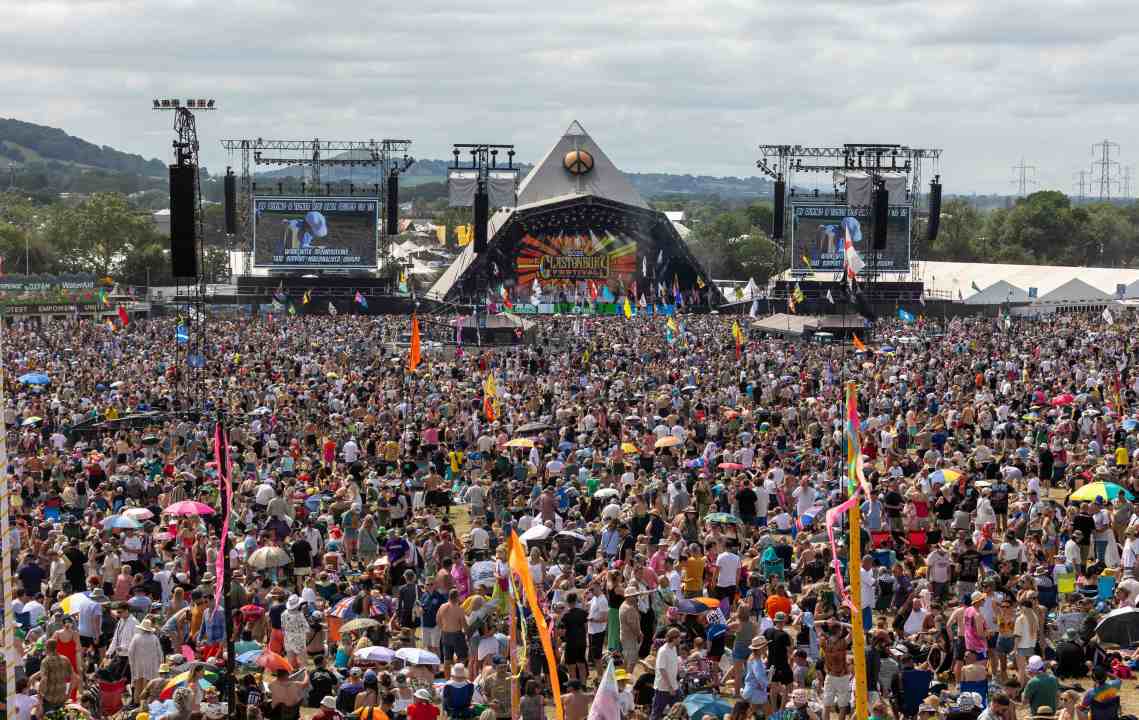
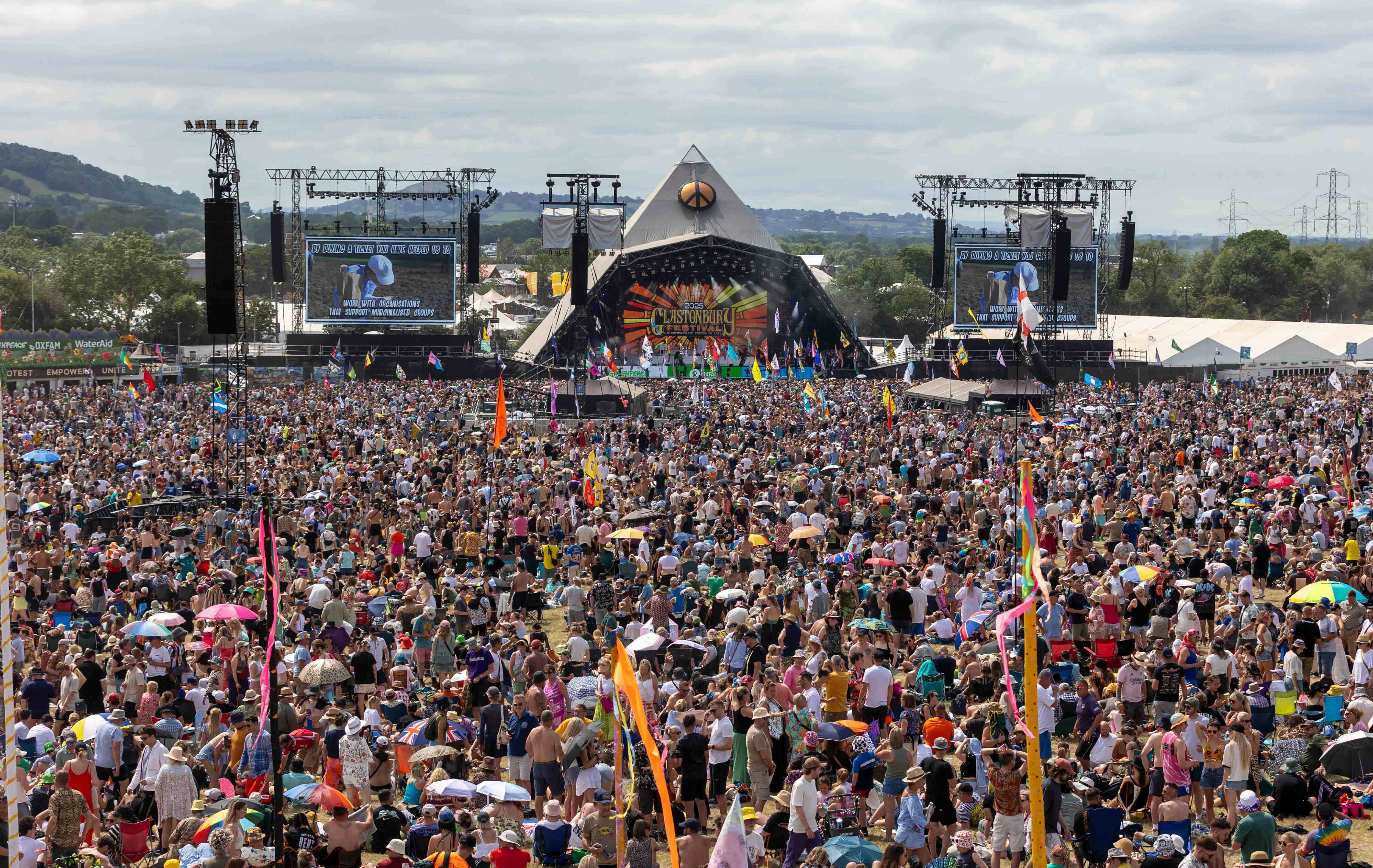
On Wednesday morning, I thanked God for Cher. My renewed appreciation of the Goddess of Pop wasn’t sparked by a Moonstruck rewatch or a ‘Believe’-filled karaoke session. No, it was the announcement of the 2027 Glastonbury lineup. Bar the inclusion of 80-year-old Cher in the ‘old and wrinkled yet still only wears sequinned clothing’ slot – sorry, ‘Legends’ – next year’s lineup may be the worst in the festival’s history. It’s official. Glastonbury has lost the plot.
Since its founding in 1970 as a canny side hustle for dairy farmer Michael Eavis, Glastonbury has become the biggest music and arts festival in the world and a necessary notch on the belt for any musical superstar hoping to be remembered amongst the greats. Its programmers have always had a knack for combining old and young, fresh and nostalgic; just look at 2025’s iteration (this year was a fallow year), where rock’s greatest curmudgeon, 81-year-old Neil Young, was pitted directly against millennial and Gen Z darling Charli XCX. Glastonbury, usually, understands that punters want a sprinkling of expensive old fogies sprinkled in with their current chart-toppers.
But there’s none of that on 2027’s lineup poster, which is topped by headliners Sam Fender, Harry Styles and Billie Eilish. Styles aside – whether or not you’re a fan, it’s impossible to deny he’s Britain’s biggest star, and certainly puts on an impressive, bells-and-whistles-galore live show – the trio of headliners feels underpowered. Yes, Fender has a heartening element – he’s a homegrown, stadium-sellout performer, as well as a Mercury Prize-winner, and most importantly, he seems like he’d be great fun to have a few pints down the pub with – but his music is, by and large, dull. Then there’s Eilish, who only last headlined in 2022; since then, she’s had one underwhelming album and a mopey (albeit Oscar-winning) Barbie soundtrack. Has Emily Eavis, the festival’s now-custodian, forgotten that other female artists exist? Maybe even women whose music makes you want to dance rather than beg for a Zoloft prescription? (Madonna, who would’ve been perfect, apparently turned it down.)
The lineup reads like a cross between a Radio 1 playlist from 2014 and the results of a school PTA focus group, where desperate parents and governors analyse what their kids are listening to: have you heard of this Sombr chap? Ellie Goulding is still relevant, right? (Answer: no)
It’s also striking how few rock and punk bands feature. Despite this being a boom time for exciting new bands from the US, UK and Ireland who are capable of drawing huge crowds – Geese, Man/Woman/Chainsaw, Fontaines D.C., Bleech 9:3, Madra Salach – the lineup is pop, pop, pop.
The lineup reads like a cross between a Radio 1 playlist from 2014 and the results of a school PTA focus group
I wonder if last year’s spate of Palestine-related controversies, particularly Bob Vylan’s chant of “Death to the IDF” on the BBC, has scared Eavis – and whether she’s sat down and thought, you know what, better book the safe, sanitised major-label lot. (Bar Massive Attack, virtually none of the artists featured on the lineup are overtly political). Earlier this year I saw Eavis speak at an Ivor Novello awards ceremony, where she lamented that the festival had become a political lightning rod, over-analysed and unfairly criticised, when its main focus remained music. Perhaps its extensive, expensive BBC coverage is the issue: does the licence fee really need to fund the annual staff jolly? Or maybe it’s the annoying opinions of its increasingly upper middle-class audience, who treat securing a ticket as essential to their survival and well-being as Maldon sea salt actually being made in Essex. Glastonbury has ceased to be a music festival, and has instead crossed over into that tackiest of pursuits: the ‘bucket list’ event.
Tickets passed the £400 mark for the first time this year. If you add up the rough costs of seeing the three headliners individually – Styles (£150), Fender (£85), Eilish (£120) – that seems like a good deal. Throw in Cher, who rarely performs live, never mind in the UK, and it’s tempting to think the 200,000 attendees have a bargain on their hands. But when you compare the calibre of artists in 2027 to editions past, which were headlined by the likes of Sir Paul McCartney, Bruce Springsteen, The Rolling Stones or Beyonce, it feels… disappointing. There’s no bragging rights in seeing Sam Fender, a man who plays everywhere, every single year. Roughly 72 per cent of the lineup have played the festival before, thus zapping away some of the magical mystery that comes with discovering the unknown. Glastonbury has always felt refreshingly immune to the music industry’s depressing risk aversion – until now.
I’ve been going to Glastonbury since I was a child, and my love for the festival has only grown as I’ve got older, especially since I’ve started attending for work. (Nothing eradicates your friends’ pity for your job’s long hours quicker than admitting those long hours involved running around Worthy Farm, watching massive bands for free.) That won’t change, even with the disappointment that is next year’s lineup.
But when I’m singing along to Cher with thousands of other unwashed, sweaty people who’ve spent their year saving for the honour of gathering in front of the Pyramid Stage, I won’t be able to banish a thought from the back of my mind: please, God, let 2028 be better. Surely Springsteen is free?


Comments