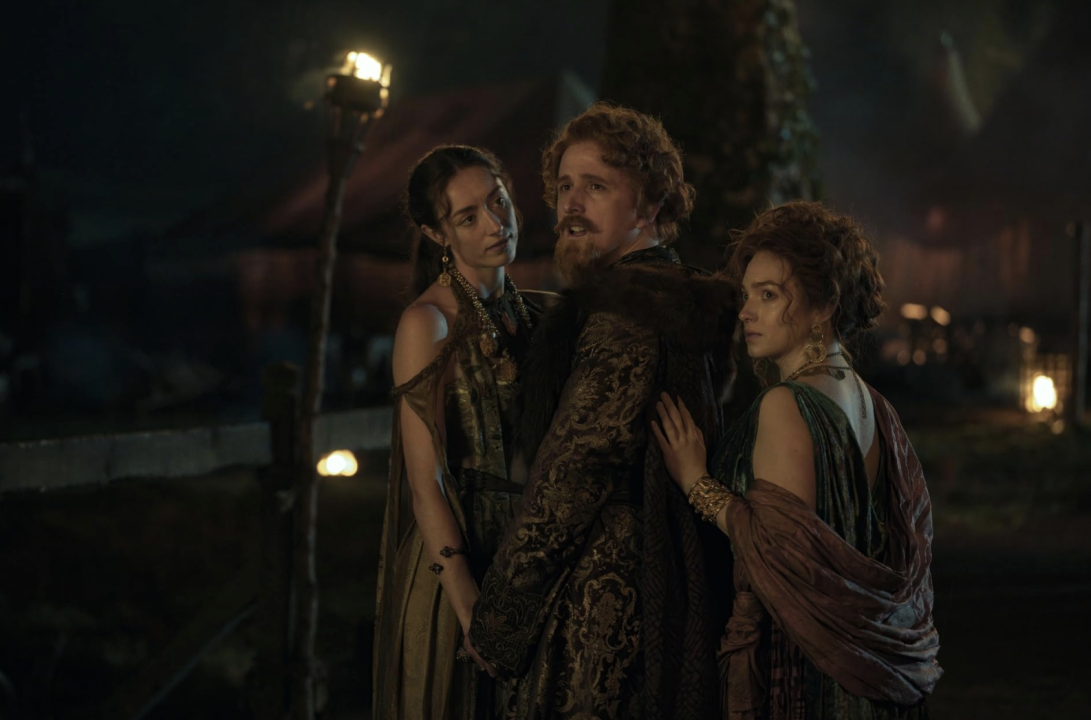
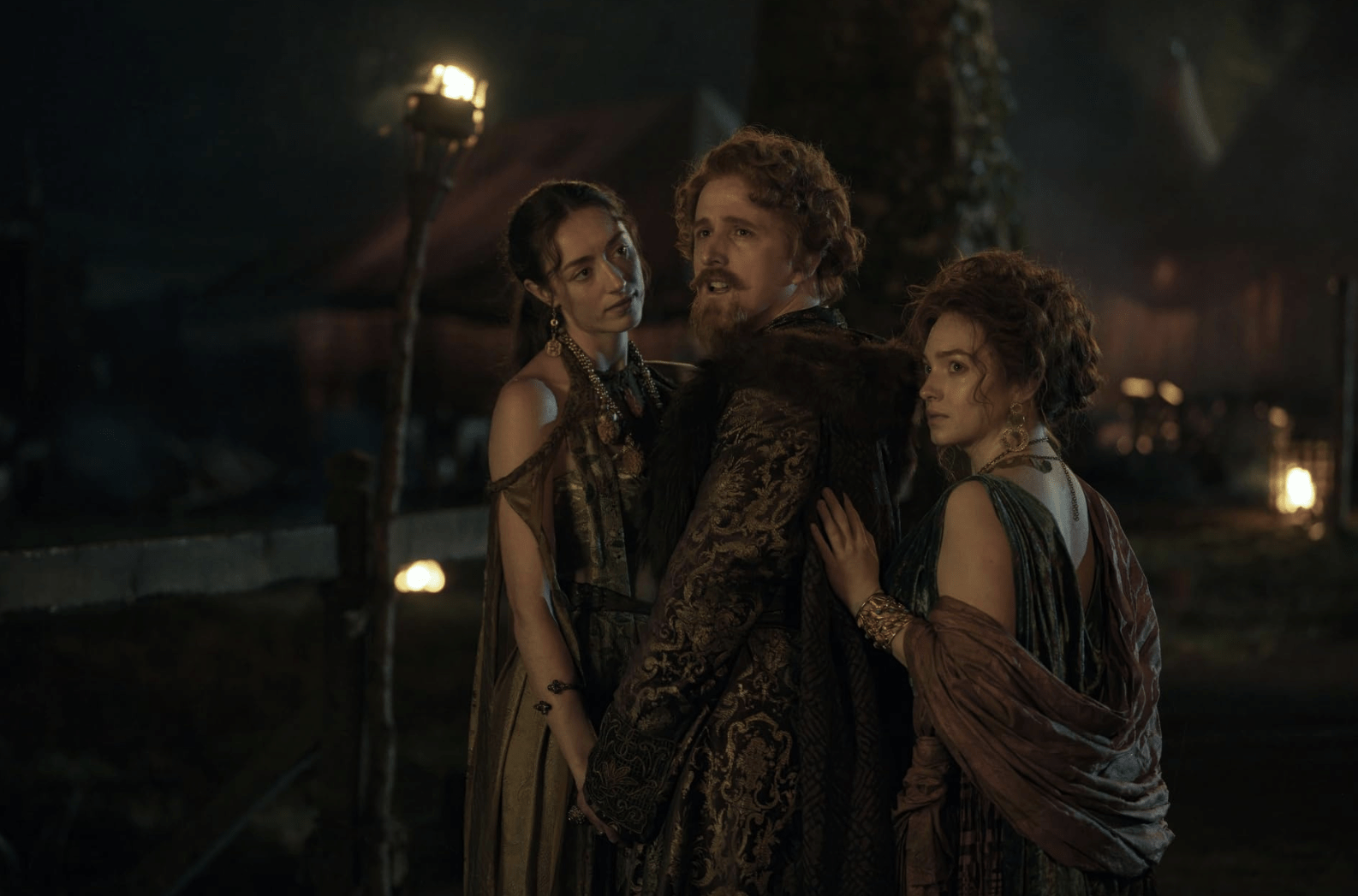
Now that the Stranger Things disappointment has died down – slightly – George R.R. Martin and his merry band of Game of Thrones cohorts have recaptured attention in what we must call the Thrones universe. After the warily positive but underwhelming reception that the major spin-off House of the Dragon received, A Knight of the Seven Kingdoms’s six-episode offering is in a lower key than either of its forbears. No dragons, no enormous battles, no big stars, just a small-scale relationship drama focusing on the hapless “hedge knight” Ser Duncan the Tall, aka “Dunk” and his child squire, Egg, whose origins are rather less lowly.
Still, small-scale doesn’t mean humorless or boring, and there is a welcome irreverence to the Ira Parker-written first episode, from the opening scenes in which Dunk buries his mentor Ser Arlan and vows that he will do the old knight’s memory proud by fighting in a tournament. The stirring strains of Ramin Djawadi’s Game of Thrones theme tune ring out and are then rudely interrupted by Dunk suffering from a bout of explosive dysentery, which the audience is then shown, in matter-of-fact detail. Those of a sensitive disposition should probably turn off at this point.
If you were expecting the political shenanigans or extreme violence of Thrones, then you will be disappointed. But there is a warmth to the odd-couple relationship between Peter Claffey’s hulking, none-too-bright Dunk and Dexter Sol Ansell’s bald-headed, diminutive Egg that gives the show its heart, and the light relief is provided by a series of swaggering supporting performances, most notably Daniel Ings as Ser Lyonel Baratheon, a hard-drinking, whimsical and potentially dangerous aristocrat whose mood shifts can result in either mad jollity or fatal consequences, depending on which point of the evening you catch him.
There are some modest twists left to be revealed if the show remains true to its source material, The Hedge Knight, and the appearance of the great Bertie Carvel as the benevolent Prince Baelor Targaryen – a relative of Emilia Clarke’s Daenerys Targaryen, lest we forget – will give A Knight of the Seven Kingdoms some serious thespian gravitas that Claffey and Ansell, finely cast actors though they are, do not necessarily possess. But this is Thrones lite, and intentionally so, with only the prospect of a suitably bloodthirsty jousting tournament in the concluding episodes offering the kind of big thrills that even House of the Dragon occasionally comes up with. This is Martin in relaxed mode, and many will appreciate the semi-bucolic evocation of a world in which hapless “hedge knights” count pennies and sleep in ditches, all the while dreaming of a better life.
The question is whether viewers will care about the wider brand. The concluding season of Game of Thrones is rightly regarded as one of the biggest letdowns in recent television, and Martin’s reluctance – or even downright failure – to complete the book series with the final installments of The Winds of Winter and A Dream of Spring has meant that casual fans, rather than aficionados, could be forgiven for growing weary of the whole universe. Perhaps the future of the franchise does lie with quietly whimsical shows such as this, dotted through with bathroom humor and a focus on smaller characters, but I cannot help wondering whether an audience that once thrilled to epic scale are really going to embrace this downgrade to Westeros whimsy.




Comments