
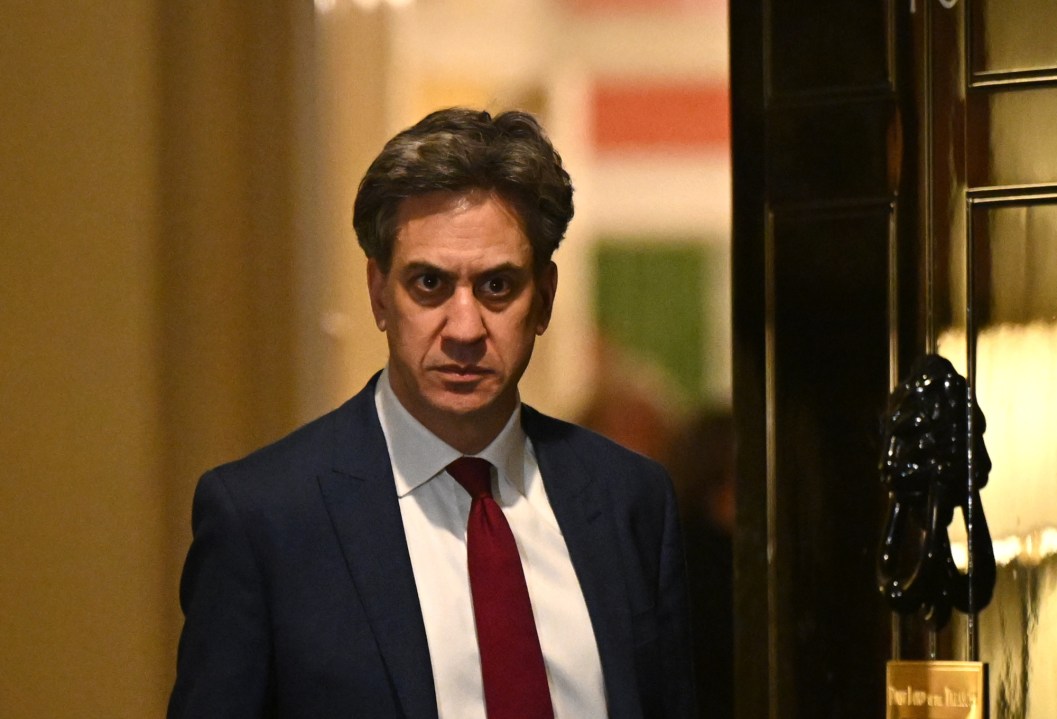

It looks as if £300 will end up being to Ed Miliband what 45 minutes was to Tony Blair: the number which will forever hang around his neck, dragging him down whatever else he tries to do in politics. Of late, Miliband seems to have stopped repeating his promise to cut £300 from our electricity bills by 2030 as he decarbonizes the electricity grid. And no wonder when Centrica boss Chris O’Shea revealed yesterday his own company’s projections for electricity prices in 2030. They show that far from falling, we will be paying more for power then than we were in the wake of the Ukraine invasion in 2022. Given that the average per household spend on electricity peaked at £1,213 in 2023 and fell back to £1,067 in 2024 (the year that Miliband made is £300 promise), Centrica’s projections appear to suggest that Miliband’s policies will be costing us at least an extra £200 a year.
Of late, Miliband seems to have stopped repeating his promise to cut £300 from our electricity bills by 2030 as he decarbonizes the electricity grid
Rachel Reeves attempted to salvage Miliband’s promise in her last Budget by shifting £150 a year’s worth of green subsidies from electricity bills to general taxation, but that doesn’t look like saving the Energy Secretary. No one can really predict energy prices in four years’ time, but it is beginning to look a grim inevitability that Labour will have to go into the next election with voters paying higher bills than they were when the Conservatives left office. That will undermine Miliband’s whole green strategy, which is very much based on the assertion that decarbonising the grid is not just good for the planet but good for your pocket, too.
If there is any bright news on the horizon regarding energy prices it is a likely fall in wholesale gas prices as the cost of importing liquefied natural gas (LNG) from the US and Qatar falls. However, that would hardly help Miliband: his whole case is based on the assertion that gas prices are extremely high, will only get higher, and therefore the sooner we ditch our dependence on gas the better. It will not go down well if householders who have spent thousands of pounds of their own money – on top of a £7,500 government grant – replacing their gas boiler with an electric heat pump to witness gas prices falling when electricity prices increase.
Why is Miliband’s £300 promise so doomed? It was based on a modelled scenario produced by the green energy lobbying group Ember in 2023, and so compared the high price of gas then with the relatively low cost of renewables. At the time, offshore wind companies were bidding to produce power for the next 15 years at a guaranteed – or ‘strike’ – price of £45 per megawatt-hour. Since then, however, the cost of wholesale gas has fallen while the cost of wind has risen dramatically – thanks to commodity prices and interest rates. In the last auction for offshore wind, concluded last month, the average price was £91 per megawatt-hour.
The efforts by Miliband’s Department for Energy Security and Net Zero to compare the price of wind with the price of gas power stations ignore something rather important. Gas powered-electricity has become expensive because of the way we are using it. Increasingly, gas is being used in short bursts to make up for shortfalls in wind and solar. The unit cost of producing electricity for a few hours a week is inevitably higher than it is to produce it at a fairly constant load. The system costs imposed on the electricity network as a result of large quantities of intermittent renewables are being blamed on gas.
Ember’s figure was also based on an assumption that it would cost £30 billion to upgrade the national grid by 2030 to accommodate renewables. Yet six months later, in March 2024, the National Energy System Operator doubled its estimate of what would be needed to £58 billion. That, too, will almost certainly turn out to be an under-estimate. As O’Shea points out, we would need to invest in the grid even without self-imposed net zero targets. But the indecent haste being imposed on the industry thanks to Miliband’s 2030 target is inflating costs considerably.
Sooner or later the public is going to start asking what some of us have been asking for the past couple of years: how come, of renewables are as cheap as Miliband makes out, does Britain have the highest industrial electricity prices and second highest domestic prices of any country measured by the International Energy Agency? How does Miliband answer that? Funny enough, he doesn’t bother even trying.






Comments