Roman history was once a bit more serious than the question: which emperor reminds you most of Donald Trump? Before the imperial family of Caligula and Nero began their careers fueling cyber quizzes, there were around five centuries of a Roman Republic which offered real answers to politicians about how they should fix checks and balances, separate state powers and discourage tyrants. When former British prime minister Boris Johnson wrote The Dream of Rome as training for power in 2006, he too focused on the Roman empire and its varyingly persuasive parallels with the European Union. The older Republicans of Rome, Cicero always to the fore, were less entertaining than Claudius and Messalina (particularly after Robert Graves had given his version), but they were once deemed essential to those who wanted better government. From the 16th to the 18th century, as Jamie Gianoutsos explains in a minatory conclusion about our own times, that was what mattered more.
Renaissance Latin lessons were not to be taken lightly. After a hard day’s work, Machiavelli would dress up at night to study the Roman Republic. Barred from his home in Florence by the Medici overthrow of his own Republic, he would don the robes appropriate for “the ancient courts of ancient men,” communing with those who had the freedoms that he had lost, asking questions about how he could get them back.

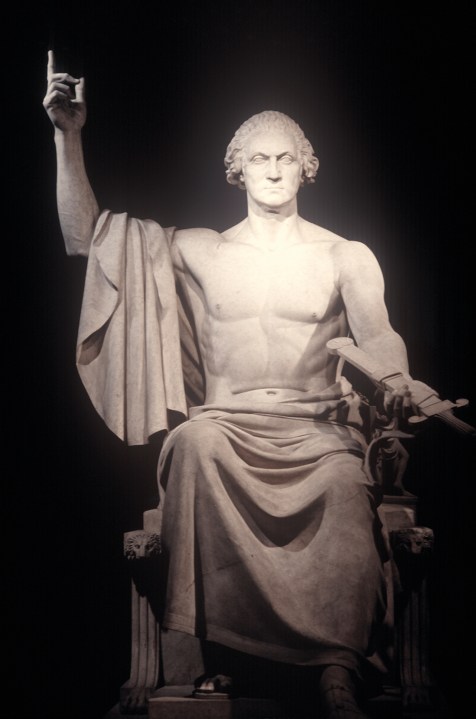
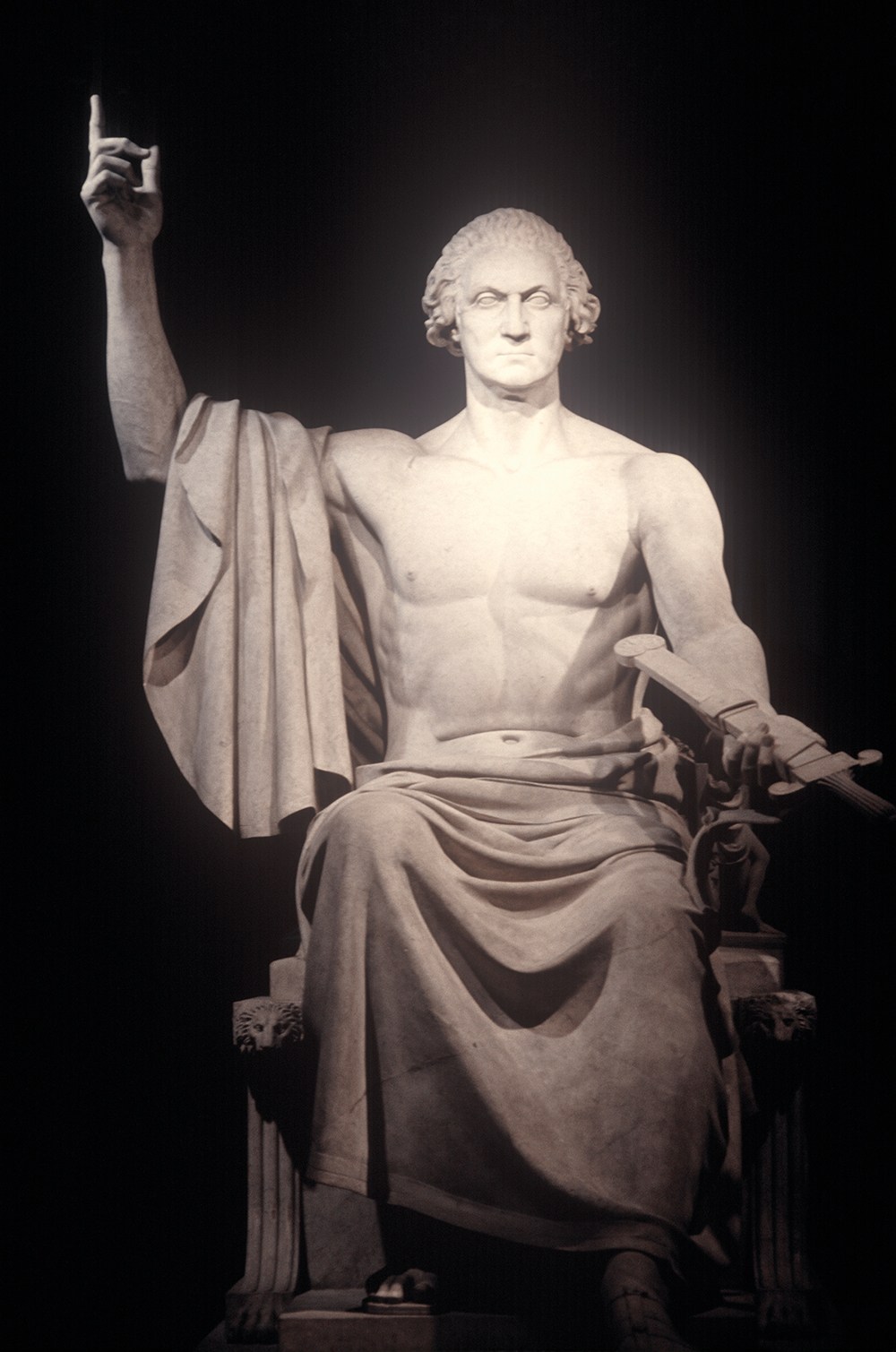
Two hundred and fifty years later, the English historian and women’s rights campaigner Catharine Macaulay posed in her own Roman gown and crown (see her in London’s National Portrait Gallery) to use ancient Republicanism against the sexual inequalities of her time and to promote the freedom of the American colonies. George Washington never dressed in a toga but his statues did. To bend the ears of Livy required more than the exercise of reason. In matters of high emotion it often helped to feel – and seem to feel – the part.
Gianoutsos, a professor of political history in Maryland, says that her own first Republican inspiration was Porcia, the self-harming wife of Brutus, Julius Caesar’s leading assassin, renowned for stabbing herself in the thigh to demand that her husband share with her his plot. Once Brutus had done so and carried out his business on the Ides of March, Porcia died a nasty death by breathing fumes from a fire or stuffing hot coals in her mouth. When Gianoutsos began her study she did not realize the extent to which she would be committing herself to “years of reading about sexual violence, metaphorical and actual.”
Each chapter begins with the relevant Roman history and moves on to how the past influenced the decisions of those making American and European history themselves. “Tyranny and Lust” is the first, the birth of Rome’s Republic around 500 BC after the Rape of Lucretia had led to the expulsion of its kings. Colonial cartoonists often took up this sexual theme of tyranny: while Lord North, the British prime minister, poured tea down the throat of a bare-breasted America, Lord Sandwich was shown peering up her dress.
The second is “The Mixed Constitution of Senate, People and Occasionally Necessary Dictatorship”. Machiavelli, suitably attired for thinking, pondered at length the lessons of Livy, the historian who looked back at the Republic from the birth of the empire that replaced it. “It would be the English admirers of Machiavelli,” Gianoutsos writes, “who first transformed the ancient idea of Rome’s mixed constitution into the fully modern idea of checks and balances.”
From “Liberty and Slavery” to “Women”, she follows her pattern. Porcia, once she was Portia in the English spelling, poses a characteristic problem: did her actions show “systemic abuse” of women by men or her own “strength and agency in a brutal world”? There are other difficulties, as the English and French come to kill their kings. The dead, like the living, do not always give their questioners the same answer. Machiavelli has challenged generations of scholars by hearing different messages from different parts of the Forum on how a ruler does and should behave.
After a hard day’s work, Machiavelli would dress up at night to study the Roman Republic
All must wrestle with the fact that Rome’s Republic fell to the populist methods of Julius Caesar and his heir Augustus, and that, despite occasional glimmerings of its return, in antiquity it never did. Ambition and avarice were the villains for Livy – and for many since. Under the later empire it became safer to pretend that the Republic had barely existed: history became ancient myth and modern emperors, with little in between.
In our own time too the emperors, good and bad, have come to dominate Rome’s story. Which one was most like Trump? Gianoutsos thinks that is not the right question and that Americans concerned with their freedoms should be dressing up again to study the Rome that inspired their founding fathers.





Comments