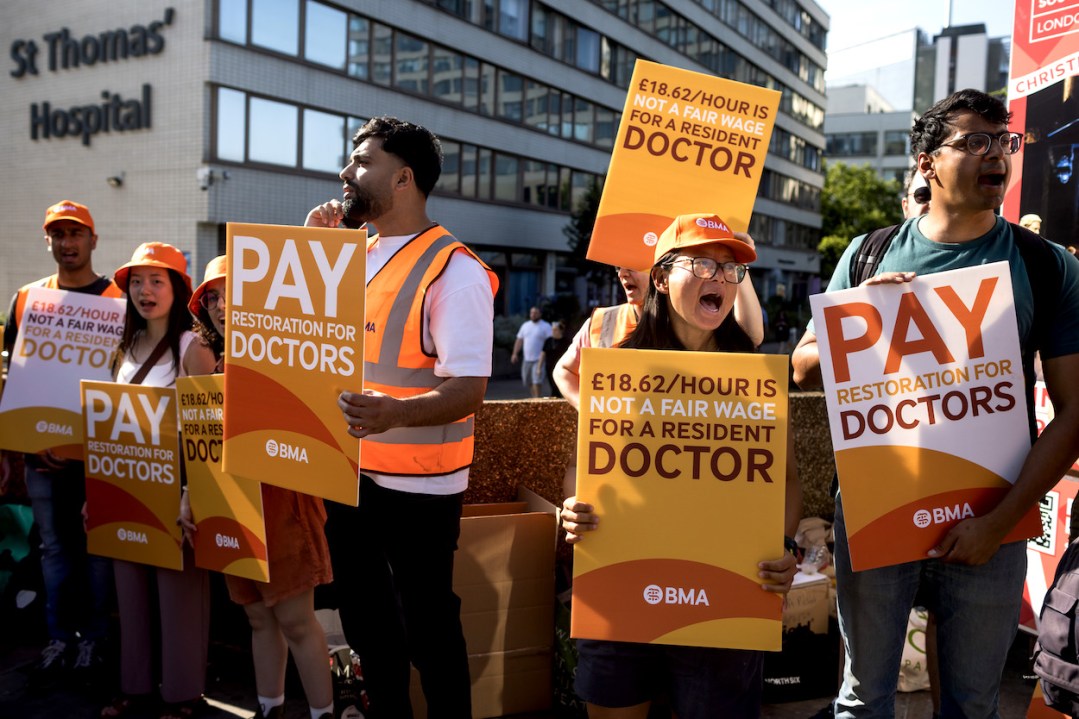
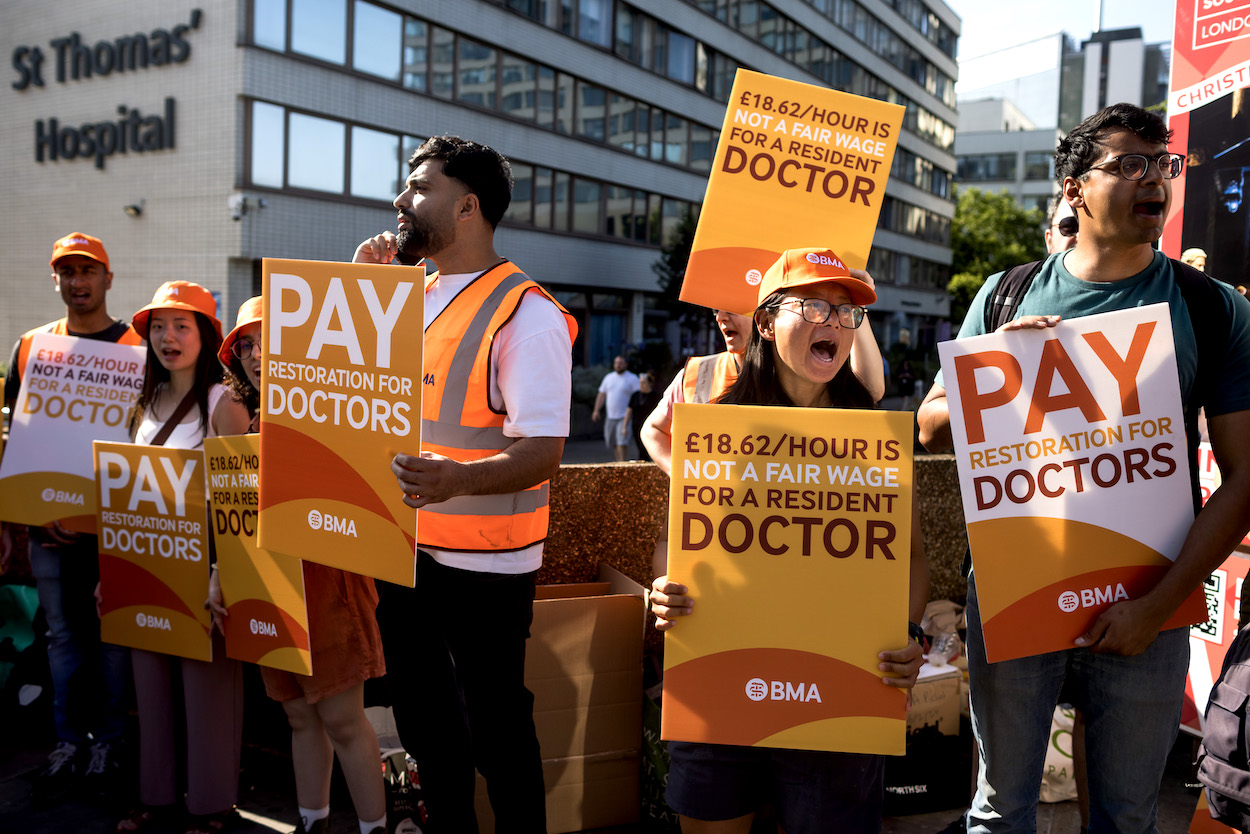
We are on the verge of yet another round of resident doctor strikes – the fifteenth in the dispute which has been running since 2023. Despite significant pay awards totalling over 30 per cent in recent years, there appears to be no end in sight in this dispute. Patients look set to suffer more avoidable harm and more disruption to their care.

The cost of previous strikes to patients and to the NHS was significant. Policy Exchange estimated last year that the impact of the July strikes alone would be 250,000 missed appointments – and a possible 2 million appointments over the year. We estimated that both inpatient activity (patients coming to hospital and staying for a night or longer) and outpatient activity (patients coming to hospital but not staying overnight) would fall during the July strikes by 4.5 per cent and 8.7 per cent respectively.
In financial terms, the cost of the strikes would be approximately £17.5 million a day.
These recurring strikes have had other effects. They have harmed public confidence in the NHS and the medical profession, and caused anxiety and worry among patients and their families in a way which is hardly consistent with the ethos of the medical profession.
The Hippocratic Oath, still the basis of many pledges taken by clinicians today, includes specific promises to ‘do no harm or injustice’ to patients. These commitments are widely associated in the public’s mind with what it means to be a good doctor – and are the basis of why we put our trust in medical practitioners. At the end of 2025, however, we saw doctors threaten and hold strikes while the NHS was near the peak of the winter crisis.
At that time, Health Secretary Wes Streeting made a number of specific concessions and called for further talks as an alternative to striking. Many others, including Policy Exchange, also called for the strikes not to go ahead, arguing that to withdraw (or even to threaten to withdraw) medical services at the height of a crisis would be irresponsible and a threat to the public’s safety.
This time around, Streeting has once again offered pay increases well above the rate of inflation and asked for talks to continue. This offer has so far, once again, been turned down. Thankfully we are not in a winter flu crisis – even if the NHS is dealing with a Meningitis B outbreak.
It is hard to see how this all ends. When can the public hope to rely on a health service which is not regularly held hostage for financial gain?
Other countries manage doctors’ pay better. In Japan, doctors strikes are almost unheard of, and are considered unthinkable by most of the profession. In many other countries, restrictions or minimum service levels are enforced to make strikes ineffective and less prevalent. In Austria, for example, all public servants are required to be present and provide services during a dispute. In Latvia, Poland, Portugal and Slovakia, strikes are circumscribed when they put public safety at risk. In Luxembourg, medical workers are not allowed to strike.
The UK has previously had minimum service levels in place, but the government took the decision in December to repeal them – a decision which is now looking increasingly like a mistake. The government should reverse course and go further. Strikes should be banned completely. According to YouGov polling, the public support this approach by 52 per cent to 42 per cent. This margin has been widening since early 2024.
Anyone genuinely convinced of the doctors’ case should welcome an alternative
Already in the UK there are examples of these kinds of restrictions. The police, prison guards and non-civilian members of the armed forces are not allowed to strike. We recognise the harm and threat that this would pose to public safety and security.
In these areas, instead of antagonistic pay disputes taking place between near-monopsony buyers (the government) and near-monopoly providers (unions), there are independent pay review bodies which review evidence and make recommendations to the secretaries of state.
There is a reasonable case to be made around resident doctor pay, but the current brinksmanship of the unions is rapidly losing them public sympathy, undermining the health service and does not look likely to result in a lasting deal anytime soon.
Anyone genuinely convinced of the doctors’ case should welcome an alternative to never-ending dispute and support an alternative which would allow our medical profession and health service to rebuild public trust.



Comments