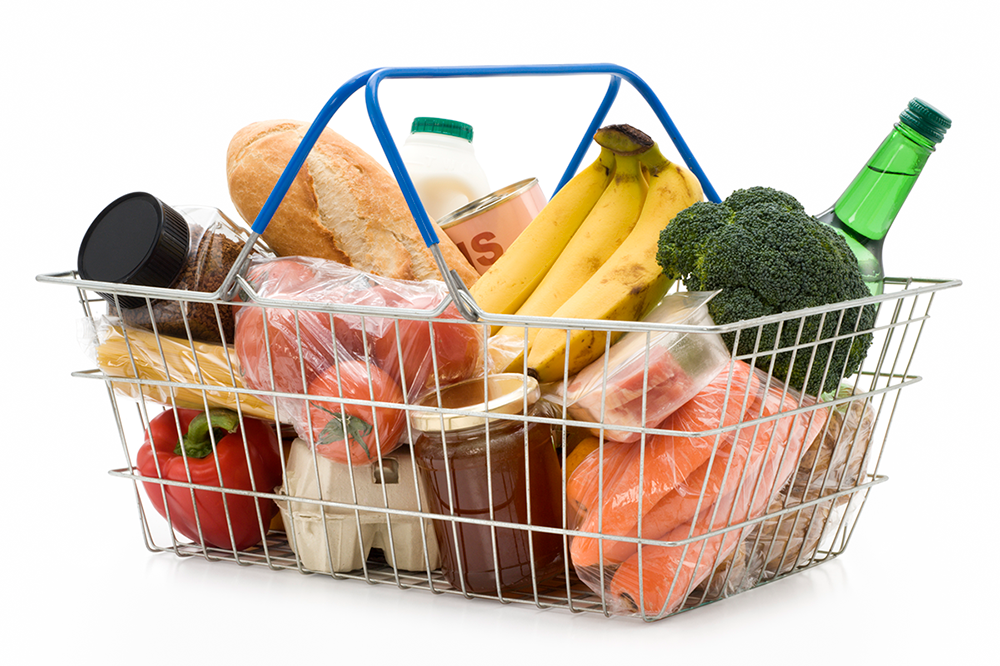


I’m sufficiently nostalgic for the British supermarkets I left behind in 2023 that on visits to the UK I run a small-scale import business between London and Lisbon. I restock: Tesco Dijon mustard (top-drawer and a bargain), rice bran oil (unavailable in Portugal) and (do not tell Portuguese customs) blocks of extra-sharp British cheddar along with bags of slender fine green beans, tails all lined up marvellously on the same side.
Thus I was put out by the new Chancellor’s warning earlier this month that the government will be ‘watching closely for any suggestions that customers are being taken for a ride’ in supermarkets. John Healey’s keeping an eye out for ‘price-gouging’, assuring the public that ‘our regulators have the powers to clamp down on it’.
Before a weekly shop, pre-loading on high blood pressure medication is a must
Fair enough, the soaring cost of food has been shocking – up in Britain by 38 per cent in five years. The Président butter I used to splurge on at two quid for 250g is now £3.65, and many butters are now slyly packaged in 200g units instead. In one year, the price of value blocks of cheddar has doubled. Before a weekly shop, pre-loading on high blood pressure medication is a must, and queuing at the till bracing for the bad news conveniently serves as the day’s aerobic exercise.
The biggest contributors to escalating food prices are energy and (related) core inflation. Admittedly, a national government has limited influence on international oil and gas markets, especially when it’s not the one bombing Iran. That said, on average half of the cost of petrol in the UK is taxes – including the infamous tax-on-tax levy of 20 per cent VAT on fuel duty. Because fuel duty is fixed at 52.95p per litre regardless of the price of oil, lower oil prices can result in petrol that’s up to 75 per cent taxes.
The appalling price of British electricity is directly related to the government’s net-zero policies: renewables subsidies, constraint payments and even negative pricing (paying people to take your excess electricity off you); the need for an entire second, fossil–fuel energy system to back up intermittent wind and solar; massive upgrades to the grid to handle an energy transition that will make net zero difference to the temperature of the planet – not to mention the dereliction of multiple British governments to plan competently for the UK’s energy future.

As for core inflation, it’s heavily influenced by the not-really-independent Bank of England pumping out too many pounds. The public often complain about rising prices when they should really be complaining about the plummeting value of their currency.
The other major pressures on supermarkets are labour costs and taxes, both of which this government has raised. One reason for £3.65 French butter is that Sainsbury’s can no longer hire 18-year-olds at a significantly lower wage than mature workers to stock the dairy case. Far worse, the 2p rise in employer national insurance brutally raises the price of pretty much everything, including labour-intensive food distribution. Pubs and restaurants may have been given a modestly lower hike of their business rates, but this kindly dispensation was not extended to supermarkets. The chains have been hit by Labour’s large property surtax and this year’s ruinous re-evaluation of warehouses – because business rates are still idiotically calculated in accordance with a property’s open-market rental value (see previous column; file under ‘don’t get me started’). Labour’s new packaging tax is apt to cost retail two billion quid. Every single glass jar of mayo is now taxed an extra 12p. (Crap. I hate mayo in plastic.)
Getting the picture? The real ‘price-gouger’ is your government. Ultimately, most corporate taxes get passed on to consumers. Big British supermarkets have a profit margin of 2-4 per cent, now trending towards 1-3 per cent and down from 5-6 per cent before budget competition from Lidl and Aldi. They can’t swallow all these extra costs without going under.
The party that really deserves to complain here is British farmers, who have little leverage with behemoth chains in setting prices for perishable products they must move quickly. Farmers are often forced to accept as little as a penny on the pound in profit and are sometimes obliged to sell for less than their meat, milk and vegetables cost to produce. Along with sky-high fertiliser prices, farmers are also hit by that heavily taxed fuel and the highest industrial electricity prices in the world. The UK already imports 40 per cent of its food, and you’ll miss your farmers when they’re gone. I gather that stir-fried solar panels are hard on your non-stick cookware.
If the Chancellor’s reference to ‘regulators’ who might ‘clamp down’ was hinting at price controls, ask the Russians: they only result in barren shelves. In a market economy, whatever politicians may promise you, it isn’t the government’s business to set the price of celery. Only countenance political promises – e.g., to scrap net zero – that government policies actually affect.
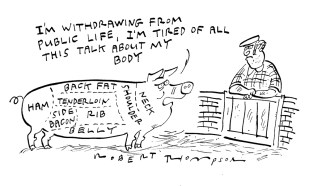
Making my mother proud, I’m a frugal shopper. Advice? Eat chicken: you can still get a 2kg bird for a fiver. Buy on offer and use your freezer. Ignore use-by dates and trust your nose. Hit the discount aisle, though beware: these days, multi-customer scrambles for a cut-price ribeye can be life-threatening. And try not to throw anything out. Brits bin more than six million tons of food every year, nearly three-quarters of which is edible. That’s £700 worth of nosh annually for a family of four.
Call this mental, but I feel responsible for the food I buy. I feel entrusted with something that has died for my sins, and I want to do right by it. Chucking a broccoli head whose florets have liquefied seems a betrayal of all the people who grew it and helped place it in my care. This sense of being a custodial disappointment isn’t about money. I feel I’ve personally let my broccoli down. Neurotic? Sure. But a bit more of that neurosis could save you Brits a packet.






Comments