I live in a hype-proof bunker and knew nothing about La Bola Negra before I attended the screening. The film won the best director prize at Cannes, or perhaps the best directors prize, since Javier Calvo and Javier Ambrossi share the job. You might expect a film acclaimed for its direction to be well paced and confident of where it’s going – direction means steering, after all – but that doesn’t describe the film I saw. Raul Refree’s score, for instance, is not only intrusive but bewildering, churning through moods and instrumental combinations (horn and flute, solo piano tinkles, braying brass) faster than anything that develops on screen.
La Bola Negra starts during the Spanish Civil War, with a village turning out to salute the Italian air force as it flies over. Instead they are machine-gunned, presumably in error, with the young Sebastian (played by a singer-actor who goes by Guitarricadelafuente) one of the few survivors. His escape is helped along – in a way that hints at a certain literary flavor in the proceedings – by an outsized wooden figure of his patron saint. Clambering to temporary safety, he uses the arrows embedded in the effigy as handholds. When he is eventually caught, he joins the army without enthusiasm as an alternative to being shot.

The credits, which show period photographs with bold pink brushstrokes, announce an agenda of cultural reclamation.In a contemporary, or near-contemporary narrative strand (it’s set in 2017), Alberto, a failed playwright seeking traces of a queer sensibility in vintage sound recordings, is told by a lawyer that he has inherited something from the grandfather he had been told was long dead. It’s refreshing that Alberto (Carlos Gonzalez) is no pin-up but an ordinary-looking Joe, in a relationship that is stable if not perhaps vibrant – though choosing an uncharismatic leading player is something of a risk.
The most striking cinematic approaches to the Spanish Civil War in recent decades, The Devil’s Backbone and Pan’s Labyrinth, were both made by Guillermo del Toro, Mexican rather than Spanish, and included fantasy elements. When Almodovar addressed the war’s legacy in Parallel Mothers (2021) he did so in an uncharacteristically half-hearted way, turning it into a subsidiary element and avoiding the single event that might have been expected most to engage him, the murder of Federico Garcia Lorca. Now – no doubt stirred by the limpid reproaches of my TLS review – he has lent his weight to La Bola Negra as an executive producer.
The screenplay posits the existence of a play – La Bola Negra or The Black Ball – written by Lorca but surviving only as a fragment, in which he deals unambiguously with homosexuality. Carlos (Milo Quifes), a young man living in a provincial town, applies for membership of the casino club but is rejected, presumably on the basis of his rumoured orientation.
Carlos’s mother thinks he should move to a city where he can live more freely, but his father wants him to apply again and to face down the rumors by aggressively denying them. A filming of the play provides the film with its third strand, and the fate of the missing manuscript more or less binds everything together despite a massive logical flaw.
The standard admissions procedure for an old-fashioned club is a secret ballot, in which a single black ball disqualifies the candidate. A majority isn’t enough, and you may never know for certain who stood in your way. Here Carlos is present and the members might as well be raising their hands. The whole club set-up, stranded as it is somewhere between allegory and realism, is very thin, whether it’s the work of Lorca or the screenwriters (the directors and Alberto Conejero, reworking Conejero’s play La piedra oscura). It’s almost redeemed by the one scene in the film with real cinematic vitality, one that shows the rejected Carlos dancing, very drunk, filmed from very close up. It manages to convey a despairing intoxication adjacent to ecstasy, a Lorca-worthy state of mind.
War films tend to be grim, love stories can be soupy, and this seems to me to be both grim and soupy
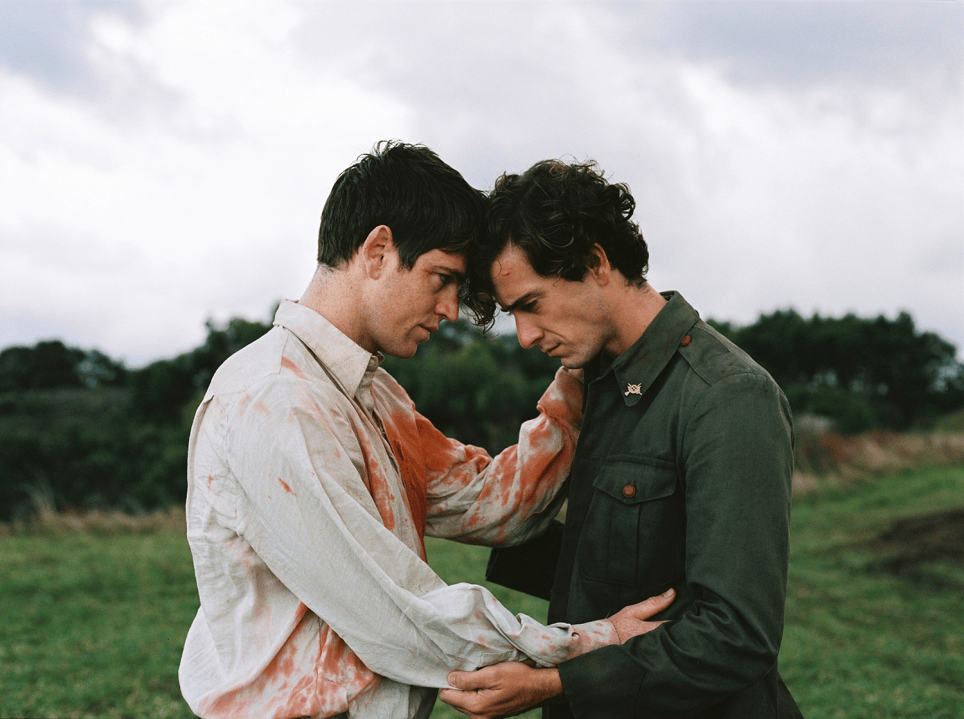
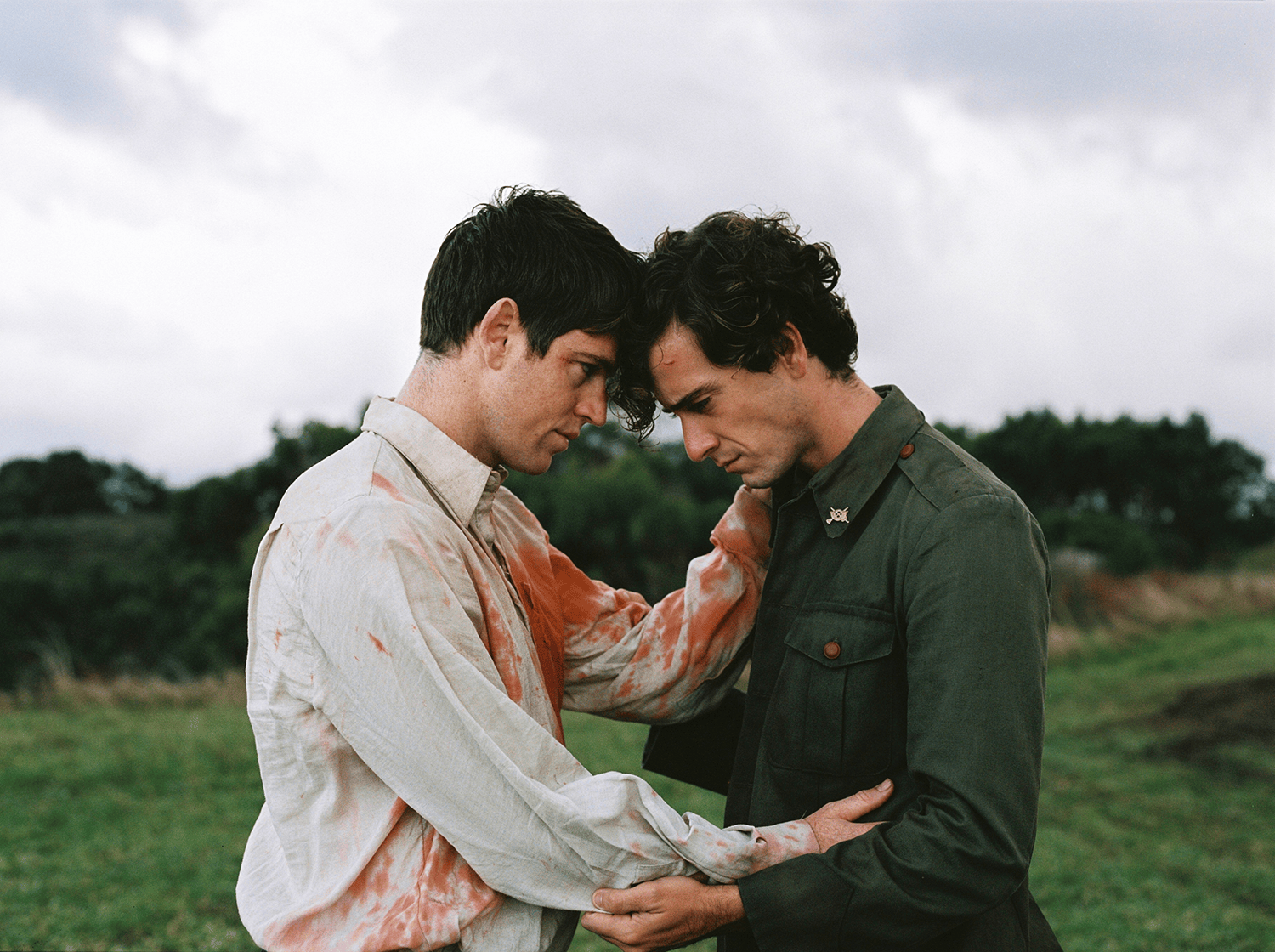
Sebastian is put in charge of a Republican prisoner gravely wounded in the battle of Santander, who has been patched up before interrogation and execution. This is Rafael (Miguel Bernardeau), a hunky ex-footballer and the film’s Lorca connection. (The historical Rafael Rodriguez Rapun was Lorca’s lover, and he didn’t survive the battle.) Some loosely edited sequences, in which the viewpoint is sometimes Sebastian’s, sometimes not, suggest that he is attuned to men’s bodies. The enforced intimacy with Rafael sparks something deeper.
War films tend to be grim, love stories can be soupy, and La Bola Negra seems to me to be both grim and soupy. There’s nowhere near enough tension to justify a running time of 155 minutes, or to distract from a single fatal question: if the missing manuscript, which Lorca wanted to publish, has been in safe hands all along, why has it not surfaced until 2017? Because otherwise there’s no film, that’s why.





Comments