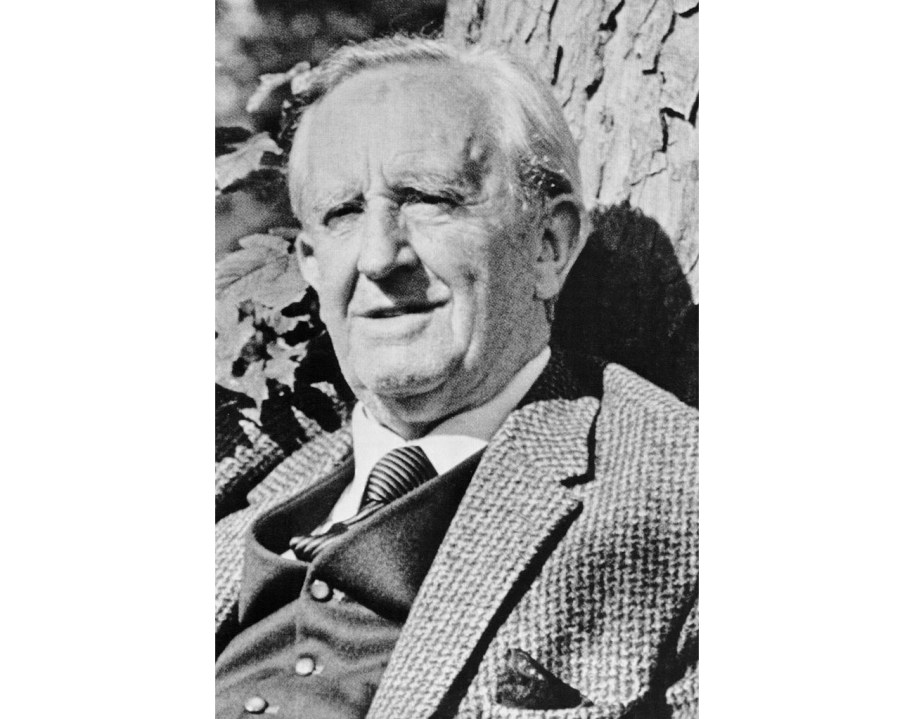
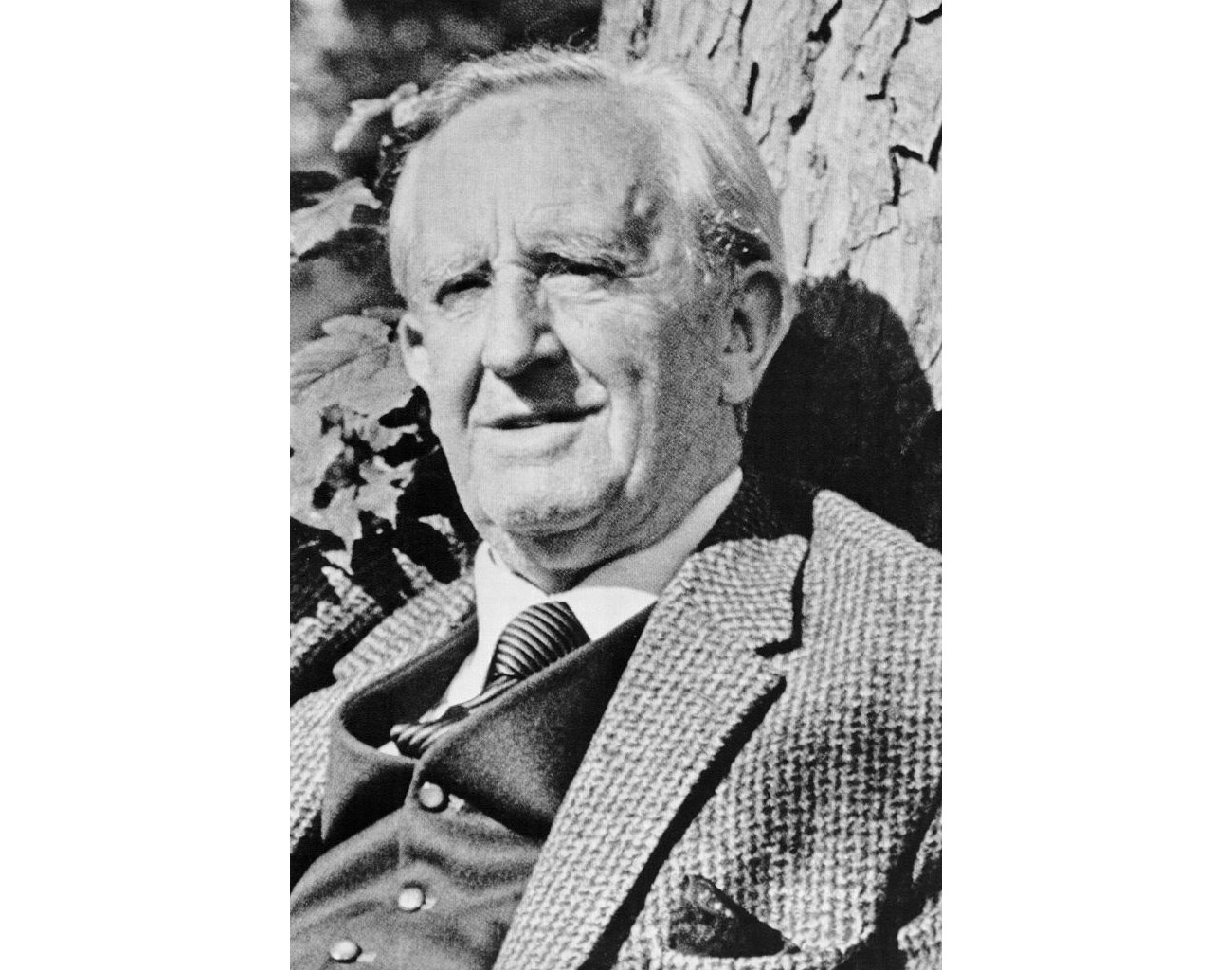
Although 2026 isn’t a significant anniversary year for J.R.R. Tolkien, there has been more attention paid to the author recently than most deceased authors get when it’s their centenary. Firstly, D.J. Taylor published his critically acclaimed quasi-biography of Tolkien, The King Under the Mountain, which is the first serious attempt to examine the writer and his legacy since Humphrey Carpenter’s authorised life in 1977. And now, as if in serendipity, Westminster Abbey has announced that there will be a new memorial to the Lord of the Rings creator in Poets’ Corner, to be designed by artist Stephen Broadbent.
There will be those, including this writer, who feel conflicted about Tolkien’s literary merits
If the thought of a dedicated Roman Catholic being venerated in an Anglican institution raises any eyebrows, then Tolkien fans should be reassured that several of the writers who are similarly honoured, most notably Philip Larkin, practised no religious faith whatsoever, and yet find themselves in this elevated company. Certainly, those who complained that Tolkien’s friend and fellow Inkling C.S. Lewis was honoured first will now have no grounds for complaint. Many will approve of the words of the Dean of Westminster, the Very Reverend Dr David Hoyle, who said of the memorial – which will be unveiled next spring – that ‘We will remember here a master storyteller, a scholar, a man with a Christian imagination and a writer who helped some of us understand that a commitment to life and virtue might be costly and courageous.’
All of this is true, and fair enough. Yet there will be those, including this writer, who feel conflicted about Tolkien’s literary merits. He was undeniably a visionary whose creation of Middle Earth has proved to be one of the most enduring, and influential, developments in fantasy fiction. And, although it matters increasingly little in our intellectually debased age, he was a significant scholar of Old and Middle English whose writing on Beowulf still stand up today, while much similar academic research has long been superseded and forgotten.

Set against this, it is possible to admire Tolkien as a literary figure and storyteller while still being agnostic about the books that he produced. There will be many who read the opening lines of The Hobbit – ‘In a hole in the ground there lived a hobbit. Not a nasty, dirty, wet hole, filled with the ends of worms and an oozy smell, nor yet a dry, bare, sandy hole with nothing in it to sit down on or to eat: it was a hobbit-hole, and that means comfort’ – and be immediately cast into a Proustian reverie of childhood contentment. And there will be others, who have tried and failed to lose themselves in Tolkien’s intricately created and densely written world, who might be more inclined to echo the sceptical words of another Inkling, Hugo Dyson, who said, wearily, ‘Not another fucking elf!’ when the author treated the group of writers to a reading from his latest work at Oxford’s Eagle and Child pub.
Tolkien’s literary output was tiny compared to many of the writers similarly honoured in Westminster Abbey, consisting of his Lord of the Rings trilogy, The Hobbit and a few bits and pieces, leaving aside his academic work. He was a man who was deeply uncomfortable with the fame and fortune that his hugely successful writing gave him, eventually retiring to Bournemouth to flee the hippies who made the pilgrimage to meet him after his books became totemic to the counter-cultural movement in the Sixties. It is unlikely that he would have welcomed the memorial and the resulting attention that it will bring, although he would almost certainly have been impressed by Broadbent’s careful design, which will be two and a half metres high and incorporate a piece of the fallen Pinus nigra from Oxford’s Botanic Garden, which was known, perhaps fancifully, as ‘Tolkien’s tree’.
All the same, given the importance of Tolkien’s writing for millions, and the way in which the shy, pipe-smoking academic has managed to create an enduring fantastical world that these readers wish to revisit repeatedly, it seems churlish not to recognise him in this manner. But once this precedent has been established, it must surely be the turn of Agatha Christie next to be honoured in Poets’ Corner. This year marked the 50th anniversary of her death, and would have offered a perfect opportunity: it is a mystery worthy of Miss Marple as to why she has not received such a distinction.






Comments