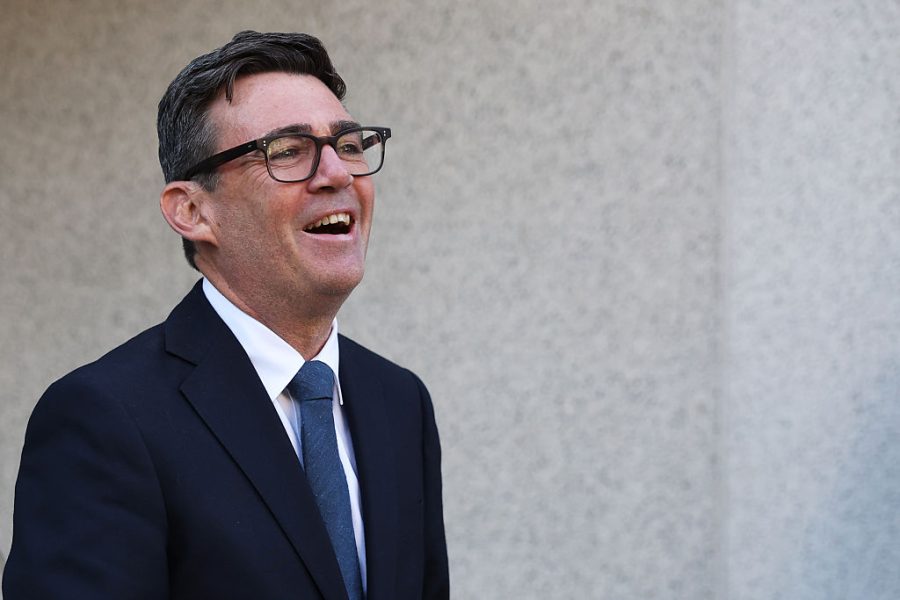
Andy Burnham has some tough words for Donald Trump, warning that he will always put Britain’s interests first, even if it means disagreeing publicly with the US president. In an interview with the BBC, when asked if he would call Trump out if it was the right thing to do, he said: ‘Of course.’ He went on to say:
You have to defend your own national interest before anything else. That’s what you’re required to do if you’re to do this job properly.
It is hard to imagine Trump quaking in his boots at the thought of a plain-speaking Burnham telling him how it is. The PM spoke at length to the US president shortly after he entered No. 10, in a call described by Downing Street officials as ‘warm’. But, when asked twice if he would trust Trump, he refused to say, answering, ‘it’s a changing world, isn’t it, and you just obviously have to call things as they develop.’
Burnham really should have found a way to answer the question and express confidence in Trump. It is a rookie mistake, one that will not have gone unnoticed in Washington.
Handling the relationship with the American president is no easy task
Burnham’s relationship with Trump has not been made any easier by the decision to appoint Ed Miliband as foreign secretary. Miliband called Trump a ‘racist, misogynistic self-confessed groper’ after his first election victory in 2016 and subsequently said the US leader had ‘lowered the bar for idiocy’. No room for misunderstanding there, I would have thought.
Miliband has described his prior statements as ‘irrelevant’, but it is naive in the extreme to believe that Trump will forgive and forget so easily. The same political naivety was on display in comments made by Wes Streeting, the new defence secretary. He said he did not believe the Trump administration was looking for allies who ‘suck up’ but rather those with the confidence to set out disagreements when needed. Really? Try telling that to a host of European leaders who have felt the lash of Trump’s tongue when they have voiced opinions that are not to his liking.
When Streeting was asked whether he trusted the US president, he too chose not to answer the question, saying: ‘I don’t know him, but I do trust the United States.’ Oh, please. Ministers are guilty of playing to the gallery of party activists at home rather than thinking of the realpolitik necessary in international relations.
The problems caused by such an unworldly approach can only mount. It has been widely suggested that Burnham hopes to leave international affairs to the Foreign Office, while he concentrates on the domestic challenges, but this notion will not long survive contact with reality. The United States has resumed its attacks on Iran, and tensions with the UK will come to the fore quickly enough. Burnham – so far at least – has stuck to the policy devised by Sir Keir Starmer of refusing to back US offensive operations, a decision that led to fierce public blowback from Trump. What will Burnham do when Trump starts directing his fire at him? Does he really think he can win a war of words with him, and at what political and financial cost to this country?
Handling the relationship with the American president is no easy task. Keir Starmer tried and failed to manage the unpredictable and mercurial Trump. Burnham faces many of the same challenges but with the added difficulty that some of his past statements about the US leader may come back to haunt him.
Burnham has previously described American politics as ‘polarised and poisonous’, and he has criticised Trump personally. On 6 Jan 2021, as rioters stormed the US Capitol, Burnham posted on X: ‘Any UK politician who gave Trump the time of day should be ashamed right now.’
At stake here, however, is much more than the relationship between the two leaders. It is as much about the so-called ‘special relationship’ between America and Britain. Many words have been expended over the years about this partnership and what it means in terms of trade, politics, freedom and democracy – but ultimately it stands for a set of shared values. The relationship has always had its ups and downs but continues to endure.
It is not, however, a relationship of equals: the brutal truth is that the US holds almost all the cards. This means that it is the fate of British PMs to play second fiddle to the Americans, whether we like it or not. That has meant cosying up to the US in the short term – and Trump is just the latest president to demand his due. Standing up to him, talking tough à la Burnham, is just performative politics.
In an unstable world, with the growing threats from Russia and China, the UK simply has nowhere else to turn. Burham will be taught this brutal lesson soon enough. Instead of posing as a truth-teller to Trump, it would be much more instructive to learn from the Prime Minister what specific ideas he has to reinvigorate and strengthen the partnership with the United States. Once again, his silence on actual policy, the lack of any discernible plan, does him little credit. Playing to the crowd remains his Achilles heel, and his approach to Trump looks and feels like more of the same.





Comments