

Most of us have had disagreements with friends over politics at some point in our lives. Or worse. One of the constant threats to friendships is that such differences could one day spill over into acrimony or result in a full-blown falling-out. In my youth, the election night parties held by my parents seldom ended without raised voices and tearful eruptions – aided, admittedly, by the vast consumption of alcohol – and who could forget the divisions and severed friendships occasioned by the EU referendum in 2016?
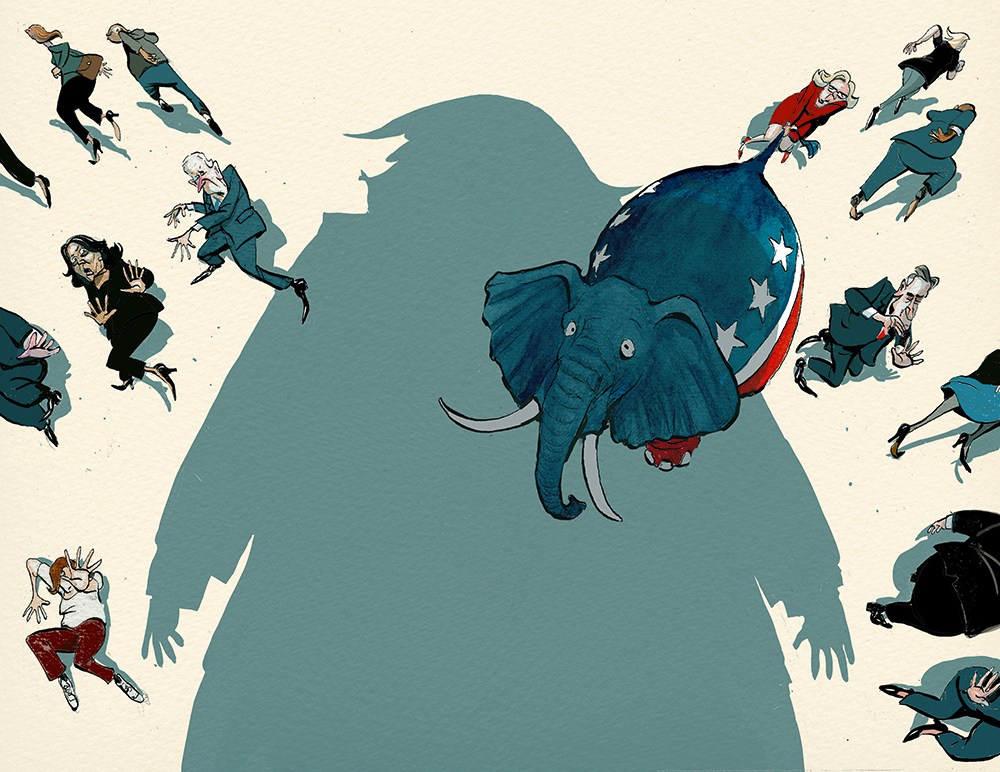
At least most folk above a certain age have been able to establish and sustain friendships with those of contrasting political persuasions. The same can’t be said for Gen Z. According to recent research by the BBC, more than a third of 16 to 24-year-olds now admit that they would struggle to be friends with those who have ‘different views’, compared with around a fifth of over-25-year-olds. We are seeing the emergence of the ‘belief-based’ relationship.
This development is sad but not surprising. While the word ‘snowflake’ enjoyed a brief vogue at the end of the last decade, ours remains an age in which many youngsters feel themselves to be delicate creatures in need of protection from offensive words and people who say nasty things. And in many respects, this is the fault of my generation and of the Boomers who came before. For years, teachers and professors have inculcated a sense of fragility in the young, telling them how dangerous certain words can be, how taboo it is to say things that might demean others, placing ‘trigger warnings’ on books lest these dainty souls be traumatised by what they might find within.
Yet the role played by smartphones and social media – two things that didn’t exist when I was coming of age in the early 1990s – cannot be underestimated. These prisms through which many comprehend the world, and which help to mould their very sense of self, have helped to collapse the division between the public and private spheres.
Thanks to the disembodied and nuance-free channel of social media, in which strangers who think differently are stripped of their humanity, the personal has become political. This is why people are quick to anger online: they take criticism of their views to be an attack on who they are. Along with the obvious fact that social media discordantly mixes news, forthright opinions, pictures of cats and holiday selfies.
For years, teachers and professors have inculcated a sense of fragility in the young
When the 20-year-old non-binary actor Aud Mason-Hyde complained last week how ‘hurtful’ it was to see John Lithgow – their co-star in the film Jimpa – being cast in the forthcoming Harry Potter series, the actor echoed Gen Z’s propensity to take things to heart. Lithgow’s ‘crime’, it appears, is to associate himself with the work of J.K. Rowling who has infamously been accused of transphobia for campaigning on single-sex spaces. Some can’t differentiate between being disagreed with and insulted.
The conflation of the personal and the political is the source of many of our 21st-century culture wars battles. One common accusation made by hyper-liberals is that gender-critical feminists and conservatives hate trans people. This argument is sometimes made out of naivety, sometimes deliberately and cynically. But it has had such force because so many are over-sensitive and shirk from the entire notion of criticism, preferring instead safety and consensus.
The same muddied conflation has also made talking about race more rancorous. Many of those who disparaged Black Lives Matter on account of its divisive political agenda, or the ritual of footballers ‘taking the knee’, were inevitably tarnished as racists or judged as bad people for doing so, when their arguments were often reasonable and dispassionate – as all political discourse should be.
You can hardly blame Gen Z. They aren’t responsible for the technology they grew up with or the society they grew up in – one which has taught and even encouraged them to be thin-skinned. Nor is this tendency solely the preserve of the young. Many carry this attitude well into adulthood. Some users of Facebook – that quintessentially middle-aged platform – continue to fall out with real and virtual friends over sensitive political issues, notably transgender rights, Palestine and Reform UK headed by Nigel Farage: a figure who continues to divide opinions ten years after he became known for his Brexit campaigning. As Lucy Powell’s infamous ‘Never kissed a Tory’ T-shirt shows, a few never grow out of this adolescent mindset and, consequently, remain narrow-minded.
But people should resist the tendency to confuse the personal with the political. One of the benefits of middle age is learning to accept that you can’t change the world and you certainly can’t change everyone’s mind. Let’s hope for the sake of Gen Z that it’s just a stage they’re going through.





Comments