
Few questions in economic history generate more heat than the one that seems, on the surface, most straightforward: Did European rule in Asia and Africa make colonised peoples poorer? The intuitive answer – of course it did – has animated a long tradition of scholarship stretching from Eric Williams’s Capitalism and Slavery (1944) to Walter Rodney’s How Europe Underdeveloped Africa (1974). At its core, this tradition advances a surplus-transfer thesis: that imperial powers systematically extracted value from subordinated territories, concentrating wealth in the metropole while deepening poverty at the periphery. If true, this would neatly invert the predictions of economic convergence theory, which holds that poorer countries should, over time, catch up with richer ones.
The image of an omnipotent imperial machine extracting surplus at will belongs to political polemic, not to the historical record
The problem is that this story cannot be properly tested. The analytical framework required to test it does not exist in any precise form. Terms like ‘extractive,’ ‘exploitation,’ ‘expropriation,’ or ‘drain,’ so influential in Indian debates, carry enormous moral weight but have no agreed scientific meaning.
Most importantly, the idea of extraction does not work for a basic reason. Colonialism was not a one‑way flow of wealth outward. It also produced large amounts of trade, migration, and investment – much of it privately driven and, by normal economic standards, beneficial to participants on both sides. Any serious assessment of colonialism’s costs and gains must therefore include what local people earned from imperial connections. If income from these links paid for schools or hospitals, then those who used them clearly benefited. That benefit needs counting, too.
Consider public debt. Indian nationalists described interest payments on this debt as a drain. Yet the debt financed irrigation canals. To tell the full story, the cost of the debt must be weighed against the gains from the canals. Doing this comprehensively is not just difficult; it is impossible. Studies that ignore local economic benefits or the indigenous people who gained from the colonial system rest on shaky foundations.

In the 1980s, imperial history grappled with how to account for the varied experiences of colonial rule. Studies done by members of the Cambridge School – most prominently scholars such as Chris Bayly and David Washbrook – showed that the British Empire had uneven effects on Indian society: different classes, castes, and regions experienced it in very different ways, sometimes as opportunity and sometimes as threat. This made universal judgments about imperial impact misleading.
If the effects were mixed, can we still estimate a net impact? In the 1980s and 1990s, a distinguished group of historians – including Patrick O’Brien, Leandro Prados de la Escosura, and Lance Davis – attempted to do just that. Through detailed cost–benefit analyses of the British Empire, they effectively mounted an indirect test of imperial theory, asking whether measurable economic gains could help explain why empires endured. Their aim was not to determine whether indigenous peoples lost overall, but whether aggregate gains were identifiable. They reached no firm conclusions.
More recent work by scholars such as Elise Huillery, Federico Tadei, Melissa Dell, and Benjamin Olken has revisited the question using more refined data and methods, but with similarly mixed findings. The honest verdict, then, is not that colonialism was economically neutral (it plainly was not) but that the size, direction, and mechanisms of its economic effects remain deeply contested.
In the face of this challenge, contemporary discussions of imperial impact have bifurcated. Nationalist, Marxist, and some postcolonial writers emphasise colonialism’s uniformly oppressive character, often presenting colonised populations primarily as victims. In contrast, academic scholarship, especially among economic historians, has coalesced around four distinct analytical approaches. One, led largely by economists, examines surplus transfer through specific institutions. A second set studies empires through its role in shaping capitalism, arguing that empires – especially the British – were not just states in the modern sense but multi-local systems aimed at global market integration. A third asks how far colonial states could drive economic change. A fourth emphasises how state capacity was shaped by the geographies of the places where most European empires ruled.
Did Colonial Institutions Extract or Adapt?
In the wake of a prominent North American intellectual movement that cast ‘institutions’ as the foundation of economic progress, scholars developed institution-centred interpretations linking colonial rule to long-term development outcomes. Daron Acemoglu, Simon Johnson, and James Robinson argued in the early 2000s that colonial regimes differed fundamentally in design: some were built to extract resources with minimal investment, while others encouraged settlement and institutional development. This divergence, they claimed, underlies contemporary global income differences.

The proposal was influential for a decade. Subsequent scholarship has largely dismantled it, showing that the supposed clean distinction between ‘extractive’ and ‘settler’ institutions does not hold up empirically, and that colonial institutions everywhere blended metropolitan design with local adaptation in ways that resist simple classification. The lesson is not that institutions are unimportant, but that their origins are more complex, and their effects more contingent, than the earlier literature assumed. In a series of works on Indian law co-authored with the economist Anand V. Swamy, I have explored this idea further.
Institutional economics, however, did have a significant conceptual influence. Economic scholarship that emerged in the 2000s and 2010s often uses the term ‘extraction’ to explain why many African societies became poor, or remained poor, under colonial rule from the nineteenth century onward. This literature does not clearly define what ‘extraction’ means or what it is that get extracted. Instead, it describes extraction indirectly and operationally, as a group of institutions that included land seizure (especially in settler colonies such as Kenya, Zimbabwe, and South Africa), forced labour, low African wages despite rising average incomes, and taxation without matching investment in public goods. Many economists agree that colonial rule generally weakened, rather than strengthened, the economic foundations of most colonised societies.
These claims are controversial for four reasons. First, colonial institutions were not limited to coercive practices. They also included market-supporting measures, such as designing commercial, contract, and company law. Non-state actors, such as merchants and non-state institutions, such as information networks in port cities, enabled new forms of investment. Business historians have studied these aspects more closely and often offer a more positive view of economic change under colonial rule, highlighting growth through trade, transport, finance, and artisanal manufacturing. Much of this scholarship no longer argues that the benefits were limited to a small European elite.
Second, the forms of ‘extraction’ described in this literature were not common across all colonies. Large-scale land seizure for settlers and formal systems of forced labour did not exist in the largest British colony, India. The economists’ arguments apply most clearly to a limited number of settler colonies, and much less clearly – if at all – to almost anywhere outside mines, plantations, and public works.
Indian industrial capitalism grew not in spite of the empire but because of the opportunities it created
Third, the claim that colonial states failed to provide public goods is also not universally true and relies on a narrow understanding of what public goods meant in the nineteenth century. For most states at the time, the main public goods were military defence and the capacity to wage war. In this respect, colonial states often performed better than precolonial states. Empires also functioned as shared state systems, pooling bureaucratic and military resources, a feature that is largely missing from public goods analyses. For most of its life, the British Empire relied on the Indian army to fight on land almost anywhere. In turn, the ability to defend larger territories and draw up borders helped indigenous capital and labour become more mobile. The emergence of a vast Indian diaspora across the Pacific and Caribbean relied heavily on the security and legal protection provided by the British Empire.
Fourth, detailed regional and comparative studies consistently show that outcomes varied widely within the same empire. Differences in land tenure systems, forms of rule (direct versus indirect), labour coercion, missionary activity, and infrastructure investment all produced uneven economic results within colonial territories. At independence in 1947-8, India had a literacy rate of 17 per cent, and neighbouring Sri Lanka 60 per cent. Both had been British colonies; a single story of state intervention will not explain the difference.
In short, although there is an apparent association between colonial rule and long-term underdevelopment, much of the evidence is correlational rather than analytical. The economics literature on colonial legacies nevertheless has important strengths. It has introduced natural-experiment methods into historical research, aiming to identify cases in which colonial interventions affected outcomes independently of other factors. The field has also expanded beyond an early focus on property rights to include land tenure, labour systems, infrastructure, human capital, culture, and gender norms. Colonialism is increasingly treated as diverse rather than uniform, allowing more space for local conditions and agency.
At the same time, this approach has serious limitations. Historical data are often incomplete and fragile, yet are used to support strong causal claims. Key mechanisms are sometimes inferred rather than directly observed. Finally, the assumption that the effects of colonial rule persist unchanged into the present, allowing scholars to use detailed modern data to measure historical impacts, has been strongly criticised.
I have criticised this scholarship for its oversight of the market-creating effects of colonialism. Both the Cambridge School scholars and business history studies would place this effect at the centre.
Capitalism in the Colonies
Left-wing thought familiarised the world with the idea that capitalism was a system that colonisers forced on the people they ruled to extract surplus. This is a misreading. In the recently published Capitalism in the Colonies, the historian Anthony Hopkins argues that capitalism in colonial Lagos was not simply imposed by the British, but was shaped by Africans themselves. This port city emerged as a site where international trade intersected with local society and institutions, allowing African merchants to play a vital role as entrepreneurs and financiers. Hopkins revises a conventional narrative suggesting a decline in African agency after European ascendance in colonial cities, showing a broad front of compatibility and complementary relationships between the colonial and the local instead.
The historian Anthony Hopkins argues that capitalism in colonial Lagos was not simply imposed by the British, but was shaped by Africans themselves
In Indianist history, a similar argument has long been familiar. The Cambridge historian Bayly suggested that the rise of British power in late-eighteenth-century Bengal rested on a broad alignment between European and Indian merchant groups. This alliance was shaped by a shared mistrust of the landlord-cum-warlord elites who dominated Bengal’s political order. Indeed, private business interests in the port cities formed a durable base of support for British rule until the First World War, proving quite vital during the 1857 Rebellion. In 1857, many militant feudal leaders led the rebel Indian soldiers, while middle-class workers in port cities and merchants supported the British with money and supplies. The British survived the challenge because Indian merchants rooted for the Empire. It had opened opportunities for them to extend their activities, operate between the ports and the hinterland, or go beyond the subcontinent into wider imperial and global markets.

British expansion into India was closely tied to the rise of industrial capitalism. By the nineteenth century, Britain needed overseas markets, raw materials, and places to invest its capital. India became central to this global system. The colonial state enforced free trade to allow British goods, capital, and shipping to enter India easily. Railways, ports, and legal systems were built to make trade cheaper and faster. As a result, India became a large market within the global capitalist economy. It exported mainly raw materials and imported manufactured goods. While expatriates often dominated the overseas trade links, the overland trade and finance were firmly in Indian hands. At the same time, the colonial state had limited ambitions and limited capacity. Its main goals were to maintain order, balance its budget, and protect imperial strategy, not to promote broad economic development. These biases reflected an imperial preference for small government and a view of India mainly as a commercial asset.
This mix had unexpected results. In the port cities of Bombay, Calcutta, Karachi, and Madras, empire and capitalism together produced rapid investment growth. Indian merchants and bankers used imperial connections to gain access to global markets, machinery, finance, and skilled labour. Industries such as cotton textiles and jute expanded quickly. They were largely financed by Indian capital and run by Indian managers and engineers. By making machines and technical knowledge easier to import, the empire reduced the cost of learning new skills. In 1950, the fourth-largest cotton mill complex in the world was in India. Indian industrial capitalism grew not in spite of the empire but because of the opportunities it created.
The limits of this economic system were most visible in rural India. Most Indians lived in agricultural areas where production changed very little under colonial rule. Farming remained low in productivity, held back by poor soils, reliance on rainfall, and rigid social hierarchies. Although the colonial state depended on land revenue, it invested little in improving agriculture, especially in rain-fed regions. Greater integration into markets exposed peasants to price swings and risk. In these areas, the empire reinforced existing inequalities rather than reducing them. Capitalism’s basic requirements – free movement of labour and capital – were only weakly present in the countryside, constrained by caste, custom, and limited state action.
These uneven outcomes show the real nature of the relationship between empire and capitalism. Empires did not encourage capitalist development everywhere in the same way. Its effects depended on pre-existing social and economic conditions. Merchants, service elites, and urban entrepreneurs gained the most from access to global markets. Peasants and manual workers, especially in poor or arid regions, gained little. The result was not simply wealth flowing from the colonies to Britain or France, but growing inequality within the colonies as wealth moved from the interior towards the coasts.
Modern states can, in principle, redress such imbalances by redistributing wealth. The idea was there, but poverty in the countryside made the state itself poor and dependent on unpopular taxes. Not just the British, but all empires had to curtail ambitions to the bare minimum, for this reason.
How Powerful Were Colonial States?
Left‑wing thought helped entrench another myth: that empires were omnipotent. If imperial states truly possessed such power, then the mass deaths that occurred during droughts and epidemics were not signs of administrative incapacity but of indifference – suffering happened not because colonial governments could not act, but because they chose not to. A common assumption underlying surplus-transfer accounts is that colonial administrations were powerful, purposeful, and effective engines of economic transformation; that they could, and did, deliberately reshape the economies under their control.
Left‑wing thought helped entrench another myth: that empires were omnipotent
Over the past two decades, an extensive body of research has challenged this picture root and branch. Pioneering work by Leigh Gardner and others on colonial taxation has shown that the states struggled to raise finances, often with primitive tools and regressive taxes. They depended heavily on local intermediaries, drew extensively on indigenous practices and institutions, and were constantly constrained by geography, disease, small revenue, weak tax systems, and political resistance. The image of an omnipotent imperial machine extracting surplus at will belongs to political polemic, not to the historical record.
There is a further problem with how we test for the legacy of states. Many economists compare the economic performance of colonial territories against some counterfactual of what those territories would have looked like in the absence of colonial rule. But this exercise runs into a fundamental identification problem: the states we are comparing did not exist before colonialism. Most contemporary political borders in formerly colonised regions of Asia and Africa are products of colonial rule. India, for example, comprised roughly 600 polities in 1750; by 1950, it comprised just two. A comparison between ‘colonial,’ ‘non-colonial,’ or ‘precolonial’ India and modern India is a comparison between a real entity and a set of fictions. The counterfactual is not merely difficult to construct; it is logically incoherent.
One often-overlooked problem with explanations of global inequality is timing: many of today’s gaps between formerly colonised regions and the West predate European colonialism and are clearly linked to geography.
Did Geography Shape Colonialism?
By 1600, tropical Africa had roughly 47 per cent of Western Europe’s per-capita income; India, again a tropical climatic land, had around 60 per cent. These figures are crude, but they are sufficient to establish a basic point. If global inequality had colonial origins, we would expect to find relative parity before colonisation and divergence after it. What we find is that meaningful inequality already existed and correlates strongly with geography, particularly the distinction between tropical and temperate zones.
The geographical dimension has been consistently underweighted in the economics literature because it is methodologically inconvenient and carries uncomfortable implications. Most territories that became European colonies lay within the semi-arid tropics, a climatic zone characterised by fragile soil fertility, erratic precipitation, and high exposure to droughts, floods, and famines. A large body of agronomic and economic research shows that these conditions depress agricultural productivity and average income irrespective of political institutions.
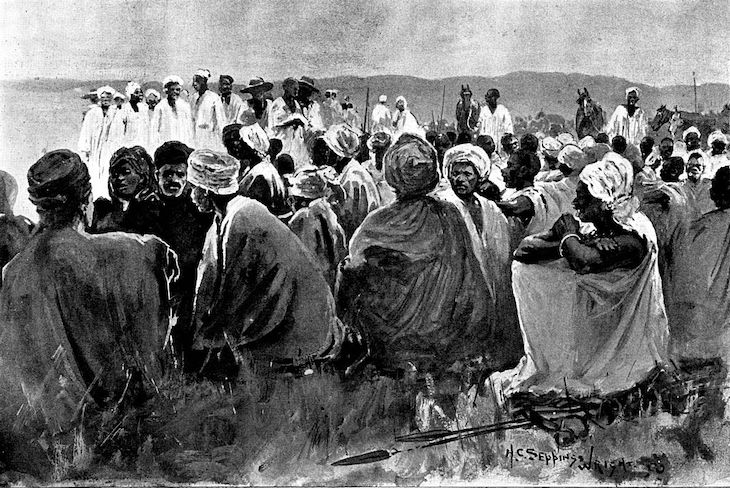
This is not a counsel of environmental determinism: geography is not destiny, and colonial policies often exacerbated environmental constraints rather than ameliorating them. The point, rather, is that geography needs to be addressed properly as an interaction between climate and geology. Given the currently available statistics, this is difficult to assess. Economists who emphasise institutional agency often try to approximate these complex dynamics using a small set of crude proxies based on ‘factor endowments,’ ultimately concluding that geography plays little role. Yet such measures are too blunt to capture the underlying processes and frequently generate misleading or spurious results.
Geography also raises a further complexity that is rarely addressed: the colonial experience was deeply uneven within territories, not just between them. If tropical climatic constraints primarily affected the agrarian countryside while port cities and river deltas developed more dynamic commercial economies, then colonialism’s legacy is partly a story of internal divergence. W. Arthur Lewis flagged this possibility in a collective book project that he led, called Tropical Development (1971). Recent work on the tropical colonies again stresses internal divergence and documents the process in detail, showing how colonial rule broadly failed to break rural stagnation while generating urban dynamism and, while attempting to secure political power, on a foundation of water control.
The implication is troubling for any analysis that uses per-capita national income as the benchmark measure of well-being in a colony. That measure collapses rural stagnation and urban dynamism into a single number, obscuring the very process numbers are meant to illuminate.
What Economic History Can and Cannot Tell Us
What, then, can economic history credibly claim about colonialism and development? It can be claimed that colonial rule was not economically neutral: it reshaped labour markets, property rights, trade networks, and fiscal systems in ways that had lasting consequences. It can be claimed that some of those consequences were harmful, and that the distribution of gains from colonial-era trade and investment was highly unequal.
What it cannot credibly claim, at least not yet, and not with the tools currently deployed, is that a single, quantifiable transfer of surplus from periphery to core explains the income gaps we observe today. The roots of global inequality are deep, tangled, and reach into centuries of divergence that preceded the age of empire. To account for colonialism’s role honestly, economic history must first reckon with everything that came before it.






Comments