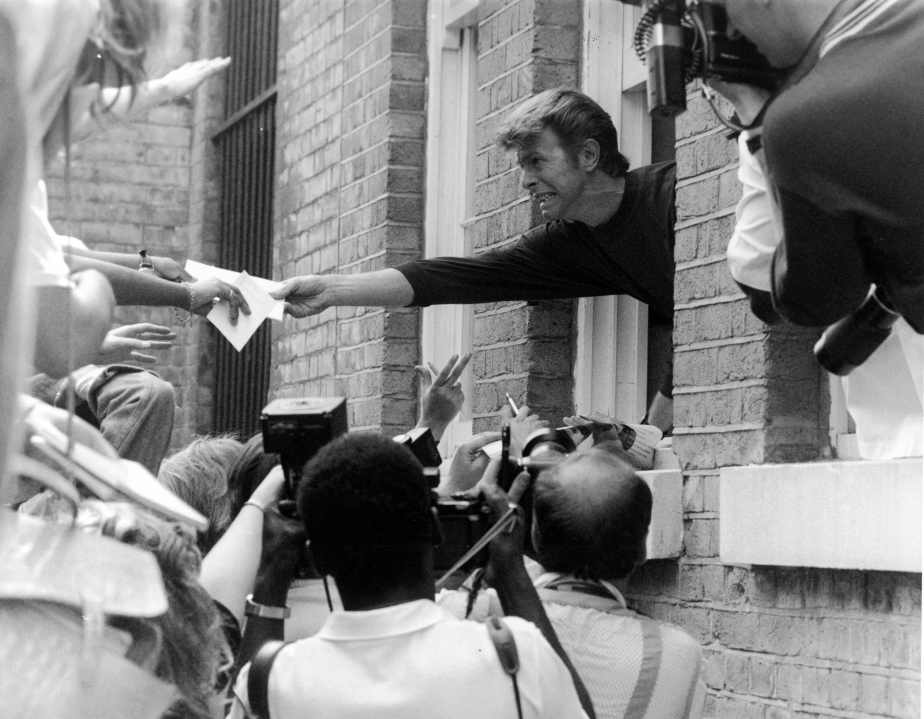
The only time I ever saw David Bowie live was at a ropey festival in an old airfield near Stratford-upon-Avon in the latter half of the 1990s. Frankly, I thought he was pretty awful.

It was the peak of Britpop, electronica and trip hop were in the ascendency and the campsite and smaller stages that weekend were fervent with fast beats, French crops and chemical ingestion. Bowie, to my late-teenage eyes and ears, seemed like an embarrassing dad, attempting to remain ‘with it’ via his recent drum and bass-infused song ‘Little Wonder’. I sloped off before the end to go and watch Goldie instead.
I’ve listened to much more Bowie since then, and although I maintain that at least 50 per cent of his vast output is distinctly average, the best bits are transcendent. Quite how something as avant-garde and glacial as ‘Low’ ever became a chart smash continues to astonish me. Clearly, people took more risks with their musical purchases in 1977 than now.
Then I moved on to the street Bowie was born on. For the first and only time, my position in life was above David’s: I lived at no. 1 Stansfield Road in Brixton. David Jones (you can see why the name change was needed) was born at no. 40 and he lived there for the first six years of his life.
Perhaps to the chagrin of the current owner (who put large white privacy screens up around the living room bay window), walking tour groups began parading up and down the street almost immediately following Bowie’s death ten years ago today.
The leader of the tour group was clearly on to a good thing. Brandishing an acoustic guitar, he would stroll past my front window with a troop of always rather kind yet earnest looking fans in his wake, all of them desperate to take a snap of no. 40. Being an amateur pianist myself, I used to take minor delight in opening my window and bashing out ‘Life on Mars?’ on my upright as the group walked past. I stopped doing that when another pedestrian (not affiliated to the group) asked me if I knew any Celine Dion.
I’d just come back to London from a stint living in the American south, during which time I’d visited both gaudy Graceland and the shotgun shack in Tupelo where Elvis was born. Sure, there were a trickle of King devotees when I went to Mississippi, but it was a damp squib compared with the almost Disney-levels of crowd management required at his Memphis mansion.
When I asked the Washington D.C. tourism board which public housing project Marvin Gaye was born in, nobody could tell me. How different we are in the UK
It quickly became apparent to me that, in the USA, what people revere in their heroes is what they became, not where they were from. Subsequent visits to Dollywood (yes, I know) and, more recently, Prince’s wonderfully bizarre Paisley Park bunker only confirmed for me that the American approach towards the fame trajectory is firmly focused on the sweet trolley, rather than the starter. When I asked the Washington D.C. tourism board which public housing project Marvin Gaye was born in, nobody could tell me.
How different we are in the UK. There was much gnashing of teeth among the self-appointed cultural intelligentsia when the National Trust bought Paul McCartney and John Lennon’s childhood homes in Liverpool. But the decision was the right one; seeing the outside of Macca’s minuscule terraced house in Allerton gives far more of an insight into his extraordinary journey than peeking through the railings of his Regency townhouse in St John’s Wood. If Sir Paul was from Kentucky, then his council house would still be lived in by a blue-collar family, while we fans would, presumably, be flocking to descend the Helter Skelter or take the Ob-La-Di, Ob-La (Bumper) Car ride at MaccaWorld.
As former public schoolboys, James Blunt and Mumford and Sons would no doubt attest that you get an easier life as a pop star in this country if you’re working class. In short, we love, indeed almost require, our musicians to have humble backgrounds and, equally importantly, we demand they keep the rainy bus stops and under-heated back bedrooms of their youth forefront in their minds, even while they’re snorting cocaine off a pole dancer’s belly button on their private jet.
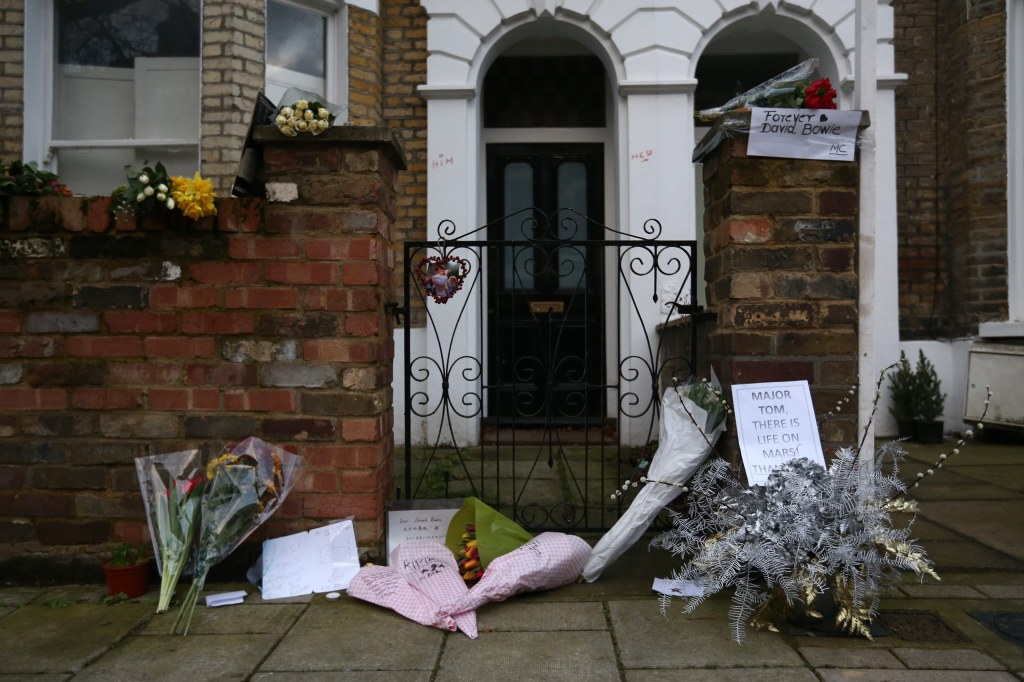
Bowie certainly never made as much of his working-class origins as the likes of the Gallagher brothers continue to (tiresomely) do. But while Bruce Springsteen’s audience adore the selfishness inherent in lines such as ‘Got a wife and kids in Baltimore, Jack / I went out for a ride and I never went back’, here in Blighty, we’d probably prefer a star who goes back regularly to drop off some cash and see how grandad’s lumbago is bearing up.
Bowie’s eccentricities were adored by so many because we all thought a lad from Brixton deserved a chance to jump through pop’s multi-coloured window. If he’d been educated at Dulwich College, we would have been saved from having to watch Labyrinth. But also, we may never have caught a single glimpse of Ziggy.




Comments