
Sophia Money-Coutts has narrated this article for you to listen to.
Readers with a nervous disposition should turn the page because I’m going to be sprinkling the C-word across the next few paragraphs. It’s still August and clearly much too early to be discussing Christmas, but a campaign has been launched that requires attention now.
First, a quick quiz. How much is a first-class stamp? Bzzzzz, time’s up. It’s now £1.80, which means a book of six is more than a tenner. Madness. I’ve taken to queuing in my local post office and buying stamps only when I require them, one at a time. If you knew the queue there as intimately as I do, you would appreciate this is a major sacrifice. Although I imagine your post office queue is probably much the same – young women with multiple Asos and Shein returns; someone sending an immensely complicated parcel to Melbourne; a nervous traveller trying to arrange their holiday money and so on. But stamps have become too expensive to buy in bulk, so I wearily stand behind them.
I send fewer letters and cards as a result. As for the idea of sending dozens of Christmas cards? Forget it. I’m not a hedge-funder.
It would be cheaper to hop on a flight to Albania and post 100 Christmas cards there than use Royal Mail
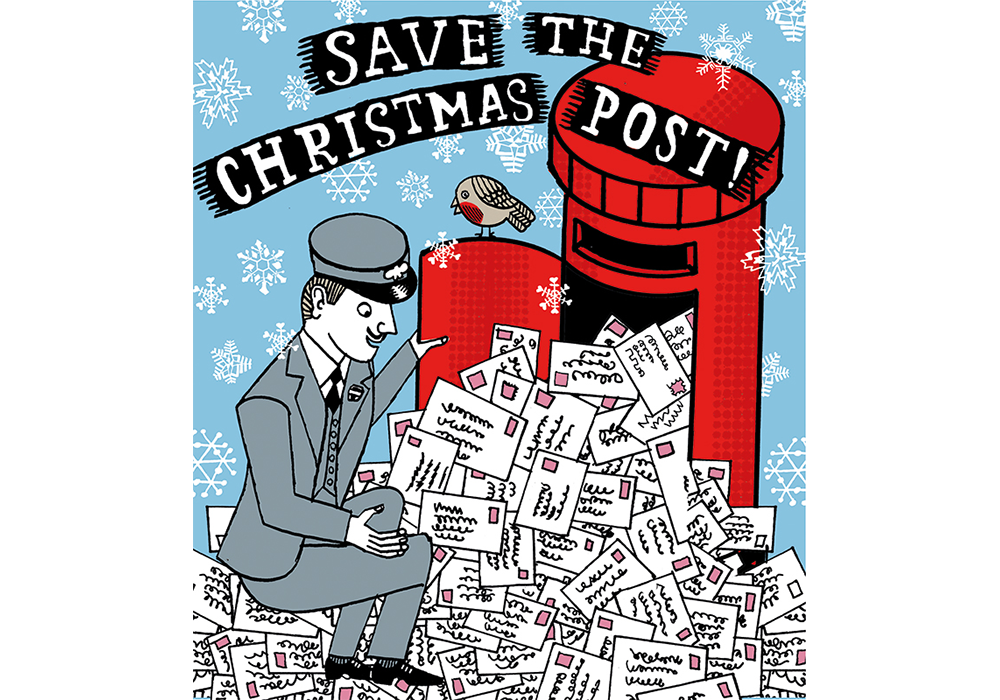
Enter four sisters who have launched a petition urging Royal Mail to drop the price of stamps for a month before Christmas to encourage us all back to the habit. A festive 50p stamp, says Charlotte Graham, ringleader of these sisters, would support the charities that sell Christmas cards, as well as helping to combat the isolation and loneliness often felt by many at that time of the year, especially by those who are less tech-savvy and can’t simply send or receive a chirpy Christmas WhatsApp or email. Such cards can also become precious keepsakes, says Charlotte, ‘preserving messages of affection, friendship and family history’.
Charlotte feels particularly fond of Christmas post, because she and her three sisters – Johanna, Isobel and Veronica – are the descendants of the chap who invented the Christmas card. Sir Henry Cole was a busy Victorian, a civil servant who would go on to be credited with persuading Prince Albert to launch the Great Exhibition and the founding of the Victoria & Albert Museum. But in 1843, he was too fizzing with ideas to sit down and write festive letters to his acquaintances, such was the Victorian custom.
Instead, Cole came up with the wheeze of sending an illustrated card with a jolly picture and a short message. He commissioned an artist pal to knock a card up, featuring three generations of the Cole family, several lifting glasses of claret, with ‘A Merry Christmas and a Happy New Year to you’ written underneath. It’s a more cheerful sight than some of the offerings you’ll find in Scribbler. ‘Have a cracking Christmas,’ said one card I received last year, featuring a mooning Father Christmas.

Cole’s Christmas card wasn’t an immediate hit. He had 1,000 printed, sent dozens to family and friends and tried to sell the rest. It took a decade or so, with advances in printing techniques and the development of the Victorians’ Christmas fetish, for the card to become more mainstream. But his was the very first. And now? Only the most dedicated bother, given that a stamp may cost more than the card itself.
Two years ago, it was revealed that it would be cheaper to hop on a flight to Albania and post 100 Christmas cards there than use Royal Mail. Even if you do shell out for expensive British stamps, there’s no guarantee your cards will arrive in time. I received several Christmas cards in January this year, which was lovely and thoughtful of the sender, but the gloss has slightly come off Christmas by the New Year, hasn’t it?
There is precedent for cheaper Christmas stamps. The Australian, Finnish and Dutch postal services flog ‘seasonal’ stamps for a discount in November and December. In Australia, Christmas stamps are under half the price of normal ones and last year’s featured both religious scenes (Mary and babe), and less religious scenes (a penguin in a Father Christmas hat) to keep everyone happy.
The four sisters’ ‘Save Christmas Cards’ petition has amassed nearly 30,000 signatures since its launch in May, but Charlotte believes they need closer to 100,000 names for Royal Mail to take them seriously. So the pressure’s on, even though we’re still enjoying the last days of summer. She and her sister Veronica have had one Zoom call with a Royal Mail communications manager, but it ‘was really just an opportunity for [them] to ask us what we were doing, and we have not heard anything since’.
Sadly, only a dozen or so of Sir Henry’s original cards survive and none of the sisters has inherited one. In 2001, one was sold at auction for £22,000, going for nearly double its estimate to an anonymous bidder, which is quite the price hike given they were sold for a shilling each in 1843. Royal Mail would doubtless approve of such inflation.
To sign the Christmas card petition, go to Change.org/savethechristmascard





Comments