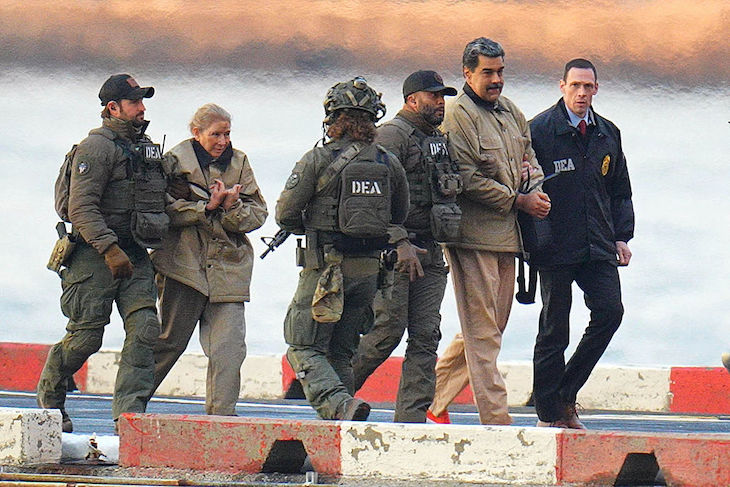
Why exactly Donald Trump ordered that another head-of-state should be kidnapped is up for debate. The official reason for the seizure of Venezuelan president Nicolás Madurowas is drug trafficking: Maduro is the alleged mastermind of the Cartel of the Suns, a drug-dealing branch of the Venezuelan government, and a narco-terrorist. But the US Justice Department has now tacitly conceded that the Cartel of the Suns doesn’t actually exist. Moreover, Trump’s claim of fighting drugs looks peculiar after his pardoning of two narco heavyweights: Ross Ulbricht, the founder of the Silk Road online drugs bazaar; and Juan Orlando Hernández, the ex-president of Honduras who once bragged about up shoving cocaine right up the gringos’ noses.
The most obvious target is Colombia
The war on drugs was probably a smokescreen for something else. A good old fashioned imperialist resource grab, perhaps, with Trump openly boasting about getting the Venezuelans’ oil. Other reports suggest Trump was personally irked by the sight of Maduro dancing to a techno remix of his own speech calling for ‘no crazy war.’
In any case, the quick and bloodless (at least from Uncle Sam’s side) strike reasserted America’s military might. It wasn’t long before Trump, bathing in the glow of his success, turned his gaze elsewhere. ‘Colombia is very sick too. Run by a sick man, who likes making cocaine and selling it to the United States. And he’s not going to be doing it very long, let me tell you,’ Trump told reporters onboard Air Force One.
‘Mexico has to get their act together, because [drugs are] pouring through Mexico and we’re gonna have to do something,’ he continued.
‘Every time I talk to [the Mexican president] I offer to send troops… She’s concerned. She’s a little afraid. It’s not nice to say, but the cartels are running Mexico.’
In his aerial press conference, Trump also threatened Greenland, Cuba and Iran.
Though the Caracas operation may have had ulterior motives, the United States still faces a fentanyl crisis, which Trump has classed as a chemical weapon. Beyond the Cartel of the Suns and another Venezuelan gang, Tren de Aragua, which together formed the pretext for Maduro’s capture and arrest, the State Department has blacklisted several other ‘narco-terrorist’ organisations, including Mexico’s Gulf, Sinaloa, Jalisco, Zetas and La Familia cartels; as well as the Gulf Clan, a Colombian paramilitary outfit.
Where’s next for Trump’s counternarcotics crusade?
The most obvious target is Colombia, where Trump has a long-running feud with its president Gustavo Petro. Petro has been outspokenly critical of the treatment of immigrants in the United States and US support for Israel in the war in Gaza. Trump has fired back, slapping Petro with personal sanctions, revoking his visa, and accusing Petro of being a ‘drug leader.’
Trump’s Department of Defense, now fittingly renamed the Department of War, has spent months blowing up alleged drug boats in the Caribbean, killing at least 115 people: so far, it’s not been publicly proven that any of them were carrying anything stronger than weed, which is legal in dozens of US states. Petro has condemned the strikes as murder on the high seas.
‘[Petro] has cocaine mills and cocaine factories; he’s not going to be doing it very long,’ said Trump.
‘So there will be an operation by the US in Colombia?’ a reporter asked.
‘Sounds good to me,’ Trump replied.
While there’s no evidence the bespectacled Petro is the new Pablo Escobar, the president’s efforts to end the war on drugs in his country have not worked: by 2024, Bloomberg reported that cocaine was now only behind oil as Colombia’s most-valued export. Meanwhile, Petro’s ambitious peace process aiming to bring all the country’s guerillas, gangs and paramilitaries to the negotiating table has stalled, as the various armed factions fail to take the talks seriously.
‘The belief by Trump, Secretary of State, and Republicans in Congress that Petro is a narco-trafficker, drug addict, anti-democratic and aligned with socialist dictators, make it likely that they could attempt to make a statement against Petro using military force,’ said Gimena Sánchez-Garzoli of the Washington Office on Latin America (WOLA).
But unlike Maduro, Petro has been fairly and democratically elected. Even some of his right-wing opponents, such as presidential candidate Vicky Dávila, say any breach of Colombian sovereignty is unacceptable.
The situation is complicated, Sánchez-Garzoli warned, by the intersection with the Venezuela crisis:
‘The Colombo-Venezuelan border is 2,219 kilometres long and extremely porous. Illegal armed and criminal groups cross back and forth with simplicity…In more recent years, the National Liberation Army (ELN) guerrillas have penetrated more deeply into Venezuela, making them, in essence, binational. Given that they are also responsible for narco-trafficking, if the US takes action against them, Colombia will be dragged into the scenario.’
His mangled corpse was dumped in a plastic bag outside Guadalajara
As for Mexico, the foremost source for narcotics in the United States, president Claudia Sheinbaum reiterated that ‘we categorically reject intervention in the internal affairs of other countries.’
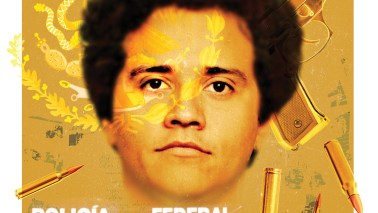
Sheinbaum has more than once demonstrated her willingness to co-operate with Trump. Last year, her government fast-tracked the mass extradition of 29 of the most-wanted narcos to the United States, including Rafael Caro Quintero, long-sought by the DEA for his involvement in the death of agent Enrique ‘Kiki’ Camarena in 1985. After leading the army to a massive weed plantation, Kiki was snatched off the street and tortured to death over three days while a doctor pumped him full of drugs to keep him awake. His mangled corpse was dumped in a plastic bag outside Guadalajara.
But for Sheinbaum, a unilateral intervention is a red line. Nevertheless many citizens, frustrated by lawlessness, may welcome US troops. In November, riots erupted following the death of Carlos Manzo, the cowboy hat-wearing mayor of Uruapan in the crime-ridden state of Michoacán, who was gunned down by a hooded assassin while celebrating the Day of the Dead. Manzo was famous for his uncompromising stance against criminals and often called out the government’s inaction against the cartels. Is Donald Trump the man to finish the job?

Comments