
Javokhir Sindarov has had an extraordinary run in 2026. Back in April, the 20-year-old Uzbek grandmaster won the Candidates tournament in Cyprus, earning the right to challenge Gukesh Dommaraju for the world championship. Their 14-game match begins in Geneva on 24 November, and Sindarov is widely considered the favourite.
His excellent performance in Samarkand in September helped Uzbekistan to win the gold medals, and he will begin the match as world no. 4, well ahead of Gukesh, who has fallen out of the world’s top 20.
Sindarov’s latest triumph was at Clutch Chess: Champions Showdown, a quadrangular rapid tournament held at the St Louis Chess Club at the end of October. Over three days of chess, he faced Praggnanandhaa Rameshbabu, Fabiano Caruana and Hikaru Nakamura six times each. First place earned him $168,000 from a $425,000 prize fund, though that is modest compared with the $2.5 million at stake in Geneva.
Clutch Chess is an unusual format, in which later games are weighted more, leaving the tournament up for grabs until the very end. The game below, played on the final day, is a perfect example of the enviable exuberance in Sindarov’s play.
The King’s Indian Defence (a queen’s pawn opening where Black aims for a kingside fianchetto and a fixed central structure) is famously aggressive, once a favourite of Garry Kasparov in his prime. Modern chess engines tend to favour the white side, so its popularity at top level has waned, but it remains a formidable weapon in the right hands. Sindarov joked in St Louis: ‘I love to play the King’s Indian. Of course, from the opening, I will always get a very bad position, but then I’m very good in tricks, I will say!’
Hikaru Nakamura–Javokhir Sindarov
Clutch Chess: Champions Showdown 2026, St Louis, October 2026
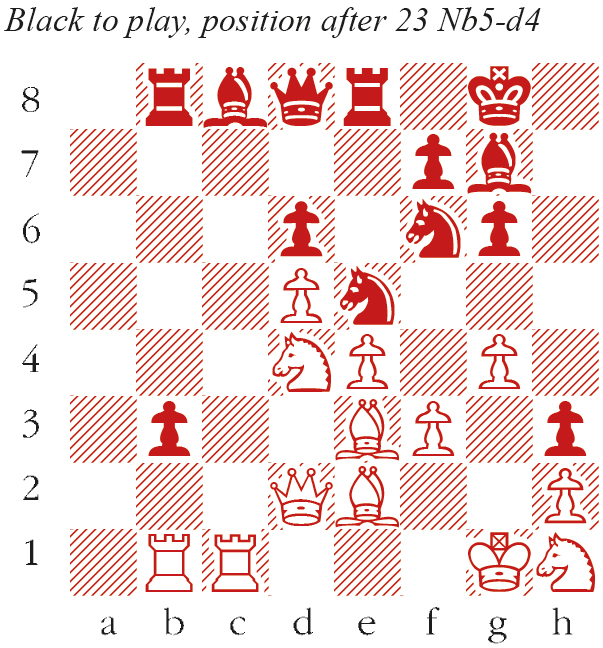
1 d4 Nf6 2 c4 g6 3 Nc3 Bg7 4 e4 d6 5 f3 O-O 6 Bg5 c5 7 d5 a6 8 a4 e6 9 Qd2 exd5 10 cxd5 Re8 11 Nge2 Nbd7 12 Ng3 Qc7 13 Be2 c4 14 O-O Rb8 15 Be3 h5 16 Rfc1 h4 17 Nh1 h3 18 g4 Up until this point the game was following a blitz game Nakamura-Kasparov played in 2016. Nakamura played 18 g3 instead, and won a wild game. b5 19 axb5 axb5 20 b4 Nakamura must have hoped that the en passant capture which follows would weaken Black’s pawns, but it allows the pieces to spring to life. Better was 20 Ra7 Qd8 21 Nf2, and then 21…b4 22 Na4 favours White. cxb3 21 Nxb5 Qd8 22 Rab1 22 Nxd6? loses to 22…b2 Ne5 23 Nd4 23 Rxb3 was better played immediately, but Sindarov might well have sacrificed a piece on g4 anyway.
23…Bxg4!! The kind of sacrifice that a King’s Indian devotee just knows will be strong. On top of the two pawns, dismantling the centre allows Black’s forces to spring to life. 24 fxg4 Declining the bishop was wiser. 24 Nc6! Nxc6 25 dxc6 Qc7 26 Ng3, and White keeps fighting. Nxe4 25 Qd1 b2 26 Rc2 Qh4 27 Bf2 27 Nf2 Bh6!! is a powerful trick in Black’s favour. Nxf2 28 Nxf2 Rb4! The attack comes from all sides. The immediate threat is …Rb4xd4 followed by Ne5-f3+ 29 Nf3 Rxg4+ 30 Kf1 Nxf3 31 Nxg4 Rxe2! 32 Rxe2 Qxg4 White must soon shed material to save his king. 33 Rf2 Qg1+ 34 Ke2 Nd4+ 35 Ke3 Bh6+ 36 Kxd4 Qxf2+ 37 Kc4 Qxh2 38 Kb5 Bc1 White resigns




Comments