
There are those who will claim that Sir Keir Starmer has handled the UK’s response to America’s war with Iran skilfully and diplomatically. That said, one in ten of the population believes in astrology, so fringe positions will always attract some support. I would not even be sure the Prime Minister himself belongs to this particular clique.
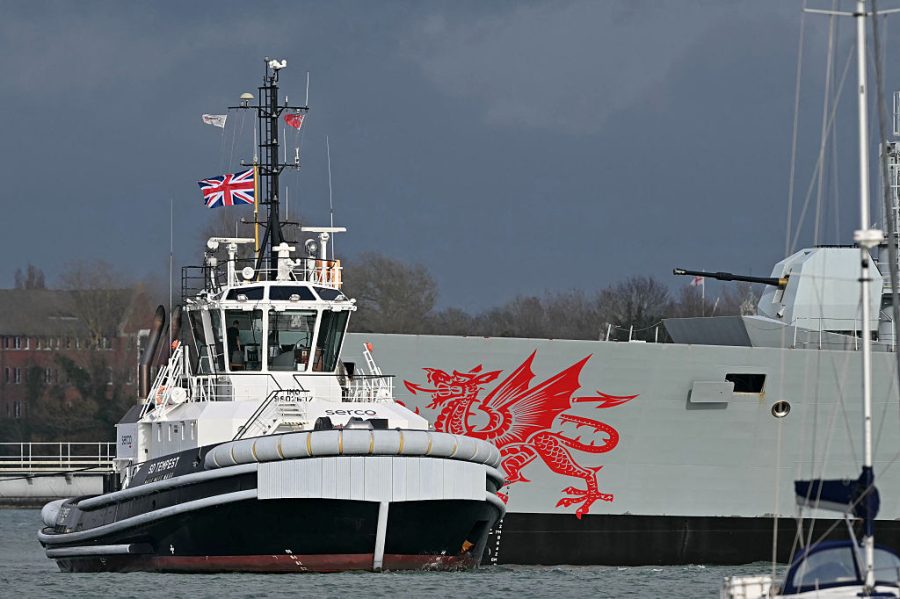
Starmer does, though, seem conscious that his stance was too passive and inscrutable when Operation Epic Fury began on 28 February and has been playing catch-up since then. The latest proposal for Britain’s contribution to containing and managing the conflict has been discreetly briefed to journalists. To look active, it is proposed that the Royal Navy charter civilian vessels and deploy them to the Gulf region, where they can act as motherships for autonomous sub-sea mine-hunting craft – submarine drones, in other words.
There is a centuries-old British tradition of complementing the Royal Navy’s capabilities with ships taken up from trade (STUFT). Older readers will remember the SS Atlantic Conveyor, a container ship pressed into service transporting helicopters and aircraft during the Falklands war and sunk by Argentinian anti-ship missiles. One anonymous defence source attempted to make this idea sound like an innovative and forward-looking strategy:
Absent is any sense of the likely conditions under which the mission would take place
You’ve got an opportunity, potentially with some of this capability, to charter vessels and use a much more commercial model around which you can build with White Ensign or international warships offering force protection around it.
In addition, the Royal Navy is also reportedly examining the conversion of the Royal Fleet Auxiliary’s three Bay-class dock landing ships to serve as mine countermeasures vessels. RFA Lyme Bay has recently been reactivated in Gibraltar, where she has been non-operational since last year, and despatched to Cyprus. RFA Mounts Bay is under maintenance in Falmouth; RFA Cardigan Bay is due to begin a major refit at the same dockyard.

There are a number of points worth noting here. The first is the government’s eagerness to appear engaged on some level in the current crisis; it is also planning to convene a ‘Strait of Hormuz security conference’ in London or Portsmouth in the next few days. This has shades of the frantic display of activity Starmer demonstrated to create the ‘coalition of the willing’ for Ukraine. It has so far been an entirely paper exercise with no mandate, mission or opportunity but has allowed countless press conferences and media statements which burnish the Prime Minister’s self-created image as a world statesman.
Second, this scheme to take up civilian ships and perhaps dust off one or more of the RFA’s landing ships is not a carefully planned response. It is a panic measure in an unforeseen situation, the severity of which is greater because of decisions the government has taken.
Until the end of last year, the UK naval support facility at Bahrain was home to four Hunt-class minesweepers and a frigate on rotation. When HMS Lancaster, a Type 23 frigate, was taken out of service last December, she was not replaced, while the minesweepers were gradually withdrawn, with HMS Middleton the last to leave in January this year. This left no crewed warships in the region for the first time in decades.
But the Royal Navy spun this as a choice, an act of policy. Vice-Admiral Steve Moorhouse, Fleet Commander, claimed that Britain’s allies in the Gulf wanted a new focus on training:
When you ask what they actually want from us, they now want… boarding teams to help them to build up their own capabilities, autonomous systems, and some leadership in the maritime environment.
That may be so, but the closure of the Strait of Hormuz has demonstrated that the Royal Navy presence in the region performed a wider role than simply assisting allies. Within months of it being withdrawn, we have found ourselves in need of the very capability we thought was unnecessary.
There is also a degree of hubris here. The government has been happy to talk about hosting a conference and providing assets to assist in opening the strait, yet it has no idea what assets it might offer. There has been some discussion of contributing Type 45 destroyers for force protection. Yet we know from the embarrassing scramble at the beginning of March that most of the six Type 45s are currently unavailable, and it has taken three weeks to get HMS Dragon to Cyprus. There is simply no spare capacity.
Absent is any sense of the likely conditions under which the mission would take place. How heavily mined is the strait now? Do we anticipate that de-mining could be carried out without Iranian interference, or are we proposing potentially to do this all while under fire? What assets will other countries provide? (Dr Emma Salisbury of the Foreign Policy Research Institute recently produced a meticulous account of how the US navy has run down its own mine countermeasures capabilities.)
Like the coalition of the willing, the plan to charter non-military ships and operate autonomous mine-clearing vessels has a wispy, other-worldy feel to it, the ink barely dry on the back of the envelope. It is not a plan so much as a notion, so insubstantial that my Scottish grandmother would have greeted it with that inimitable expression of Glaswegian scepticism: ‘Did ye, aye?’ Ministers need to do better than this.






Comments