
When ABC News asked New York Representative Alexandria Ocasio-Cortez about a fellow Democrat who years ago had proposed abolishing prisons, abolishing the police and abolishing Thanksgiving, she replied with a dismissive phrase that she attributed to a city councilman she knew: “Woke 1 was crazy,” AOC said. Half the country was indignant: not the half who’d perpetrated woke, with their safe spaces and their Covid masks and their land acknowledgments, but the half who’d been made to grovel under it. They weren’t going to let AOC off the hook. They wanted to see her grovel in return.
But that is never the way gifted politicians offload a discredited stance, and Ocasio-Cortez is a gifted politician. In 2018, when she was working as a bartender and no one had ever heard of the Democratic Socialists of America, she used their help to topple one of the most powerful Democrats in Washington. Now in 2026, when the entire progressive establishment is quaking in fear at the Democratic Socialists of America, she is tacking away from them and winning the affections of centrists.
That ought to be enough for the enemies of woke. Take the win, man!
There is, however, a contrary argument. It is that, far from repudiating woke, AOC is keeping mum, consolidating Woke 1’s triumphs and laying the groundwork for Woke 2. In some ways, woke is still with us. Gender reassignment and federal DEI departments are gone as long as Republicans hold the White House. But a lot of woke has endured, if only through inertia and vested interest. The fad for unisex bathrooms has hardly receded, mostly because it allows restaurants and gas stations to halve their expenses by having one bathroom, not two – or to reserve a bathroom for employees’ exclusive use, in lieu of paying them a living wage.
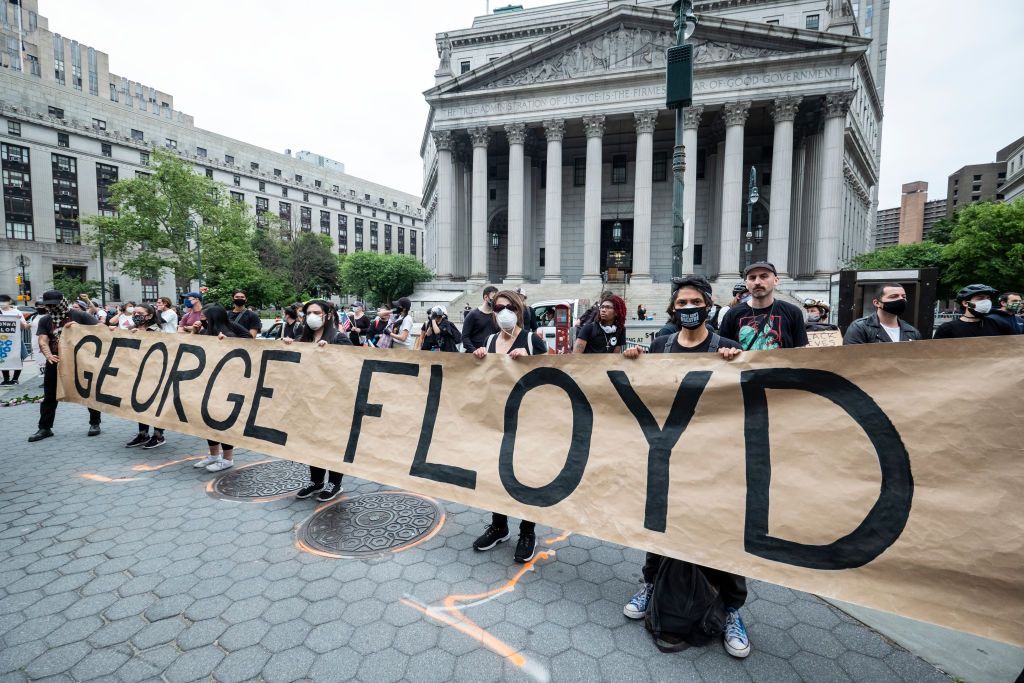
If there is an archetypal woke survival, it is the bizarre hierarchy of race-adjectives that persists in most quality newspapers and magazines, even a few that bill themselves as conservative: nearly all capitalize the adjective “Black” but not “white.” As with most woke annoyances, there is no good reason for this. The progressive Seattle Times launched the practice in 2019. Other newspapers took it up in the course of a few days in mid-June 2020, in the wake of nationwide rioting over the death of black drifter George Floyd at the hands of police in Minneapolis.
On June 11, 2020, New York’s venerable black weekly the Amsterdam News urged capitalizing the “B” in black, and enjoined the Associated Press, which publishes an influential journalistic stylebook, to follow suit. The paper’s justifications were neither historical nor philosophical, just boosterish. “This step is a good first step to affirm the significance of being Black in America,” said Sara Glover, former president of the National Association of Black Journalists. “This matters. It’s to bring humanity to a group of people who have experienced forms of oppression and discrimination since they first came to the United States 401 years ago as enslaved people.”
Five days later, the Columbia Journalism Review followed suit, adding a couple more convoluted rationales: “For many people, Black reflects a shared sense of identity and community. White carries a different set of meanings; capitalizing the word in this context risks following the lead of white supremacists.” In other words, capitalizing “white” but not “black” is the sort of spiteful act that only the Ku Klux Klan would carry out. So CJR decided to reverse the poles and exact a sort of supremacist retribution of its own. “If capping the B strikes you as in part a project of reclamation,” CJR concluded, “well, it is.”
Three days after that, AP gave in to the Amsterdam News’s demand, updating its style book to capitalize black. It gave in to the rationale, too: “Black” is a culture, but “white”? It’s just a color! It followed CJR’s lead in invoking white supremacism: “We agree that white people’s skin color plays into systemic inequalities and injustices,” AP affirmed, “and we want our journalism to robustly explore those problems.”
And that was that. The long march through all the country’s newspapers and networks took only a few more weeks. But it never acquired a logic. The convention of capitalizing “black” is rooted only in politics.
Often newspapers would explain their policy change to annoyed readers by referencing “consultations” that had taken place among newsroom staff. A likely story! Do you remember that summer? Whole cities were burning. Statues were falling. The editor of Bon Appetit lost his job for attending a Hallowe’en party in Puerto Rican garb. Those who liked such changes were voluble and truculent. Those who didn’t were silent, as if their jobs depended on it. Which they did. These newsroom “consultations” could only have been of a Maoist kind.
A lot of woke has endured, if only through inertia and vested interest
So we’re faced with a novelty introduced for reasons people hardly remember, then maintained because… well, just because. For nearly a century, military officers in all western countries were still posing for photographs with the same hand-in-shirtfront stance that Napoleon had affected before the invention of the camera. There was nothing evil about it. But it was groundless, and in retrospect a bit stupid all around.
Of course the new orthography has sowed resentment – at least among the literate. The white reader of media nowadays is confronted at every turn with an affirmation of his own “problematic” status – put forward in the name of fighting racial stereotypes.
This was a goad to vote for any candidate who curses the media and all its works. Hence the fate of woke. Voters in our polarized century are a bit like syndicalists who seized factories at the turn of the 20th: without their bosses, they have trouble figuring out how to make all the factory’s cogs and spindles and spools go – but they sure know how to make them stop.





Comments