Over the past week, government ministers and police chiefs have been ‘rolling the pitch’ for what the Home Office is billing as the biggest overhaul of policing since the service was founded two centuries ago. A carefully co-ordinated communications campaign, involving set-piece interviews, newspaper op eds and filming opportunities, has been constructed by the department ahead of the long-awaited White Paper on police reform: ‘From local to national: a new model for policing’. It’s expected to be published today, six months after it was initially scheduled to be unveiled.
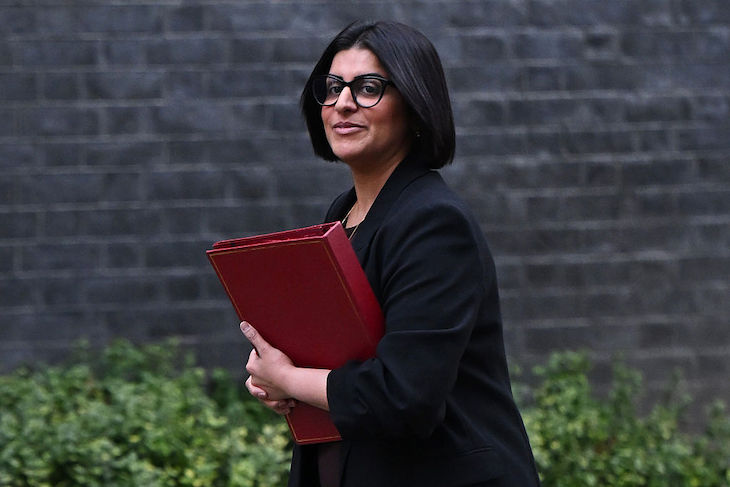
Under Mahmood’s proposals, a small number of mega-sized forces will specialise in tackling serious and organised crime
The centrepiece of the preview coverage was a story, first reported by the BBC, that Shabana Mahmood, the Home Secretary, was promising to ‘significantly’ cut the number of police forces in England and Wales. One Home Office insider purred that the story was a ‘plant the flag’ moment.
There is no denying that an ambition to overhaul the 43-force model of policing is radical and brave. The last home secretary to attempt it, Charles Clarke, faced a politically bruising backlash when he suggested that small constabularies should merge into a dozen larger ones, and after he was sacked over an immigration scandal the plans were shelved. That was 20 years ago.
Since then, the case for re-structuring has strengthened as police funding pressures have intensified. Amalgamating forces, it is said, will lead to economies of scale because operational and business support functions, such as human resources, payroll and IT can be shared, and management pared back.
The argument goes that larger forces will be better able to pool specialist capabilities, such as firearms and digital forensics, respond to major incidents and public disorder, and track gangs who operate online and across constabulary boundaries that were set in 1974.

Under Mahmood’s proposals, a small number of mega-sized forces will specialise in tackling serious and organised crime, homicides, drug trafficking and county lines networks. Each force will be divided into a number of Local Policing Areas where neighbourhood officers will be responsible for dealing with shoplifting, phone theft, and anti-social behaviour.
Although the plans are backed by key figures in policing – a group known as the ‘system leaders’ – they represent a leap in the dark. Michael Stephenson, an organisational psychologist who has worked as a policing consultant, says there is no evidence that larger forces outperform smaller ones, citing the problems that beset Police Scotland which was established in 2013 through the merger of eight regional constabularies.
‘Reorganisation is the comfort blanket of public sector reform,’ writes Stephenson in the online magazine, Policing Insight. ‘Structural change without cultural change produces, at best, the same problems in new configurations,’ he says.
Stephenson is right. But the plans are being driven largely by money. Despite its difficulties, Police Scotland estimates that in the decade after it was formed, £2 billion was saved through reductions in staff and officer numbers, efficiencies and improved working practices. A saving of that kind across England and Wales would generate hundreds of millions of pounds every year to be reinvested in frontline policing.
However, restructuring the 43-force model will require a complete re-wiring of the arrangements for police funding, governance and accountability. The changes will also need up-front investment – as any large-scale re-organisation does – which the Treasury may be reluctant to fund without a solid business case for each police force area. And the plans are likely to run into opposition, particularly in rural areas where a small force may be swallowed up by its bigger neighbour. These are all reasons why Mahmood is not rushing the shake-up, as Clarke foolishly did, but setting out a timetable that stretches well into the next decade.
The danger though for Mahmood in such a lengthy process is that it will drag on to the point where the impetus for reform is lost. Within a couple of years, there may well be a different home secretary with other priorities, the system leaders who have provided such solid support will have retired or moved on, and if the changes aren’t embedded before the next general election there’s a chance they will be reversed by a new government.
What would help the Home Secretary get her plans off the ground is if several forces decided to merge voluntarily. That was once a distant prospect, but it is now a distinct possibility because of the precarious financial state of some smaller constabularies, such as Lincolnshire and Gloucestershire, and forthcoming changes to local government. The creation of a new combined authority for Norfolk and Suffolk in 2028, for example, with a Mayor in overall charge of policing in the two counties, could pave the way for the two constabularies to merge. Mahmood would do well to give them a helping hand to make the switch.
Police force reorganisation is just one of a series of far-reaching policy ideas in the 100-page White Paper. Over the coming days, we can expect to hear a lot about a new national centre for policing, a workforce strategy to raise standards and professionalism among officers, and how the Home Secretary will take a more interventionist approach. But of all the proposals, overhauling the 43-force model is arguably the trickiest and most contentious. Shabana Mahmood will need all her political nous to see it through.



Comments