
‘Shape without form, shade without colour. Paralysed force, gesture without motion.’ T.S Eliot’s lines from ‘The Hollow Men’ sum up in 11 words the emptiness of Sir Keir Starmer’s administration. Nowhere is the shade darker and the force more paralysed than in our government’s defence policy.
At the Munich Security Conference last weekend, the Prime Minister boasted that he has demonstrated ‘Britain’s leadership on the world stage’ and pledged to augment our ‘huge defence capabilities’. A promise to increase defence spending further, faster, followed. But this is all gesture and no motion.
The Prime Minister’s promises that Britain will be ready for global conflict are all shape and no form
As our political editor, Tim Shipman, lays out in this week’s magazine, our defence capabilities are hollowed out, not huge. The promised rise in defence spending comes dropping slow. It scarcely begins to make up for the neglect and decay our military has endured for years now.
Britain’s claim to be a western leader in defence spending is built on an accounting trick. Expenditure on our nuclear deterrent used to be held separately from other defence spending. It now amounts to more than one third of the UK’s entire planned equipment budget. Remove the amounts invested in our nuclear capability and we currently spend significantly less than 2 per cent of our GDP on defence. Rather than outgunning our Nato allies in spending on conventional forces, we bring up the rear.
It is not as though our continuous at-sea deterrent is in robust shape. Our nuclear submarines are spending longer and longer at sea because the time and cost of refitting and repairing these ageing vessels when they are in dock is rising. With each prolonged deployment, the strain on crew and ship accumulates. All while questions about the reliability and precision of the deterrent capability remain unanswered.
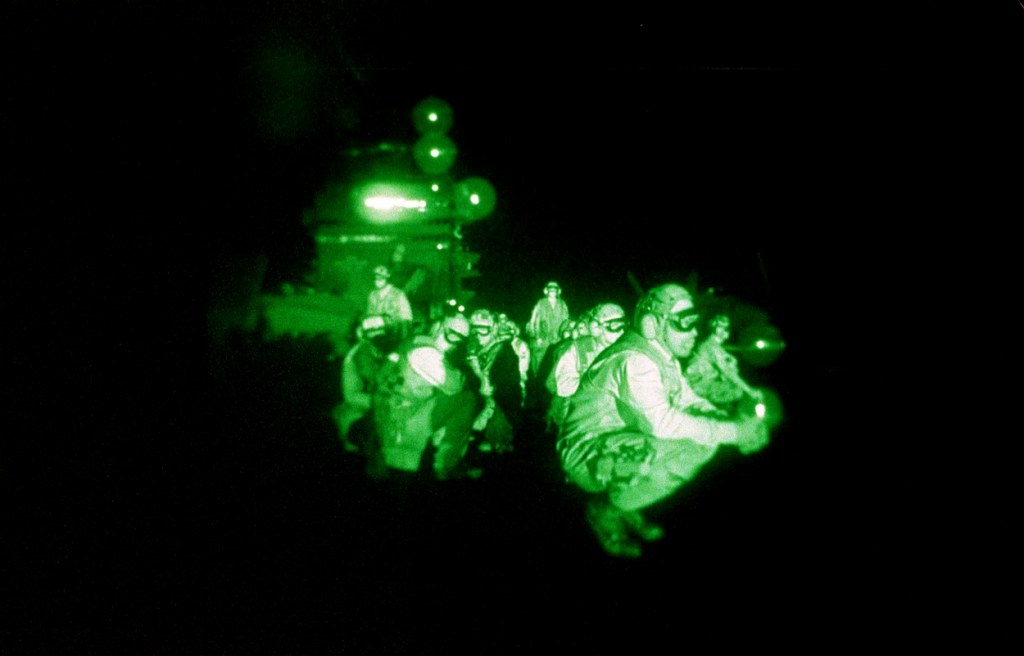
The rest of our Navy is, if anything, in worse shape. Surface ships, such as the Type 45 destroyers, are more likely to be spotted undergoing repairs in Portsmouth than deterring our enemies at sea. The flagships of the fleet, our aircraft carriers, are more goods of ostentation than force projectors. We scarcely have the naval and air capability to keep them safe out of harbour. Just one can be deployed, at enormous risk and cost, at any time.
Our Navy can only operate, such as it does, by relying on reservist manpower. And the crisis of recruitment and retention it faces is matched across the military. The Army has increasingly come to rely on foreign citizens, some with only the most basic grasp of English, to make up its numbers. Almost 9 per cent of our soldiers (including officers) are not UK citizens.
The problems with manpower are compounded by strains on materiel and morale. Resources, rightly, prioritised for deployment in Ukraine have depleted artillery capability. The former chief of the defence staff Sir Nick Carter has judged in our pages that the army, with a notional strength of more than 70,000 men, is only capable of fielding 10,000 for combat at any time. That time would be very short because we lack the ammunition and supplies for any prolonged engagement.
Our armoured strength is puny. Our tanks are ageing. The government promises upgraded capability, but in its planned new deployment, only 60 tanks will be fully equipped to deal with modern warfare. By way of comparison, the Russian army has more than 12,000 tanks in total with some 8,000 currently operational.
Infantry, artillery and armour are the traditional arms of the military on land. But the war in Ukraine has demonstrated that, while each is still vital, their effective deployment depends on enhanced capability in the air – specifically drones, assisted by cyber deployment and AI. Britain does have some technical expertise in these domains. But the military adoption of drone technology is woefully behind and crippled, as ever, by the Ministry of Defence’s dysfunctional procurement process.
Perhaps the MoD’s greatest failure has been to maintain the morale of our military and to protect those who have proven most skilled at defending us: our special forces. As our writer Mary Wakefield revealed in her interview with former Regimental Sergeant Major George Simm last year, the bravest men who have worn our country’s uniform are now in fear of lawfare waged by politically motivated enemies of the Crown – and the government is complicit in this process.
Set against this tragic backdrop, the promises of the Prime Minister that Britain will be ready for the looming risks of global conflict are all shape and no form. He talks fondly of European solidarity but, with the exception of Poland and the Nordic and Baltic States, the EU’s armies are more welfare services in uniform than terrors of the earth. At the moment, France and Germany – the ‘steel spine’ of EU defence – would struggle to get much more than a single brigade into the field in Europe if a threat materialised. As for support from the moral leader of ‘middle powers’, mighty Canada, its army has just over 22,000 men of whom scarcely more than 2,000 can be deployed rapidly overseas to meet significant threats. There are several Mexican criminal gangs more lethal than Mark Carney’s maple leaf warriors.
There is no sign that the Prime Minister has even begun to appreciate the scale of what is required to achieve the effective deterrent force the West needs. Nothing less than action this day. An immediate increase to 5 per cent of GDP on defence at the Spring Statement next month, overhauled procurement, rapid embrace of new technology and an end to lawfare are required to keep us safe. Anything else is just hollow.


Comments