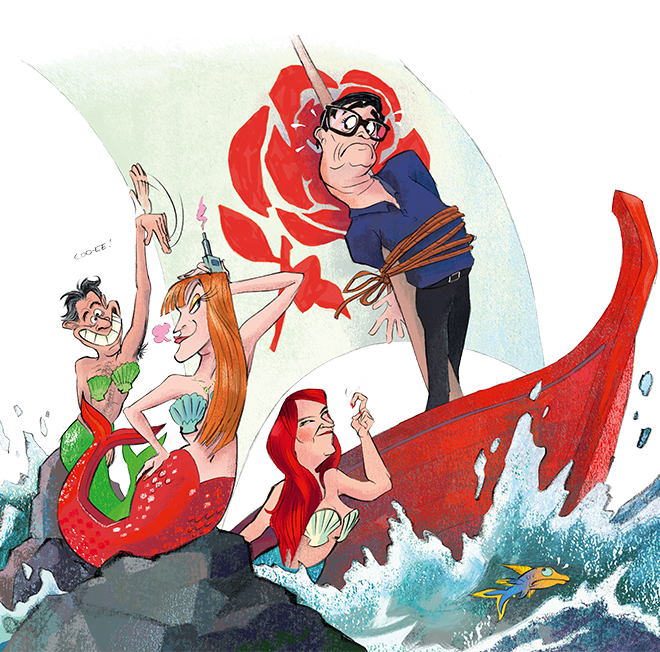



Power, when it is gained and lost, is transferred in stages: the actual, the visual and the constitutional. The latter took place on June 23 when the prime minister presumptive sent a letter to Antonia Romeo, the Cabinet Secretary, requesting that she commence access talks with his team. Keir Starmer had already given permission for them to proceed, but the propriety and ethics team in the Cabinet Office had told Romeo she could not initiate proceedings. Andy Burnham had to ask first. To all intents and purposes, he is already the vessel from which power flows.
At the same time, it became clear that James Purnell, the former Blairite cabinet minister, will lead the transition team and stay on to become chief of staff in 10 Downing Street. For several weeks Purnell, who was a special advisor and cabinet contemporary of Burnham’s, has been playing a key backroom role, along with several former mandarins, attempting to ensure that this moment is not lost. “We either get this right or Nigel Farage is the next prime minister,” one says.
Purnell was involved in a report last year by the Future Governance Forum recommending the creation of a prime minister’s department to seize power from the Cabinet Office. “James is a serious figure who has run big teams,” says a friend. “He’s not some lunatic left-wing person. He won’t just sit there and say: ‘This is all working fine.’ He’ll be asking why five people have the same job and what they do all day.”
Starmer only realized the game was up when the result of the Makerfield by-election was announced
Before the constitutional niceties, there was the visible transformation of the mayor of Greater Manchester into national leader. Burnham boarded a train from Manchester on Monday morning wearing a T-shirt and emerged at Euston station three hours later wearing a suit. “You can’t go to the Palace in a black T-shirt and bomber jacket,” notes one ally. Burnham was mobbed by reporters, his progress to parliament followed by two TV helicopters.
After he was sworn in as an MP, an aide took him to Westminster Hall to meet his fellow Labour MPs. Burnham peered through the door and saw hundreds of them assembled for a photograph. “Blimey!” he said. Proof of the actual transfer of power. “Everybody’s texting everyone in Team Burnham saying, ‘I need to see Andy,’” a Labour source says. Rather than setting out his agenda, “he’s being pitched at” by everyone who wants a job or has an idea.
In No. 10, the transfer of power had to happen in Starmer’s head. He only realized the game was up when the result of the Makerfield by-election was announced early on Friday morning. “It was the scale of the victory,” a cabinet minister says. “That changed the game. We’d have lost with a different candidate. That was a proof point for the PLP [parliamentary Labour party]. MPs facing a Reform threat look at that and think, bloody hell, this guy can beat Reform. But in a London seat where the Greens are knocking on the door, they’ll think Andy’s brought the progressive vote into one place. The Lib Dem and Green vote just drained away.” On 20 June, Starmer was writing his departure speech with aides.
Power has already shifted to Burnham, but the subject of nearly every conversation in Westminster is: what will he do with it?
The plan, which originated in Zoom meetings in Burnham’s garden during the Makerfield campaign, is now being drawn up in a series of offices in SW1 and Manchester. Josh Simons, who gave up his seat for Burnham, and Miatta Fahnbulleh, a close ally of Ed Miliband, lead the policy shop, overseen by Louise Haigh and Anneliese Midgley, the “northern queens” of Burnhamism.
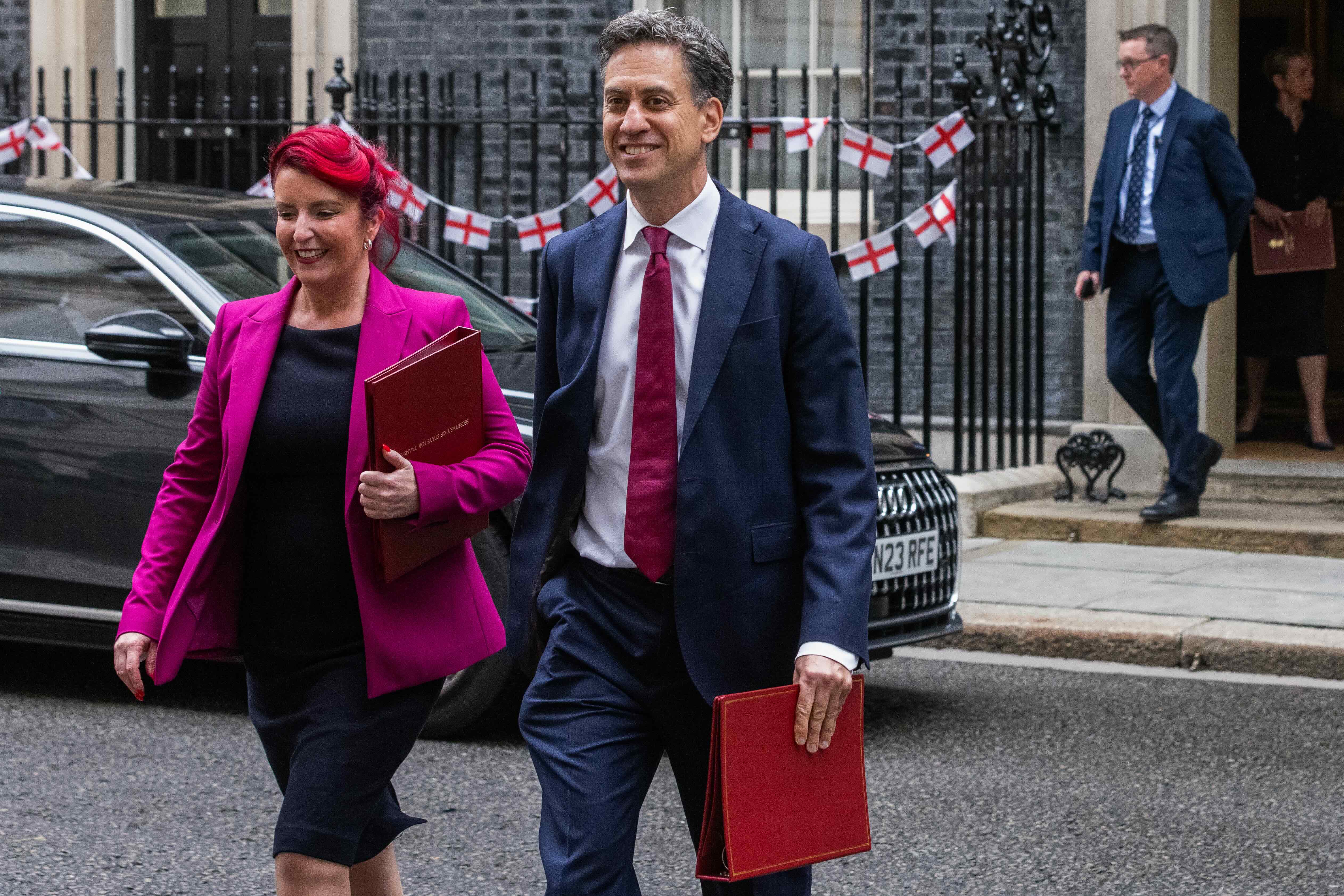
In Makerfield, Burnham reversed his opposition to Shabana Mahmood’s crackdown on migration and soft-pedaled his pro-Europeanism. But he also spoke of his vision for greater state intervention in the economy, devolution to the regions and taking some utilities back into public control. “The Makerfield test forces you toward economic blowing-the-doors-off plus social conservatism,” says a ministerial aide. But in listening to siren left-wing voices in his party, does he risk crashing his premiership and the economy?
In late June, Burnham will make an “economy and regional development” speech. Seven people are working on the text, which will detail his “core script” as prime minister, his desire to “put hope back on the ballot paper” and explain how he will “unlock regional growth potential” and move the “center of political gravity away from being solely in London.” Expect government agencies to be relocated outside the capital.
The Treasury has already begun planning for some tax-raising powers to be devolved, though Burnham will make that idea his own. “There will be a big devolution offer to the metro mayors and possibly the devolved administrations,” an aide says.
Burnham is planning a program of renationalizations to take key public utilities back into public ownership where they are perceived to have failed, starting with water. Others, such as telecoms, where market competition has improved services, will be left alone.
Even as a national leader, Burnham will lean into his northern identity. Insiders say a booking for the speech was made at the Barbican in London, but the venue has now been told by Burnham’s team that they think it would look bad to do it in London and the great unveiling will be at a “symbolic location” in Greater Manchester.
Burnham’s economic advisors include former banker and Treasury minister Jim O’Neill and Andy Haldane, the former chief economist at the Bank of England. O’Neill is a public advocate for more borrowing to invest. The Chancellor, Rachel Reeves, tweaked her fiscal rules to allow for more investment, but O’Neill has urged Burnham to do much more to kickstart growth. “Jim thinks you can borrow as long as you are borrowing for growth,” says someone who has worked with him recently.
A Burnham advisor says O’Neill and Haldane’s presence is important, not just for their ideas but because of the credibility they bring. “They give you blue-chip credentials to do different things in government. They give you the air cover that you need with the establishment to actually think differently. You can have a different fiscal rule setup, you can have a different regionalism agenda.” At the micro level, there is talk of equalizing capital gains tax rates with income tax, and charging an exit tax for billionaires who leave the country, but whether Burnham has decided on these measures is unclear.
Haldane’s presence throws up a parallel with another former mayor turned prime minister who wanted more investment in the North and was the one who devolved power over buses to Manchester. Haldane helped to write Boris Johnson’s plan for “leveling up,” that PM’s passion project which was to be derailed by the pandemic. Burnham’s government will “channel money and power to parts of Britain which have not had either,” says one Labour strategist. Another, drawing on Burnham’s flat vowels, coined the phrase “leveling oop.”
O’Neill and Haldane will not be enough. Everyone around Burnham knows that his key decision is who to appoint as his chancellor – not an announcement he will make on June 29. “They need to have the confidence of the markets, the confidence of the PLP and the confidence of Andy,” an advisor says. Very few tick all three boxes. The choice appears to be between Ed Miliband and someone else. Wes Streeting and Shabana Mahmood are often mentioned, and Yvette Cooper and Pat McFadden are considered the dark horses.
Miliband, who has been seeking to install Burnham for months, was the first cabinet minister to tell Starmer to resign. As a former Treasury aide to Gordon Brown, he is desperate for the job. But many MPs doubt he would reassure the markets, and fellow ministers believe his zealotry on net zero is an impediment to saving money and opening up North Sea drilling – both of which Burnham’s senior aides think he will need to do to be a success.
Key unions are also gunning for Miliband. Both the GMB and Unite back North Sea exploration and Sharon Graham of Unite called Miliband’s commitment to net zero a “noose around the neck” for job creation. “Ed only seems to be interested in one side of the equation, rushing Britain to net zero with almost no thought for jobs, skills and national security,” Graham said.
Miliband’s allies mobilized 40 progressive economists in the Guardian on June 24 to tell Graham she was wrong. But one of Starmer’s most senior aides, who thinks it was a mistake for the Prime Minister not to sack Miliband, said the unions should be listened to: “There’s a real concern with Ed. They think that Ed is costing them jobs and members, and that he’s got a dismissive approach to that.” A Midlands MP says: “For places like mine to prosper, I need a chancellor who will back advanced manufacturing. I’m not at all confident in Ed.”
Questions about Miliband’s suitability have emboldened allies of Reeves to fight to save her job, though the battle appears lost. One MP says: “For the first female chancellor, if she is disposed of after two years, I would find that message really difficult to take.”
Lucy Powell, the deputy leader of the Labour party, is expected to become deputy prime minister, while Louise Haigh, the former transport secretary, is expected to return to cabinet in a coordinating role, perhaps as the chief secretary to the prime minister, a position currently held by Darren Jones (who has ruled out challenging Burnham). “Lou would make a success of the role, instead of holding pointless meetings,” a Whitehall source observes.
But if there is pressure to have a woman at the Treasury, that opens the door for Mahmood, who though content to stay at the Home Office would surely not resist the promotion, or Yvette Cooper, the Foreign Secretary, who is a trained economist.
Either way, there is a strong sense that a Burnham-led government will be female-dominated. One senior figure in the party even describes Burnham as “Labour’s first woman prime minister.” This is not a revelation about his policy on self-ID for trans people, but reflects his interests. “The reason Labour has always craved, but also been cautious about, a female leader is because, in a Labour government, she could have an unashamedly female agenda, focused on health, education, family finances and issues like safer streets, social care, online safety for kids, that are disproportionately important to women. [This would be] unlike the Tories’ female leaders, who are under internal pressure – and the weight of history – to show how tough they are on traditionally male issues. Along comes Andy, surrounded by female advisors and backers, but more importantly, genuinely passionate about all those traditionally female-oriented issues, and much less so with the bombs and budgets. So could we finally see what Labour has failed to deliver all these years – a female PM in all but sex?”
Whether he likes it or not, however, one of the first issues in Burnham’s inbox will be the size of Britain’s military budget, over which John Healey recently resigned as defense secretary. The final Defense Investment Plan will be published as early as June 30. Insiders say Dan Jarvis, the new Defence Secretary, is working better with Reeves to get the plan finalized – though sources still say the financial settlement will fall far short of what the armed forces are demanding.
Starmer discussed the plan with Burnham when they met. But allies of Burnham are frustrated that the issue will be finalized before he takes charge on July 17 (if no one runs against him), because it needs to be ready ahead of the NATO summit on July 7, which Starmer will attend. A Starmer confidant says: “Keir can’t go to NATO without it or Trump will embarrass the whole country. Andy’s got to endorse it.”
One senior party figure even describes Burnham as ‘Labour’s first woman prime minister’
The Starmer-Burnham meeting was “good-natured.” The Prime Minister acknowledged that, as one source put it, “the scale of the challenge that comes next requires a different skill set.” Starmer told the cabinet on June 23: “When I left the job of DPP [Director of Public Prosecutions] I made a point of not commenting on my successor and I will not do so when I leave this job either.” He received warm applause from ministers.
Some are worried about Burnham’s lack of experience on the world stage, but he will have help. Purnell is not the only big name due to return. Oliver Robbins, the former Brexit negotiator who was sacked as permanent secretary at the Foreign Office by Starmer, has been considering legal action against the government for damage to his reputation. But allies of Burnham, who regard Robbins as “an outstanding operator,” have reached out and he is likely to take a senior job. “Olly is incredibly well thought of by both Andy and the people around and influencing Andy’s thinking,” a source says.
While Robbins probably won’t return to his old post, his background is security and he would be a natural successor to Jonathan Powell, Starmer’s National Security Advisor, who is expected to move on. “That looks tailor-made for Olly,” a senior Whitehall source familiar with the conversations reveals. “Powell was to blame for the Chagos mess as well, so they can hang that round his neck.”
The handover of power has also delayed a summit, which had been expected on July 22, to finalize the first phase of negotiations with the European Union over a closer trading relationship. Nick Thomas-Symonds, the minister responsible for the negotiations, is close to finalizing terms with his opposite number, Maros Sefcovic. Colleagues think it would make sense for NTS, as he is known, to stay in his job because of his wealth of contacts across the EU. It also seems unlikely that Burnham, who backs migration controls, will want to change the UK’s negotiating strategy, which a Whitehall figure summarized thus: “As close as possible without freedom of movement.”
The biggest questions concern what spending, if any, Burnham is willing to cut. “You can borrow if it’s for growth,” a cabinet source says. “But you’ve got to be doing spending cuts if you’re going to be able to get the markets to give you money to invest in productive things.” A cabinet minister predicts: “I do think Burnham will open up the North Sea. But the truth is he’s also going to have to go back to welfare.”
Burnham has said the welfare bill needs to come down, but not how. To complicate matters, the Office for Budget Responsibility (OBR) will only “score” savings made on welfare if benefits payments are reduced or the number of people getting them is cut. Other moves, such as changing how claimants are assessed, are ignored by the watchdog. “The OBR will score paying people less and they’ll score giving it to fewer people,” explains a source who has wrestled with this issue. “What they won’t score is a bunch of procedural stuff.”
The “battle for Burnham’s brain” is on-going. Purnell was a Blairite. Miliband was a Brownite. But when Burnham won Makerfield, John McDonnell – Jeremy Corbyn’s shadow chancellor – wept with joy on television. Seb Corbyn, Jeremy’s son, helped on the campaign. “I have to say, I do not have high hopes for it not drifting into the realms of economic lunacy,” says a ministerial aide loyal to Starmer. “I really worry about the role of the Socialist Campaign Group.”
For Burnham this is a big moment. Since he was last in Westminster, so much has changed, but the sense that Britain is on the skids is more pronounced. “He had his parliamentary induction,” an ally says, “and the computer system hadn’t been upgraded since the last time he did it.”
The next few weeks may determine whether he will be an upgrade on Starmer.





Comments