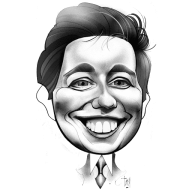

In an office stuffed full of books, Alex Burghart sits back in his chair, sipping on a mug of tea. Beside the Shadow Northern Ireland Secretary is a black and white photograph of a former army officer. ‘This is Brigadier Clive Tonry, a D-Day veteran’, he explains, when I inquire about the framed image. ‘When I was eight and nine, he taught me science and he had the most wonderful disregard for health and safety.’ Burghart fondly recalls being taught wind resistance by being strapped by Tonry in a parachute and dragged towards his school’s barbed wire fences. ‘He had two German helmets at the back of his classroom that he’d picked up from the beaches. He never told us they were men that he’d killed but that is what we guessed.’
It is Tonry and others like him that have been on Burghart’s mind this week. Legislation aimed at tackling the legacy of the Troubles in Northern Ireland has passed its stages in the Commons. On the floor of the House, passions ran high: Jim Shannon, a DUP MP, said that one IRA man killed in the Troubles ‘is burning in hell today – couldn’t happen to a nicer person.’ Many fear that the government’s law change will simply exacerbate historic prosecutions for British veterans who served there between 1969 and 2007. ‘They were often very young men were placed in impossible circumstances where you have to make life or death decisions at a moment’s notice’, says Burghart. ‘Mercifully, I don’t think many people in Britain today understand what that’s like.’
‘We have a few assets that make us indispensable to our allies. Our Special Forces are one of those assets’
The bill will replace the previous Conservative government’s 2023 Legacy Act, which banned inquests and civil actions related to Troubles-era incidents. Burghart cites fears from Special Forces’ veterans that the new legislation will harm their operations. ‘We have a few assets that make us indispensable to our allies. Our Special Forces are one of those assets.’ He warns that ‘if we degrade that asset’, then he warns it will be ‘bad for the Western alliance as a whole. The SAS and people like them don’t just keep us safe – they keep a lot of other people safe as well. But they also help maintain Britain’s place in the world and its utility to its friends. And if it gets destroyed, it will be next door to impossible to put back together again.’
The legislation has now gone to the Lords where the government now faces a real ‘fight on its hands’. Burghart and other opponents are concentrating their firepower on two issues, in a bid to win over generals and lawyers in the Upper House. The first is on the threshold for new evidence to open prosecutions: the Tories want to insert the term ‘new and compelling,’ a pre-existing legal term which exists in the Overseas Operations Bill. ‘It basically means that your evidence must be new and compelling’, says Burghart. ‘You have to be able to make a case that it would change the outcome’. The second key issue is on inquests, with Burghart critical of the coronial system that has been blamed for years of investigation into incidents like the Coagh ambush. ‘Our argument was, if you’re going to do this, then you must use this as a single track for investigating everything that happened in the Troubles’, he says, arguing the Legacy Commission should instead handle all cases.
‘The Conservative party is the party of the Armed Forces… I think it’s been very disappointing that Reform MPs have not really engaged with this.’
The subject of prosecutions has plagued governments for years. But Burghart believes that his party’s pledge to withdraw from the European Convention on Human Rights (ECHR) will be sufficient to overcome legal hurdles in this field. ‘The Legacy Act that we passed was challenged in the courts over there, that won’t be a problem for us next time.’ He says it is an issue that deeply resonates with his colleagues. ‘People like Iain Duncan Smith and Lincoln Jopp, who served in Northern Ireland and commanded men in Northern Ireland, feel it very personally. The Conservative party is the party of the Armed Forces… I think it’s been very disappointing that Reform MPs have not really engaged with this.’
Like his Essex constituency, Burghart is solidly middle class and English. But he greatly respects Northern Ireland’s politics and its oratorical culture, praising the likes of Colum Eastwood and Gavin Robinson as two of the best speakers in the House. ‘I’ve found all but one party very easy to deal with in Northern Ireland. I love dealing in Northern Irish politics. People are often very up front about what they what they stand for and what they don’t stand for. And it’s possible to have honest and direct conversations.’ Behind the scenes, Lord Wolfson, the Shadow Attorney General, is helping put together a legal document on how a post-ECHR Northern Ireland would fit within the framework of the Good Friday Agreement. A separate piece of political work will then follow.
Alongside Northern Ireland, Burghart also holds the Cabinet Office brief. He faces Louise Haigh, one of the ‘northern queens’ so central to Andy Burnham’s agenda. The Tory MP wryly notes the unusually high attendance at weekly questions on Thursday morning. ‘Quite a lot of people turn up. It’s almost like Labour backbenchers know where the power is.’ He remains sceptical of her agenda, believing arm’s length bodies (ALBs) and quangos are being shuffled around with no thought as to the underlying structure. ‘The reason why a lot of ALBs have been set up over the years is in order to get away from Treasury rules and Cabinet Office HR – if you just pick up a quango and put it back in without fixing Treasury rules and Cabinet Office rules, you have the same problem.’
He believes that the two issues most important in Whitehall are the flow and accountability of information and money. Having worked in three ministries himself, Burghart remarks that ‘often ministers don’t know exactly what is going on in their department… it is not unusual for ministers to uncover things that were started a very long time ago and have just never been turned off’, like ‘a sort of peculiar ongoing algorithm left to run certain bits of government’ with ‘the lights blinking on the dashboard’. Reform’s Danny Kruger has made a virtue out of publicly presenting his party’s plans for Whitehall. Thus far, the Tories are yet to do the same, though Burghart says he is talking to ‘a lot’ of former officials and that it will be ‘an essential part’ of the next Conservative government.
‘It’s been wonderful watching her develop the architecture that she wants to bring to the party and to the country.’
Burghart and Badenoch have known each other since their first days in parliament, meeting at a whips’ briefing for new MPs after the 2017 election. He quickly recognised her potential, becoming a key sounding board on her march to the leadership. ‘She’s always been very frank and honest and principled, and it’s been wonderful watching her develop the architecture that she wants to bring to the party and to the country.’ On his corridor are based the offices of Julia Lopez and Neil O’Brien: all three resigned with Badenoch to trigger Boris Johnson’s downfall in 2022. Burghart is discreet but clearly proud of his friend’s journey and argues that Badenoch is now developing ‘the most coherent and developed political thinking of a political leader in my adult lifetime.’
To his two previous hats, Burghart has now added a third. Last month he was named the party’s deputy leader, confirming his de facto status as de jure. His predecessors in this role include Michael Ancram, Reggie Maudling and Willie Whitelaw. The latter inspired a famous remark by Mrs Thatcher: that ‘every Prime Minister needs a Willie’. Does Burghart feel the same? He smiles: ‘Much as I would like to give you the opportunity James, to write the line that “Alex Burghart is Kemi’s Willie”, I think I will not take you up on that kind invitation.’
He is one of the inner core tasked with helping the leader prepare for Prime Ministers’ Questions. ‘Our job is to help her think through things and make her feel as comfortable as possible because she’s at her best when she’s just reacting to the stupid things that Labour Prime Ministers say in the chamber.’ He raises a quizzical eyebrow when I quote an article suggesting that Badenoch is yet to work out Burnham’s style. ‘Who said that?’ He considers. ‘Andy Burnham is obviously a sort of better Commons performer than Keir, but he’s also more nervous at the despatch box than I expected him to be.’ He notes the relative silence on the Labour benches when the Jackdaw decision was announced, compared to the cheering Tory ones. ‘The despatch box is a very uncomfortable place to be when you have hundreds of pairs of angry eyes boring into the back of your skull.’
Badenoch currently has no such problems, with Burghart comparing the party’s upbeat mood to that on the eve of the 2010 election or the post-victory, pre-pandemic feeling of Boris Johnson’s 2019 peak. He himself became one of the unexpected stars of last month’s conference, featuring in a video showcasing the party’s mock-up of the Bayeux tapestry. With a doctorate in Anglo Saxon England, Burghart was the natural choice to front the clip. ‘I was brought in right towards the end as a sort of quasi-historical adviser on what sort of things that should be in the Birmingham tapestry.’ He says ‘99 per cent of the work was done by other folk’, praising staff for even managing to get the ‘same font’ as the British Museum exhibition.
‘From great defeat, can emerge things that are not just renewed, but new and more enduring.’
Burghart’s conservatism is one that draws on his deep love of history: a skepticism of seeming inevitabilities and a keen awareness of turning points throughout the past. As our interview concludes, I ask him for a suitable analogy for his party’s recent journey. He turns to the fall of the Roman Empire: a seemingly permanent political order, replaced by the age of paganism: ‘a rural population’ where ‘everybody’s speaking German and washing in cold water.’
Yet from that, ‘the Kingdom of England forms, which is turns out to be more durable and, in many ways, intellectually better than the Roman Empire. And it’s still with us and so from great defeat, can emerge things that are not just renewed, but new and more enduring.’ It is a metaphor which inspires Burghart as he and Badenoch seek to establish a new Tory kingdom.




Comments