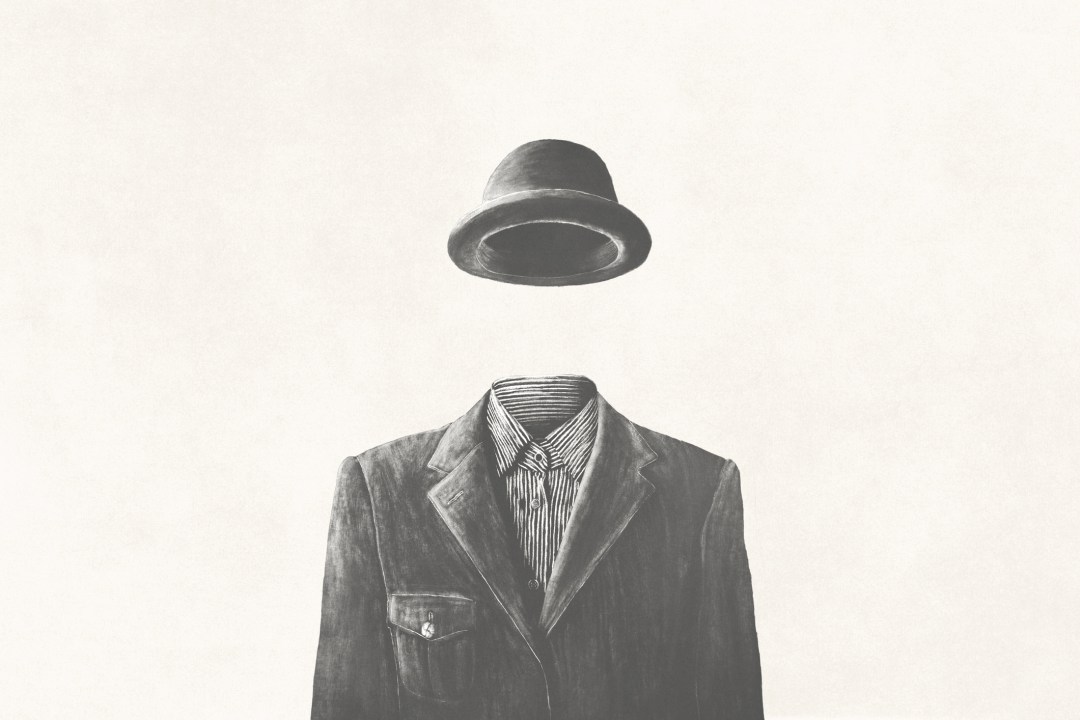
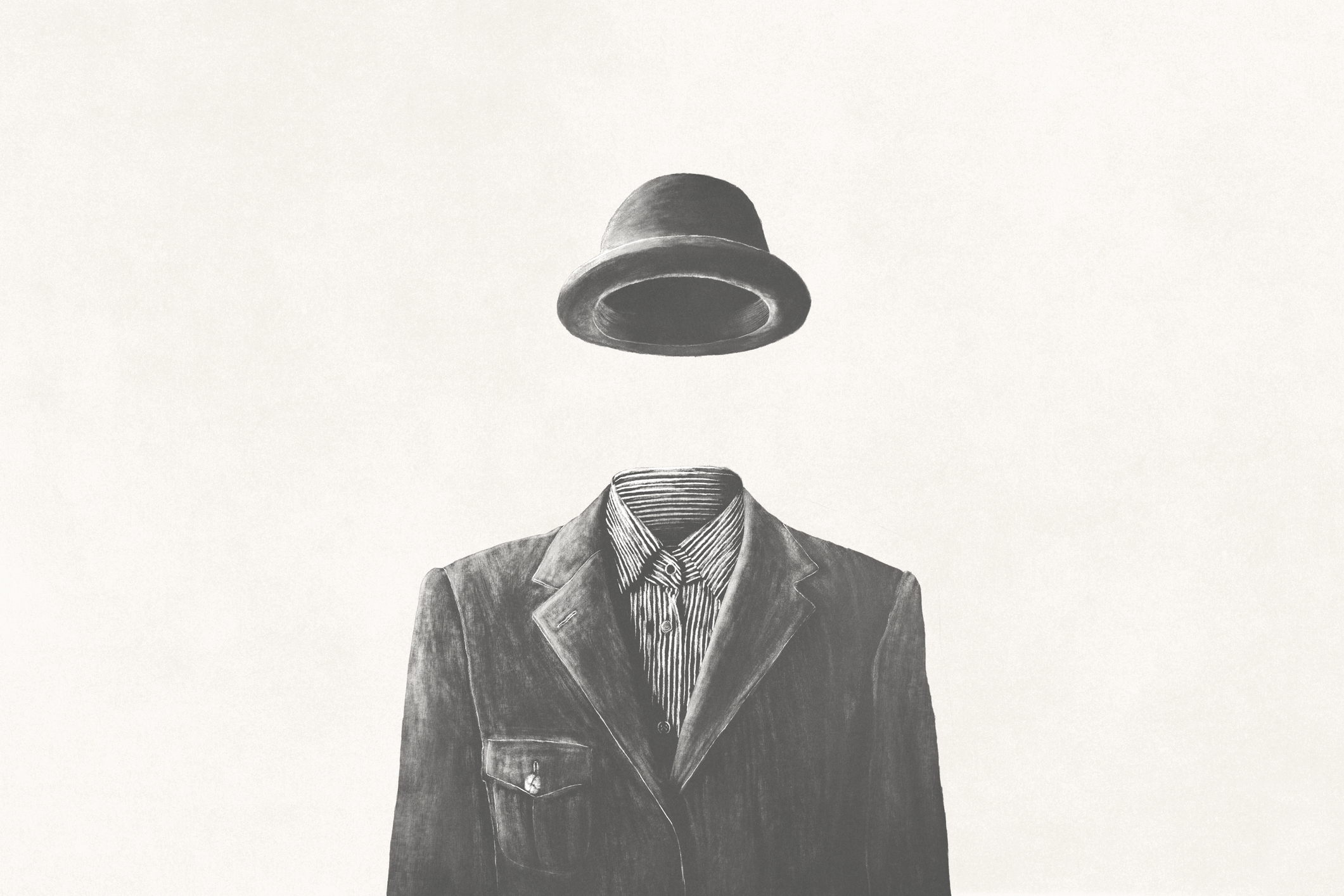
I saw a chap walking down the road the other day looking, unusually for my part of town, the very quintessence of sartorial elegance: polished brogues, tailored pin-striped suit, rolled umbrella. He was a modern-day Beau Brummell. But what really topped off his ensemble – literally and figuratively – was a bowler hat. I haven’t seen anyone wearing one of those for decades. In fact, the last time was about 35 years ago when a girl arrived at a party in one. Cruelly, I pointed and said: ‘Ha! Charlie Chaplin!’ The awkward silence that followed shamed me rather than embarrassed her.

Since the bottom dropped out of the officewear market during Covid, making an effort with daytime dress is unusual enough. To spot anyone in headgear that isn’t a baseball cap or woolly hat is now as rare as hen’s teeth. A nation of Burlington Berties we are not.
Unless you have a job that requires a uniform, hats are unlikely to be part of your dress code. Civil servants had stopped wearing bowlers by the 1970s, and they disappeared from the City in the 1980s. Top hats went out of fashion even earlier. There was a time, though, when hats were pretty much de rigueur, both socially and in the workplace. They were a signifier of class and a mark of propriety, as well as having practical benefits, such as keeping your head warm in winter. Leaving the house without one was almost unthinkable.
But factors such as a move to more casual dress, and the introduction of motor cars with roofs – try driving a Mini wearing a topper – saw a decline in everyday use, which is a shame. Hats are now worn more as fashion accessories, for special events, or to reflect personal style. I’ve never been much of a hat wearer myself, apart from the ubiquitous, unflattering kind, but I can see the appeal of a well-crafted headpiece. It speaks to a certain panache. The person needs confidence and flair to carry it off.
My paternal grandfather, a regular Phileas Fogg, can be seen sporting an array of titfers in black-and-white photographs from the early 20th century. He looks quite the dandy in a white linen suit and straw boater in Nagasaki, while in Kenya, he is wearing khakis and a pith helmet, as if he’s about to bag a rhino.
Milliners, sadly, are a rarity these days. There’s one on the way to my children’s school, and I’ve often wondered how they keep going. As lovely as it is to see those artisanal crafts still being practised, expensive commissions aside, there can’t be much of a market. Hats undergo occasional renaissances – the tweed cap, for instance – but unless you’re a member of the farming fraternity, wearing one when you’re under 70 can look slightly affected. For a while, the streets were full of men in Baker Boy caps hoping to be mistaken for Thomas Shelby. But unless there’s a razor blade sewn into the rim – which would obviously be dangerous and illegal – you ain’t no Peaky Blinder, bab! Even my 87-year-old father-in-law preferred looking like a 1920s Brummie gangster to an old-age pensioner.
Hats used to denote status. The higher your station, the more impressive the headgear. Now, unless you’re in the services, people would be hard-pressed to determine your seniority or rank from a hat. Monarchs, of course, still get to wear blinging crowns, studded with priceless gems, so heavy they risk a collapsed vertebra if one’s worn for more than about two minutes at a time. And if you’re an important religious figure, like the Archbishop of Canterbury, big hats remain very much part of the job.
Ladies’ Day at Ascot sees women in extraordinary bird’s nest creations, tottering around in heels until they eventually collapse under the sheer weight. Or from the alcohol. It’s hard to tell. Men in traditional morning attire at the races, meanwhile, like to get drunk and attack each other. These days, unless you’re at a high society wedding, posh hats as a determinant of class no longer apply.
Hats used to denote status. The higher your station, the more impressive the headgear
Hats are well represented in literature: The Cat in the Hat, The Mad Hatter and The Artful Dodger, to name just a few. In Hollywood’s black-and-white heyday, actresses such as Lauren Bacall were made even more alluring as they smouldered under elegant, wide-brimmed affairs. And some historic figures have become indistinguishable from their choice of headgear, such as Napoleon’s bicorne (two-cornered) hat, which he wore sideways (en bataille) so that he could easily be identified in battle, and De Gaulle’s kepi.
Certain hats are synonymous with evil, such as the peaked visor cap (Schirmmütze) bearing the Totenkopf, or death’s head, symbol worn by the Waffen-SS. Conversely, another hat has become symbolic of ‘resistance’. Strictly speaking, the keffiyeh is a traditional Middle Eastern headdress. However, if you live in Britain, where temperatures are unlikely to be extreme enough to warrant putting one on your head, it doubles nicely as a scarf. It shows that you care about important stuff, like defending human rights.
As I approach a landmark birthday, the urge to ditch the T-shirts and fleeces and start dressing more age-appropriately grows ever stronger. I don’t want to age myself prematurely, but surely some sophisticated headwear can only enhance the new look. I’m imagining George Clooney in a fedora. I may even be tempted to lift it from my head slightly in greeting, or, depending on my mood, tilt it at a jaunty angle. The possibilities are endless.
So restore the hat to its rightful place, I say. Enough of slovenliness: debonair headgear should once again be part of our wardrobes. The country might be in the doldrums, but a good hat will put a spring in your step as you draw admiring glances from strangers. Bowlers may be rather outré these days, but there are less unconventional options that will still get you noticed. Whatever your preference – grab it from the stand on the way out in the morning and wear it with pride. Britain’s continuing ‘greatness’ may be in doubt – but it no longer needs to remain hatless.


Comments