Can’t get an appointment with your GP? Nowhere to sit in surgeries crammed with the ill and infirm? Spare a thought for your local auctioneer who is also dealing with the effects of a long winter of discontent. The cost-of-living plague, from which almost nobody is immune, has prompted people to rummage around in their cupboards for treasure and to wonder whether they really want to continue to insure that Raeburn or Lawrence at vast expense. Throw in the epidemic of rocketing gold and silver prices, and you’ll struggle to get an appointment with an auctioneer, busy as he is weighing Georgian candlesticks and making house visits to inspect the family portraits.

Often unfairly referred to as ‘ambulance chasers’ who haunt the obituaries section of the Telegraph, auctioneers deal in death and misfortune almost as much as lawyers. Yes, the ‘three Ds (death, debt and divorce)’ keep us busy, but an auction house is not always Bleak House. As any fan of Cash in the Attic will tell you, the unpredictable nature of auctions is what makes them thrilling spectacles.
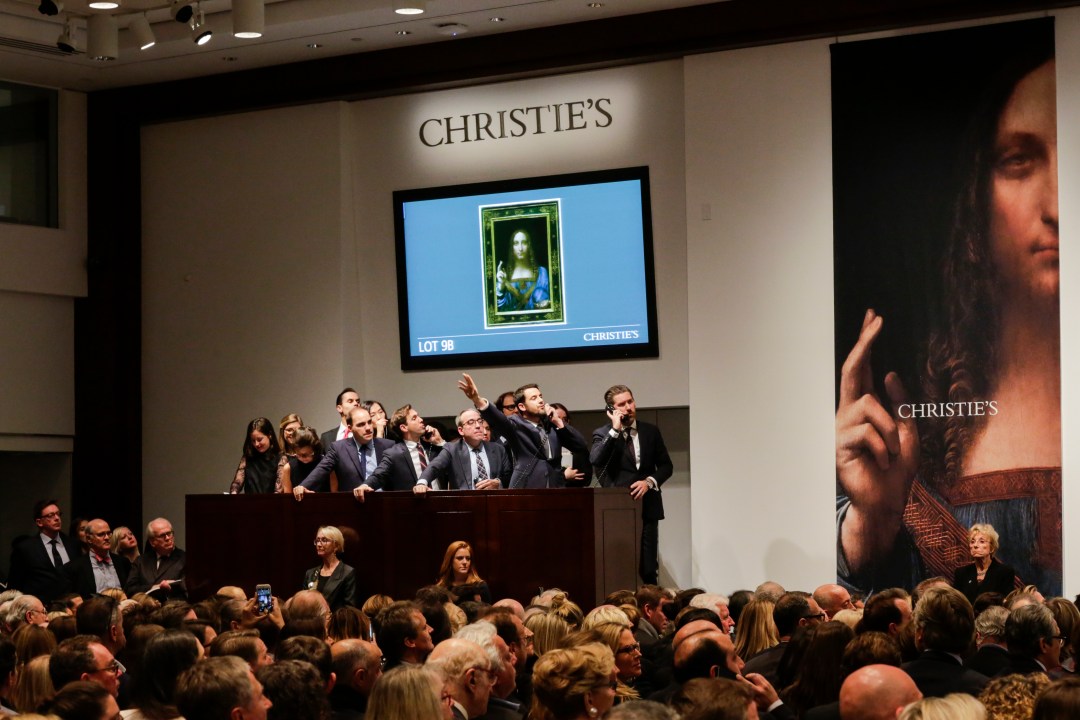
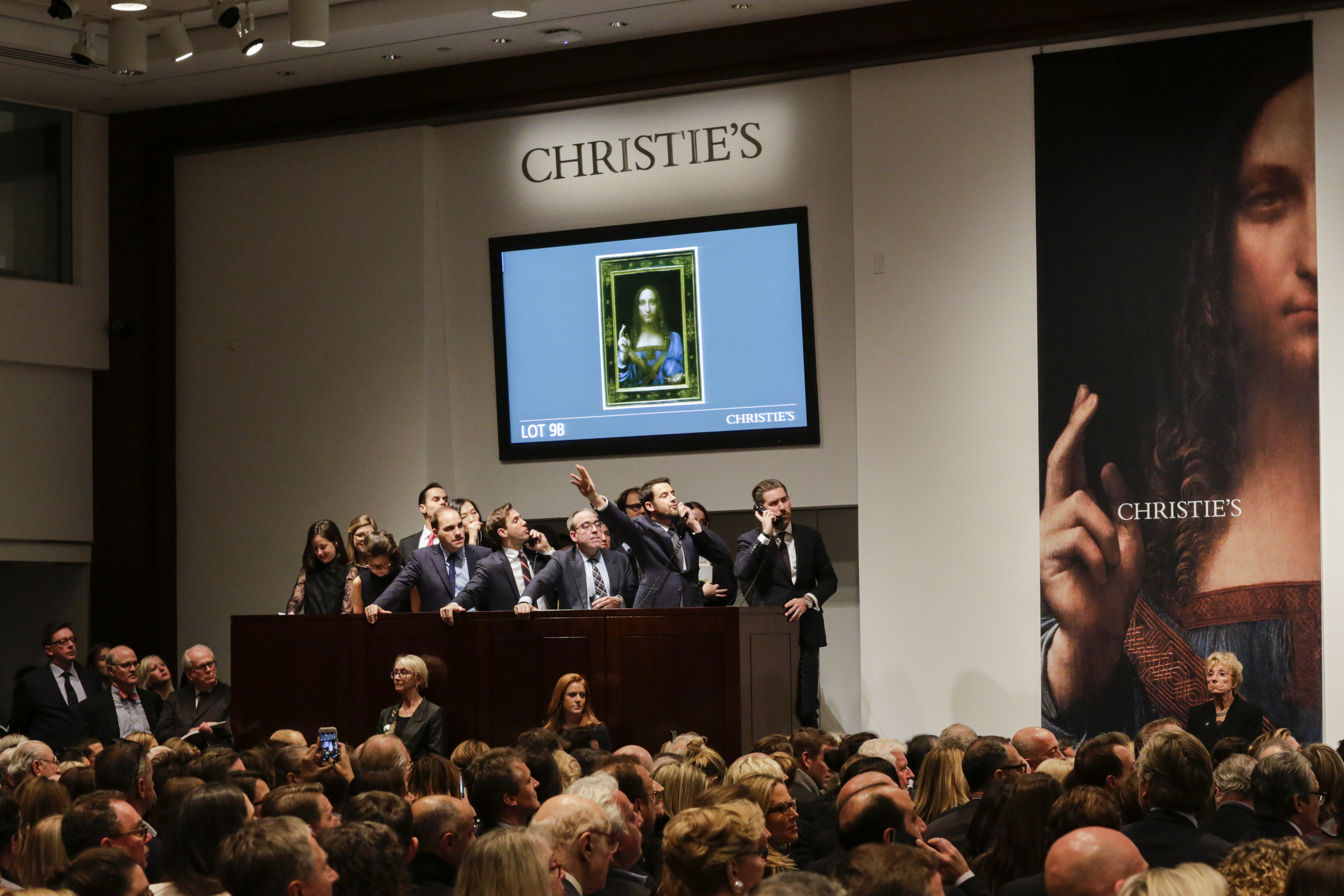
When I first joined a major auction house in London 20 years ago, I went to watch a Chinese Works of Art sale. The item with top billing was an Imperial Qianlong vase and as the lot came up, one of the more senior porters who was standing next to me at the back of the room whispered: ‘Spot the vendor. He’s the chap who looks like Charles I on the scaffold.’ Indeed, the gentleman who owned the piece was sitting rigidly in his chair, hands not stretched out but pressed together as if in prayer, shaking. The bidding was extensive: a drawn-out competition between the phones and the room. When the hammer came down at many hundreds of thousands of pounds, well above the estimate range, the chap sprang up ecstatically and, as the room began to applaud, took a bow.
While much of what one sees now as an auction specialist is sent through online portals, valuation days have not changed a great deal. People still come to see the ‘auctioneer on call’, waiting patiently with odd-shaped packages on their laps or by their feet. The appointment, not dissimilar to triage with a nurse in A&E, often begins with my saying, ‘so tell me about what you’ve brought today’, and a bit of to-and-fro about the object in question. It’s not unusual to hear ‘my grandmother always said this was something’ as a piece of kitchen roll is unfolded and the treasure within revealed.
Boy, do we long to caress those Cartier brooches and gaze at those Guercinos! More often than not, I have to let people down, crushing their dreams as I tell them that the market for 19th-century watercolours is not what it used to be. Nevertheless, the search is always worth it: one memorable valuation day in Brussels involved a woman slowly peeling back many layers of bubble wrap only to reveal a tin full of dog biscuits. I was relieved to learn that she had wrapped the wrong tin and eventually she returned with the right one housing an exquisite pale blue guilloché enamel Fabergé frame.
It doesn’t matter who you are: if you look and smell like a tramp but have a Canaletto in your Sainsbury’s bag, you’ll be greeted as a lifelong friend
There is something wonderfully egalitarian about the auction business. It doesn’t matter who you are: if you look and smell like a tramp but have a Canaletto in your Sainsbury’s bag, you’ll be greeted as a lifelong friend. Salutary tales abounded on New Bond Street of the man in a bashed-up leather jacket who was barred entrance to one auction house by a snooty doorman, only to walk into another and consign his Rothko. No auctioneer ever wants to be responsible for ‘the one that got away’, hence why every call and visit is taken seriously, although eventually I stopped taking calls from Jack in Liverpool when it transpired that his collection of Russian masterpieces was no more than a picture calendar from the Tretyakov Gallery. ‘I’ve got a Shishkin in front of me, Sophie,’ he would say boastfully over the telephone. ‘No, Jack, you’re just looking at October.’
A tip from the top: if at all possible, always view an auction before bidding on something. While photographs online are better than ever, there is no substitute for handling something ‘in the flesh’; works of art really do commune with you, as Bruce Chatwin knew so well. You would be surprised at the number of people who buy things remotely and on collection exclaim ‘Oh, my goodness! I had no idea it was so small!’ Also, take what you hear others saying in the view with a pinch of salt. I observed many Russian clients practising what I refer to as ‘reverse tyre-kicking’, whereby one might say very loudly to another in the saleroom, ‘This painting is a terrible fake! Complete and utter dross!’ only for him to bid fiercely for said dross and buy it, hoping that he had put off other potential bidders.
It would be remiss of me to write about auctions and not to mention Rasputin’s penis. Early on in my auctioneering career, I was told that Rasputin’s pickled penis had once been consigned for sale but, regrettably, turned out to be a sea cucumber. Auction urban myth? I don’t think it really matters.



Comments