The story must have been a sub-editor’s dream. The Telegraph could barely resist with its headline, ‘Bag snatcher poaches £2 million Fabergé egg’, while the Times opted for the less playful: ‘Police on a Fabergé egg hunt after pickpocket strikes at West End pub.’ Frankly, I’m disappointed: a story about a stolen Fabergé egg appears during Lent and that is the best they come up with? Pressure on The Spectator’s sub-editor for this article aside, the story is glorious clickbait, teasing as it does with the terms ‘Fabergé’, ‘millions’ and ‘theft’. One can’t help but think of Octopussy, museum heists, fast car chases and suitcases full of cash. The public is crying out for the glamour of it.
And yet, crack the shell of this story and the glamour is mostly illusory. In November 2024, Rosie Dawson, the director of premium brands at the Craft Irish Whiskey Company, had her handbag stolen in a pub in Soho by one Enzo Conticello. Her bag contained a Fabergé egg and watch worth £2 million, as well as a laptop and credit cards. The egg and watch, which belonged to the Craft Irish Whiskey Company, are still missing. Addressing Conticello, who admitted to theft and three counts of fraud by false representation at Southwark crown court last week, Judge Martin Griffiths said: ‘I expect it was probably quite a surprise to you when you discovered that egg. What you did with it I don’t quite know but I expect we’re going to find out.’
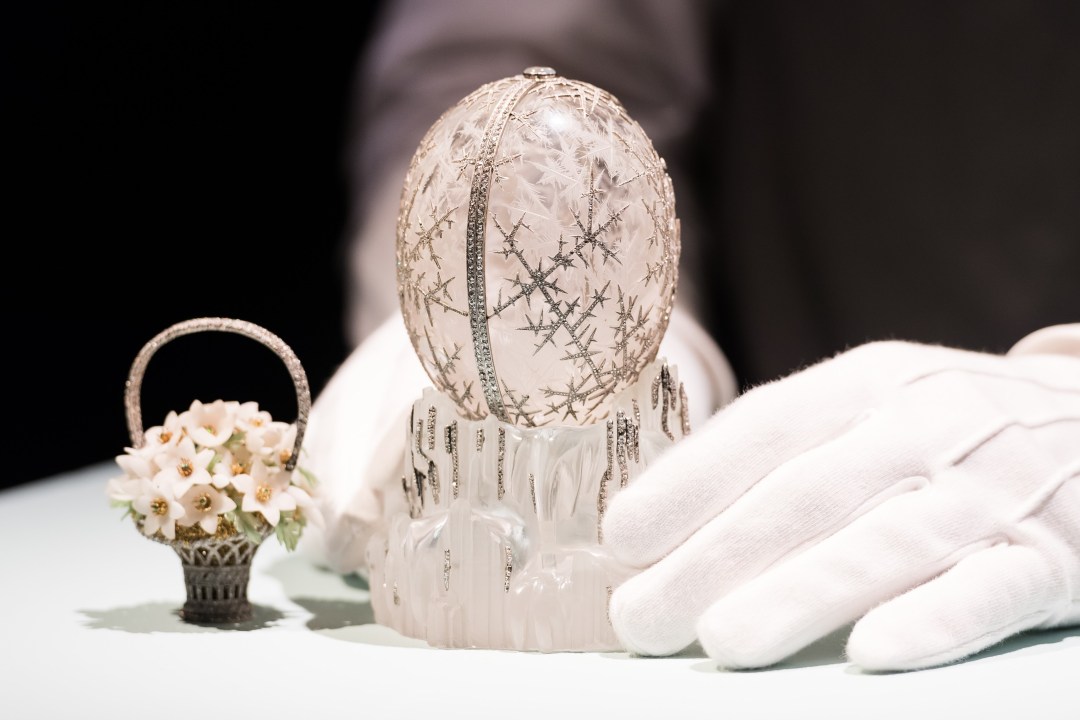
A surprise? Yes, but I’ll bet Conticello’s jubilation was tinged with disappointment because, as he will have discovered, not all Fabergé eggs are created equal. It’s not been confirmed exactly what type of egg he had taken, but a bit of googling would have suggested that what he had in his hands may have been a ‘modern Fabergé egg’: a Celtic Egg, one of seven made in 2021 as part of a Craft Irish Whiskey Company collaboration with Fabergé. Slàinte, Mother Russia! No doubt Conticello would have been swiftly informed by a black-market art-trafficker that the truly valuable Fabergé eggs are the pre-Revolutionary ones: the ones crafted in Russia by jeweller Peter Carl Fabergé in the years up to and including 1917.
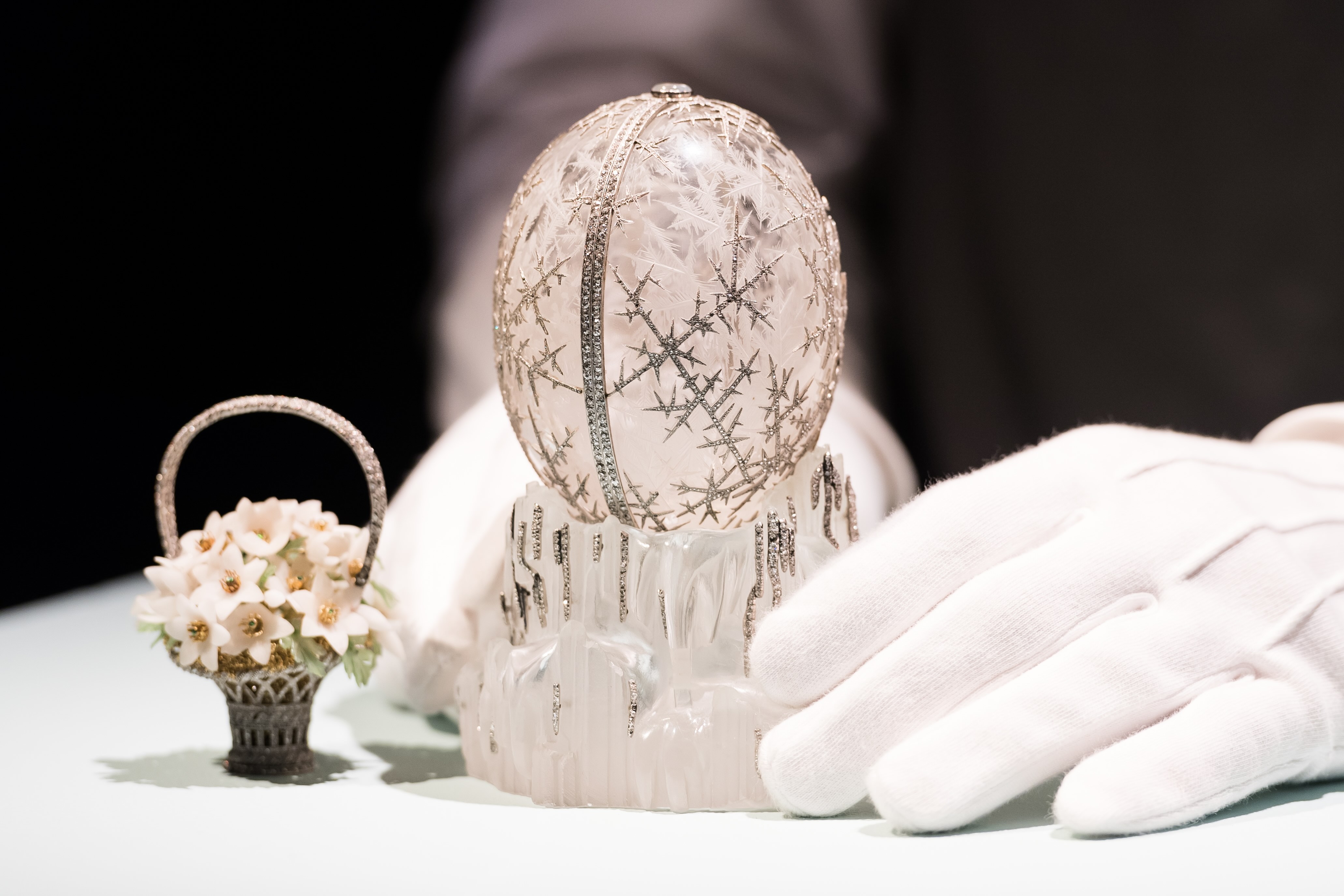
Over a period of 30 years, the House of Fabergé made 50 Easter eggs for the Russian Imperial family, applying incredible ingenuity in interpreting the shape and size of each egg. Designed to delight, every egg contained a ‘surprise’ which was to be discovered by the recipient, such as the miniature working train of gold, diamonds and rubies which is housed in the Trans-Siberian Railway Egg of 1900, or the songbird which emerges from the top of the 1911 Bay Tree egg to sing and enchant. Apart from seven missing eggs, most of the eggs are in museums or private collections (King Charles has three). The eggs appear only rarely at auction, with the Winter Egg of 1913 (possibly my favourite) selling at Christie’s in December for £22.9 million.
Were a modern egg to come under the hammer, it wouldn’t fetch anything like the dizzying sums of the pre-Revolutionary Imperial Fabergé eggs
Perhaps regrettably for our thief, modern Fabergé does not have quite the same appeal or heft on the rostrum. When Lenin’s commissars nationalised his company in 1918, Carl Fabergé left Russia, taking refuge in Switzerland and dying in Lausanne in 1920 – supposedly of a broken heart. The Fabergé name was appropriated and sold over and over again from the 1930s onwards; poor Carl Gustavovitch could hardly have imagined his name would be plastered on scents (Brut 33 by Fabergé) and cleaning products (courtesy of Unilever). Many legal battles later, the name was relaunched as a jewellery brand in 2009 by its new owner, Gemfields. More eggs were made – among them the Goldfinger Egg and the Game of Thrones Egg – but for true Fabergé connoisseurs, the firm was shuttered in 1918 and never opened again. The modern iteration was sold last August for £37 million to Sergei Mosunov, a Russian venture capitalist based in the UK.
While the value of the stolen egg and watch was stated in court to be £2 million, this is almost certainly a figure adjusted to include retail replacement value and private sales, and not indicative of value at auction. Were a modern egg to come under the hammer, it wouldn’t fetch anything like the dizzying sums of the pre-Revolutionary Imperial Fabergé eggs. The eggs made for the Dowager Empress Marie and the Tsarina Alexandra are masterpieces of another age, born of craftsmanship that cannot be replicated today and freighted with the dangerous glamour of a family felled by the relentless pace of history.
I doubt Conticello is dwelling much on the history of Fabergé eggs while he awaits his next hearing on Friday. But it would be cruel to tell him about the American scrap metal merchant who decided to research the oval gold object he had been trying to flog for years, only to learn it was the missing Third Imperial Fabergé Egg of 1887. He later sold it in 2014 for an undisclosed sum believed to be north of £20 million. Now that’s a good egg.




Comments