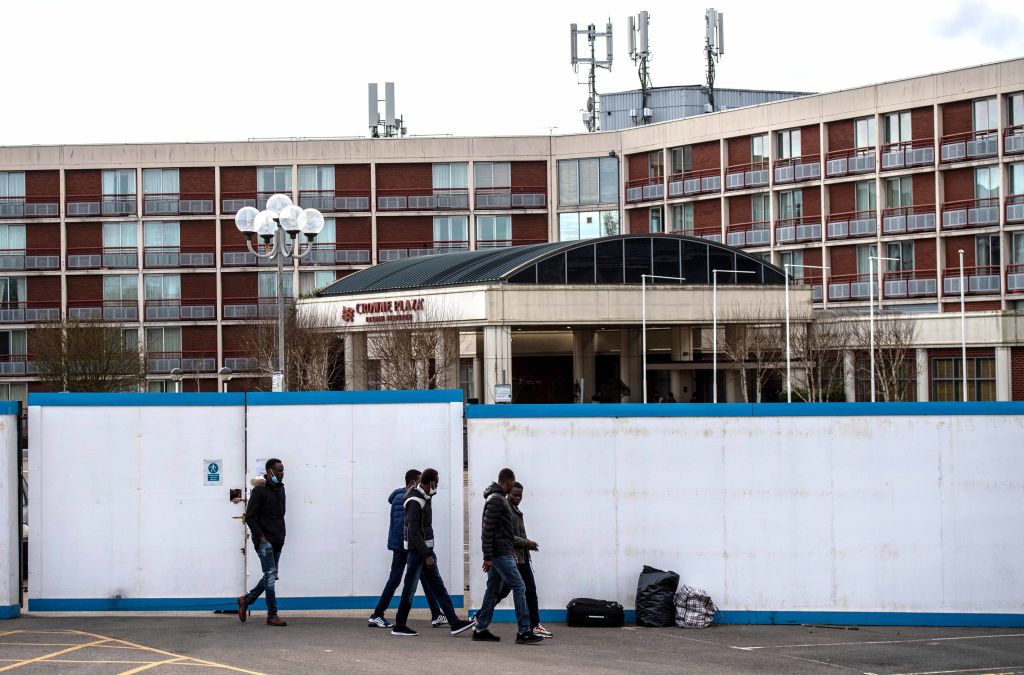
It’s clearly asylum week at the Home Office. On Sunday, destructive new ‘safe and legal’ routes for asylum seekers which will create a Burnhamwave were unveiled. Monday brought a commitment to replace employment tribunal judges with specially recruited members of the public. And today we a new plan was revealed which, according to the department’s press release, means ‘asylum seekers [are] to pay’ towards the cost of their accommodation and support.
We know from Home Office research published last year that those granted asylum have very low levels of employment (less than 50 per cent), even years after that grant
The media management model is familiar to those of us who’ve followed Home Secretary Shabana Mahmood’s team since they were at the Ministry of Justice. Each day in the lead-up to the publication of a major piece of legislation they trail an individual policy or two. Some are calibrated to appeal to the left, some to the right. They push messages about fairness, balance, and both the fiscal and moral necessity of reform.
Sometimes it works. Broadly, Mahmood’s sentencing reforms were necessary and well-intended. The migration reforms announced last year were even better – an end to the permanence of asylum grants, recognition that the Boriswave was a disaster, and a serious effort to reverse much of its harm, with planned reforms which would have prevented the large care worker cohort from ever settling.
But this time is different. There are two problems. The first is that these are not particularly good proposals. As I wrote on Sunday, establishing ‘safe and legal’ routes won’t reduce asylum flows, and the proposal to replace migration judges with members of the public will likely only result in capture by activists. In any event those decision makers would still have to abide by the Human Rights Act and certain provisions of the Equality Act, with all the barriers they present to our ability to deny asylum. If we intend to make migration matters non-justiciable, then we should have them decided entirely by asylum decision makers, with the experience to spot obvious lies and false claims.

As for the plan to make asylum seekers pay, to its credit I understand that the Home Office are planning to set a low threshold for repayments. They’re also intending to take money from both wages and benefits, which might sound good, but really just means that taxpayers will be ‘paying back’ the debt on behalf of the asylum seeker as they receive slightly lower benefits.
This is because almost no asylum seekers earn any meaningful income. Home Office research published last year showed that those granted asylum have very low levels of employment (less than 50 per cent), even years after that grant. And of those who are working at that point, half have ‘no regular pattern of hours’, with fewer than 40 per cent working full time. This means that eight years after being granted asylum, only 20 per cent are in full-time employment,
The earnings of those in work are also low. Eight years after asylum grant, median earnings are only around £13,000. So it’s hard to see how these people would ever pay back the circa £10,000 they would owe under the proposed scheme. Equally, while the deduction threshold might be low, repayments are unlikely to be substantial giving the legal barriers to making people destitute. On this policy, it will be absolutely necessary to review the detail, but there is no way it will ever cover the vast costs of our asylum system – accommodation alone is estimated to cost £15.3 billion over ten years. And that’s even before we consider the costs of healthcare, schooling and criminality associated with these people.
One bright spot is that this policy would likely mean that very many of those granted asylum here would never be granted settlement. The intent isn’t terrible. It would be nice if foreigners, many of whom entered our country illegally, paid back the billions we spend housing them. But this is a group with very low economic productivity. The reality is that importing such people is a disastrous idea, and well-intentioned fiddling at the margins won’t change that.
The wider problem is that the last set of promised migration reforms haven’t happened yet. The Boriswave is settling, with more and more becoming eligible every day. I understand that the current plan is for Indefinite Leave to Remain (ILR) to be handled not by primary legislation but via immigration rule changes in the autumn. Of course, Home Office minister Mike Tapp has been suggesting that there are plans to exempt care workers from those reforms, which would defeat much of their purpose. And, it remains to be seen if these plans survive Burnham as prime minister.
Our asylum system remains in utter chaos, and I understand from sources within the Home Office that in recent months the number of asylum claims being processed has collapsed. Meanwhile, illegal arrivals, and migrant crimes continue. It’s all very bleak, and won’t change until we have a government willing to tear up the laws which prevent us from saying ‘no’ to unwanted arrivals.






Comments