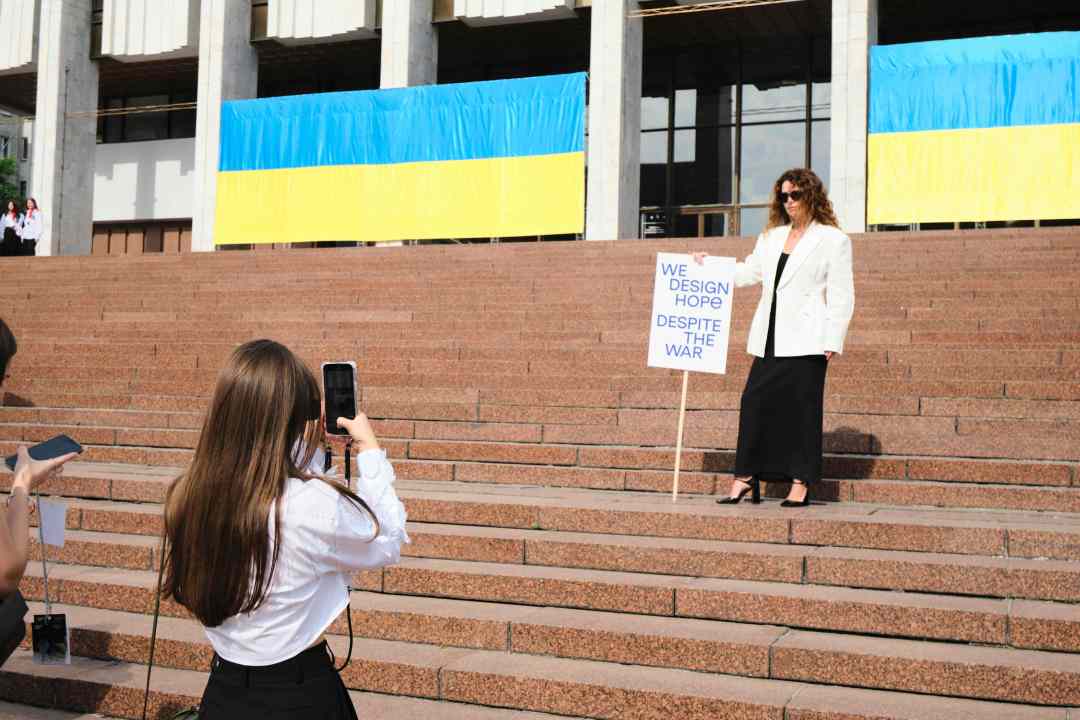
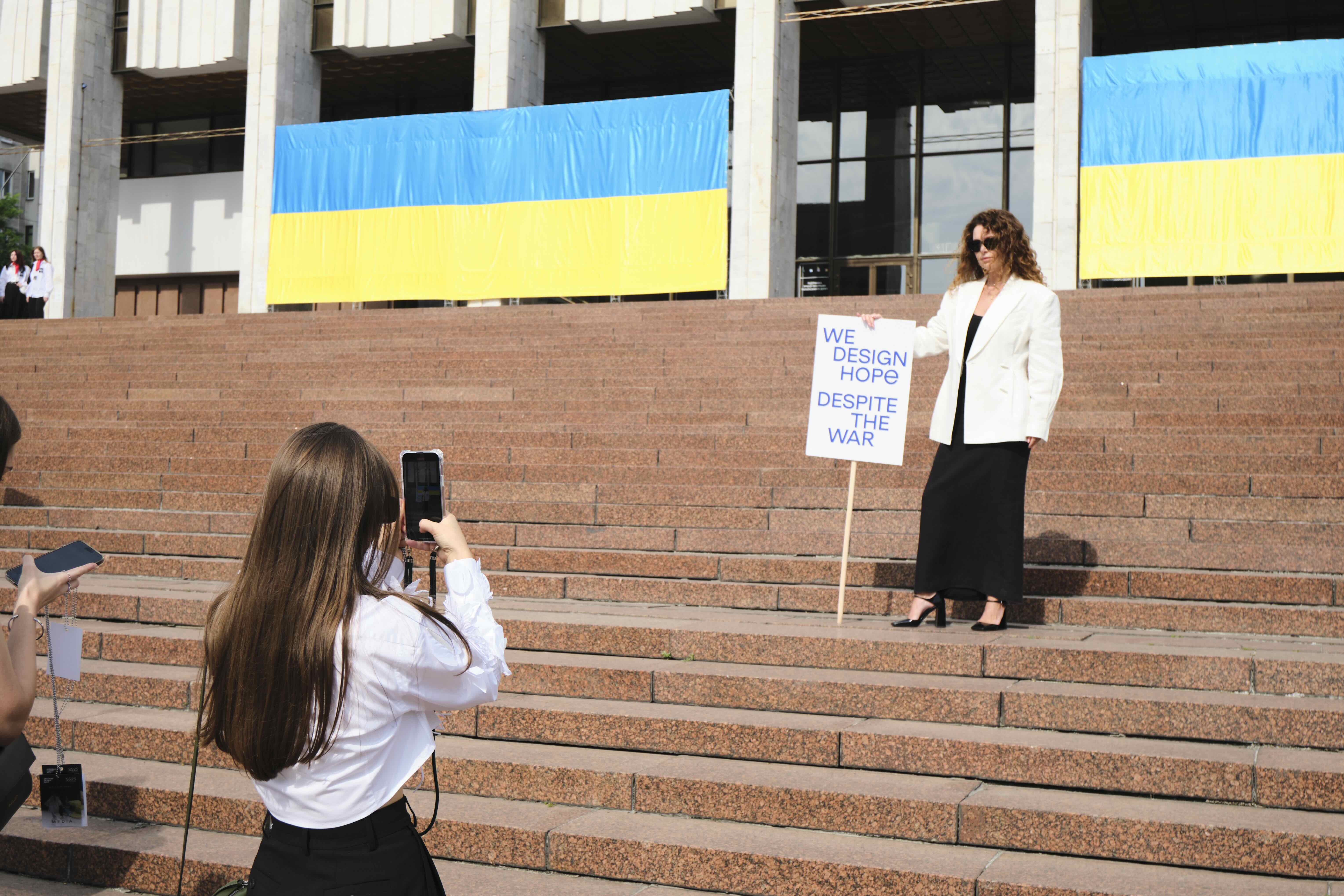
Flitting between runway shows, new collection previews and cocktail receptions under the blaring sound of air raid sirens is now the norm at Ukrainian Fashion Week. Following Russia’s full-scale invasion of Ukraine on 24 February 2022, Ukrainian brands travelled abroad to fashion weeks in cities including London, Berlin and Budapest to exhibit collections, before coming home to Kyiv in September 2024.
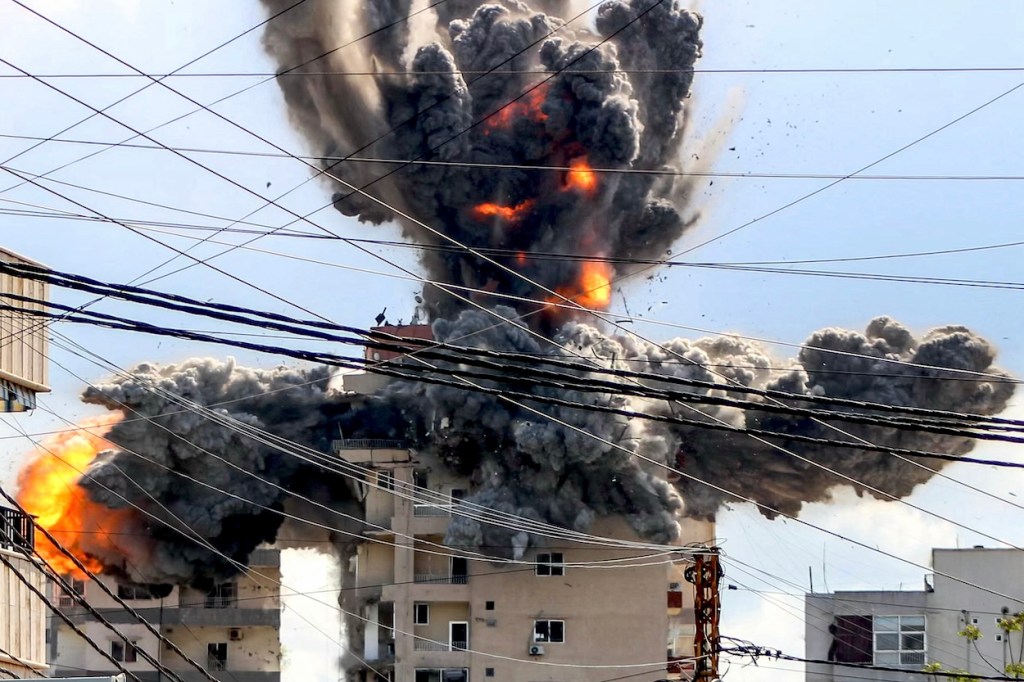
After covering international fashion weeks for almost a decade, attending the return of Ukraine Fashion Week to Kyiv for British Vogue was naturally unlike any other fashion happening. It’s hard to convey the dissonance felt watching sculptural designs by Ukrainian ready-to-wear label Coat by Katya Silchenko flow down the catwalk in the gardens of the National Opera of Ukraine, knowing that at any moment, fleets of Russian one-way attack drones and a deadly combination of cruise and ballistic missiles could bombard the capital. When launched from Belarus or Russia’s Bryansk region, Iskander missiles take as little as three minutes to reach the Ukrainian capital, making attempts to find shelter close to futile.
This season, designers showcased new designs from 12–15 March. On Saturday, Russian strikes in the Kyiv region killed four people, wounding another 15. Ukrainian President Volodymyr Zelenskyy said around 430 drones and 68 missiles were launched at the country in this overnight assault, with Kyiv under attack for almost four hours. During this bombardment, the production facilities of several Ukrainian brands in the Kyiv region, including eco-friendly label TG Botanical and menswear brand Viktor Anisimov, were destroyed.
‘On the third day of fashion week, we woke up to the news their production was bombed,’ says Lisa Ushcheka, head of international communications for Ukrainian Fashion Week. Originally scheduled to take place in early February, ongoing Russian attacks on Ukraine’s critical energy infrastructure forced organisers to postpone the event. ‘The situation with production was hard. Without heating, water, electricity and blackouts with temperatures of -20°C outside, even generators were freezing,’ adds Ushcheka. Coming out of the coldest winter Kyiv has seen in 15 years, Kyivans are more than ready to enjoy Spring. ‘These days are truly inspiring. You can see in the collections, not only the resilience and resistance, but this burst of life,’ smiles Ushcheka.
Holding fashion week in a country at war may appear superfluous when the Ukrainian Armed Forces are fighting for survival in the east of the nation on the frontlines. But these designers and fashion brands are paying essential taxes to Kyiv’s wartime economy, employing thousands upon thousands of skilled artisans and, perhaps most importantly, showing that even under fire, Ukraine’s cultural heritage will not be erased.
At the best of times, starting 30 minutes late is practically early for fashion shows, so it’s doubly impressive that despite the impossible circumstances in Kyiv, almost all the shows I have attended at Ukrainian Fashion Week over the past year and a half have started close to schedule.
Juliya Perekrestova, the designer behind the label Juliya Kros, is absolutely exhausted the day after her show. ‘The human psyche is this super weird thing that can adapt to almost any condition,’ says Perekrestova. Inclusive design has become the hallmark of Perekrestova’s designs, with garments featuring adjustable silhouettes and adaptive elements being worn by military veterans Ruslan Ivanov and Mykhailo Drobotenko during the show. ‘People who’ve lost limbs and are disabled from military service have a right to return to their normal life and look fashionable and stylish,’ says Perekrestova.
Production facilities for the brand are located in Sumy, an embattled city in northeastern Ukraine near the Russian border, just 20 kilometres from the frontline. Since the war began, hundreds of civilians have been killed or wounded in Sumy from Russian missile, drone and rocket strikes, with widespread power outages across the city being a common occurrence. ‘Our production is marked in an area of critical infrastructure, that’s why we’ve not had problems with blackouts and electricity. The whole city was without light, but this location had electricity. This miracle made the collection happen,’ she adds.
Constant reminders of the brutal impact of Russia’s invasion can be found throughout fashion week. Just before the entrance to the catwalk shows in Mystetskyi Arsenal, Ukraine’s flagship cultural institution, guests pass a Wall of Remembrance, honouring fallen fashion industry workers who joined the Ukrainian Armed Forces and paid the ultimate price defending their nation.
Avoiding a traditional catwalk, designer Mila Ogly of conscious fashion brand Upslowuse focused on a modern reinterpretation of Ukrainian demonology that reflects the current hardships faced by Ukrainians. A handful of models hid amongst the audience, before walking the runway, illustrating how demons live among us or, maybe, are us.
‘As a nation, we are going through hard times. We have lost our usual state of mind, our usual life. We are in the liminal state between the past and future,’ says Ogly. Well-known for its up-cycled denim pieces, Upslowuse faced major challenges during production, such as acute power shortages and blackouts, making conventional fabrication methods impossible. ‘Honestly, this year was the hardest for us,’ explains Ogly. But necessity is the mother of invention, with Ogly and her team developing new techniques, such as knitting or connecting materials at small bonding points rather than sewing.
Perhaps, as performance director Nastia Tymus has found, creativity is the only way to process wartime realities. ‘An artistic life is the thing that saved me. Art is not born in ‘nice’ conditions. Sometimes fashion is escapism, like any other art,’ says Tymus.

Comments