
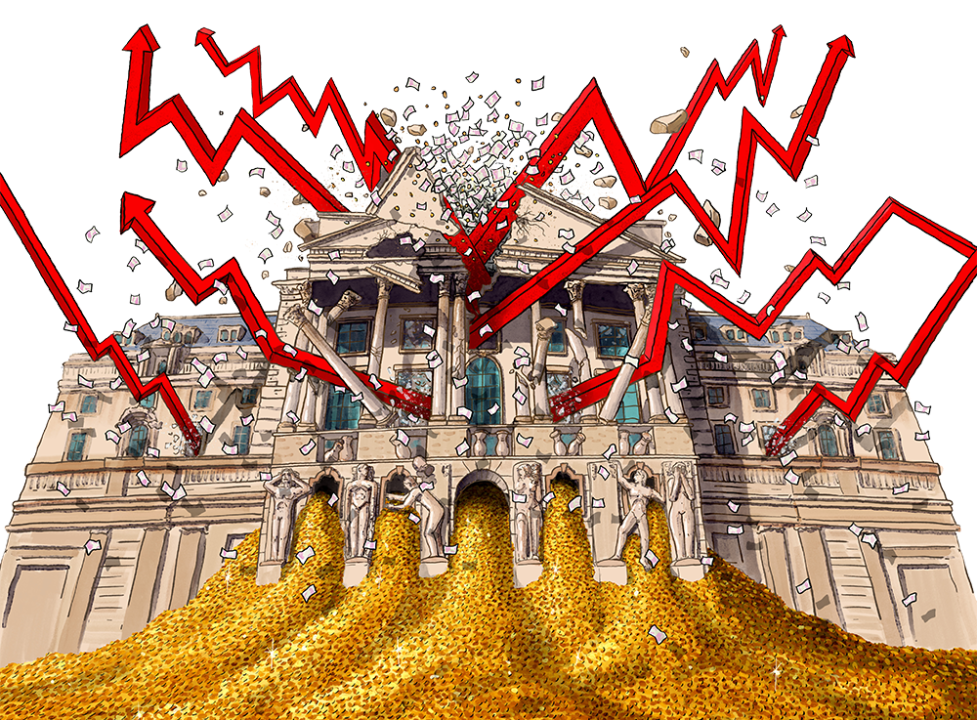
The Bank of England’s former chief economist Andy Haldane has accused the Bank of being too slow to tackle the latest wave of inflation and warned that five years of missed targets ‘does beg the question in the markets’ mind: are they serious?’
‘More than five years of misses, does beg the question in the markets’ mind: are they serious?’
On this week’s episode of Reality Check, Haldane tells me the Bank ‘hasn’t learned its lesson’ from the inflation shock of 2021 and thinks that it ‘should have gone a bit sooner’ in raising interest rates.
‘The truth is, it’s a very self-serving comment,’ he said.
‘I left the Bank of England’s Monetary Policy Committee in June 2021. Inflation was bang on 2 per cent. It has been above its target every month since I left the committee. I’m not suggesting causality there, Michael – although you could possibly, if you wanted. But five years, more than five years of misses, does beg the question in the markets’ mind: are they serious? I think that’s a real question.’
Haldane says he would have been ‘on my bike and raising rates sooner’ to fight the impression that the Bank was ‘playing a bit fast and loose with inflation’.
On next week’s Budget, Haldane – who was once rumoured to be advising Andy Burnham on his economic strategy but now backs Kemi Badenoch’s approach – reckons John Healey could deliver ‘a smorgasbord of modest tax rises’ as well as a reduction in fiscal headroom.
While backing fiscal devolution, the ‘critical friend’ of Burnham warned that ‘devolution by itself is not a growth plan’ and suggested the Prime Minister’s campaign rhetoric didn’t reflect the actual Manchester record.

‘I think early on in the campaigning, conference speech phases, it was all, you know, “rolling back 40 years of neoliberalism”. I don’t even know what that means. But it certainly doesn’t describe Manchester, I can tell you.’
Haldane argued that Burnham knows Manchester’s success depended on private investment as much as public intervention: ‘It hasn’t been built on bus franchising, for heaven’s sake. It’s been built on attracting people and money and business and culture, just like every other successful city in human history.’
The former Bank chief economist, though, remains ‘resolutely optimistic about UK plc’, arguing that Britain still has the capacity for much stronger growth.





Comments