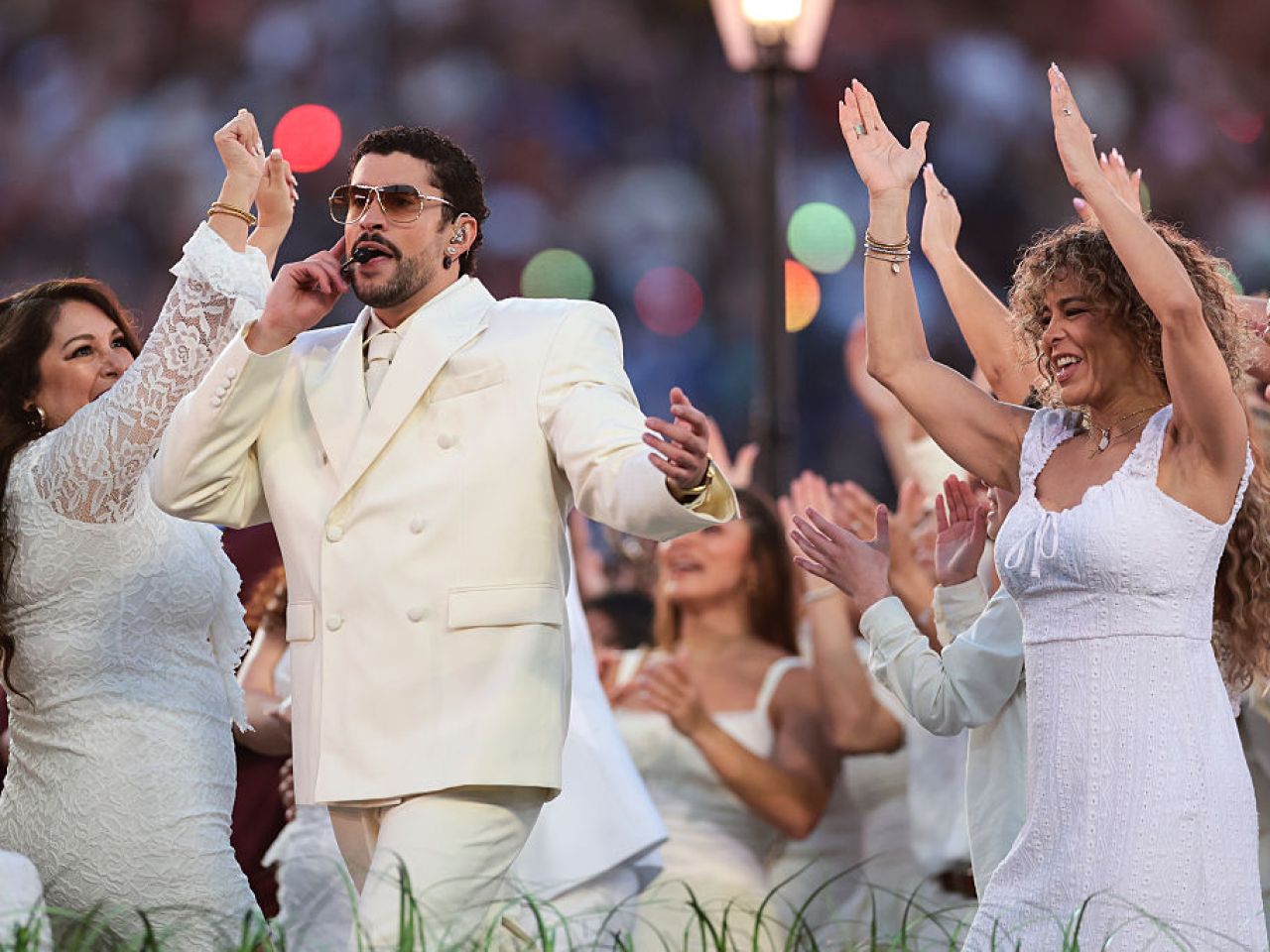
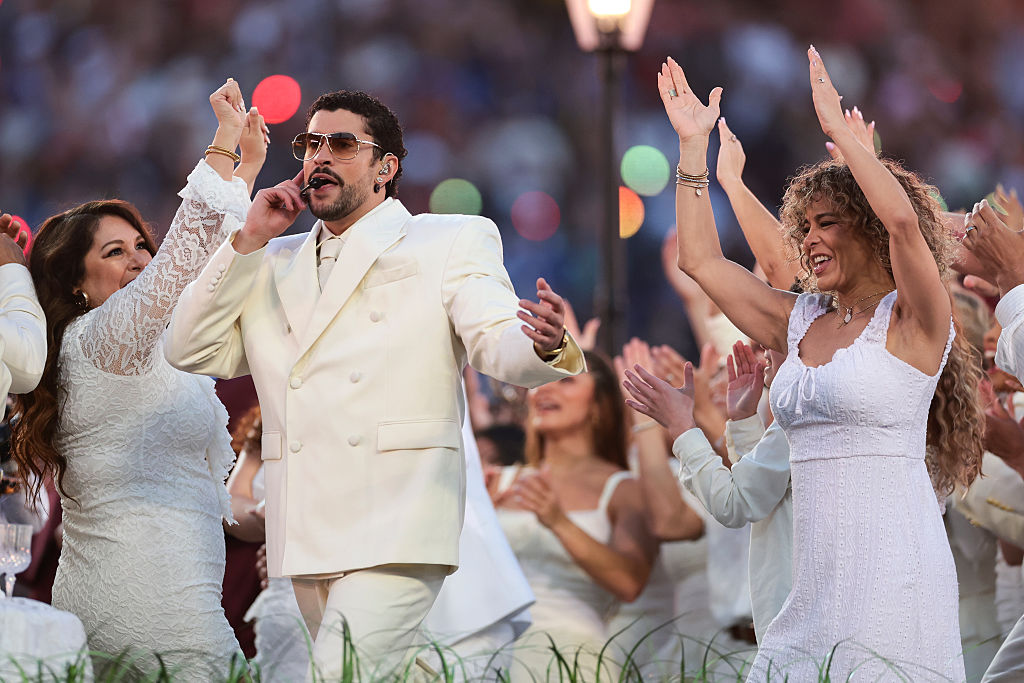
The latest Super Bowl offers the most recent opportunity to reflect on the terminal state of our national culture, held together chiefly by a distractive and unhealthy mania for commercial sports and perfectly exemplified by the infantile yet aggressively transgressive nihilism of a brainless showoff calling himself Bad Bunny and dressed all in white, suggestive perhaps of an anti-Easter Bunny. Why, one wonders, has no political theorist from Hobbes forward posited the ideal human community as one which would combine political democracy with cultural and intellectual aristocracy – as, indeed, America at the time of her founding and for several generations thereafter did? Such an arrangement might satisfy critics of democratic society on the anti-egalitarian right, such as T.S. Eliot, and those on the egalitarian left, like John Rawls, for whom democracy can never be inclusive and participatory enough.
The likely answer is that the thing is a theoretical as well as a practical impossibility, like a scientifically advanced society that combines modern dentistry with pre-industrial technology. The principal enemy of the supremacy of the intellect in a civilized society is not, as anti-democratic critics over the past 200 years have argued, democratic systems of government. It is, rather, industrial economies which destroyed aristocratical governments and cultures by creating the mass societies which emerged from the industrial ones and on which the latter depend, as high culture depended on agricultural societies and the aristocracies that shaped and controlled them.
The western world, it seems, is doomed to a future of a vulgar and transgressive popular culture
It is true that agricultural civilizations of the past were comprised of an upper minority stratum, the cultural elite who were both the creators and, as we say today, the consumers of the achievements of a high culture, resting upon a majority lower one consisting of the ignorant and unlettered, just as the industrial ones of the modern era are.
The difference between the two – and it is a critical one – is that ever since the arrival of industrialism the division has been between a high culture and a mass culture, whereas in the countless ages before it the distinction was between high culture and folk culture, whose contribution to civilization throughout recorded history has been in every way as valuable, rich and significant as that of the former. Indeed, in many instances, the two are indistinguishable – Beowulf, for example, or the fairy tales of the Brothers Grimm, or the fables of Aesop and La Rochefoucauld, or the English madrigals and the French rondelays.
What differentiates the two – the folk culture of the aristocratic-agricultural past and the mass culture of the democratic-industrial present – is that the first was created spontaneously by the “folk,” the people themselves, whereas the second is artificially generated, carefully and cynically according to commercial calculation based on prevalent consumer tastes determined by statistical surveys consulted by “creative” hacks and their employers who expect to satisfy and profit from those tastes, after having created them themselves.

The result is that while children in the not-so-long-ago invented their own games and entertainments and their elders wrote their own stories and composed their own songs and playlets to perform for their families and neighbors, today they buy them out of a box or imitate the popular “artists” they see and hear on television, radio and the antisocial media.
David Cannadine, the author of The Decline and Fall of the British Aristocracy, correctly noted that many British aristocrats were philistines. Still, the aristocracy constituted a socially and culturally stable class that was the chief preservative element in high British civilization over a full millennium; a role that the unstable financial and industrial plutocracies that succeeded the old aristocracies and whose members rapidly ascend to and as quickly drop out of them as business and social conditions fluctuate – thus virtually ensuring that they pass little if anything of tradition and high value on to their successors – cannot fill.
Folk culture, equally the victim of the destructive new civilization that arose in the early 19th century, has proved itself similarly unable to survive despite the earnest but sporadic attempts of people like John Ruskin toward the end of the same century and since to reject the industrially manufactured arts and crafts in favor of their humanly created equivalents.
Other dissenters (in America especially) from the new world in formation attempted to revive the old agrarian tradition, the most famous being the Southern Agrarians in the American South in the 1920s and 1930s whose members included John Crowe Ransom, Allen Tate, Andrew Lytle and Robert Penn Warren. But Agrarianism failed to survive World War Two, while subsequent and more inclusive and popular attempts at resurrecting and promoting the old agricultural values and ways of life – the “back-to-the-land movement” in the 1960s and 1970s, for example, and Wendell Berry’s protest against industrial agriculture and what he calls “the unsettling of America” – were as quixotic in practical terms as they were productive in literary ones.
The tragic fact is that the recreation of any sort of high culture as something more than a footnote to the mass culture represented by Bad Bunny, Taylor Swift, the Kardashians, Billie Eilish, et al. is as impossible as the reestablishment of anything like civil and political peace in the United States – and elsewhere – is. The western world, it seems, is doomed to a future of a vulgar and transgressive popular culture, maintained in the context of angry political division and social chaos.





Comments