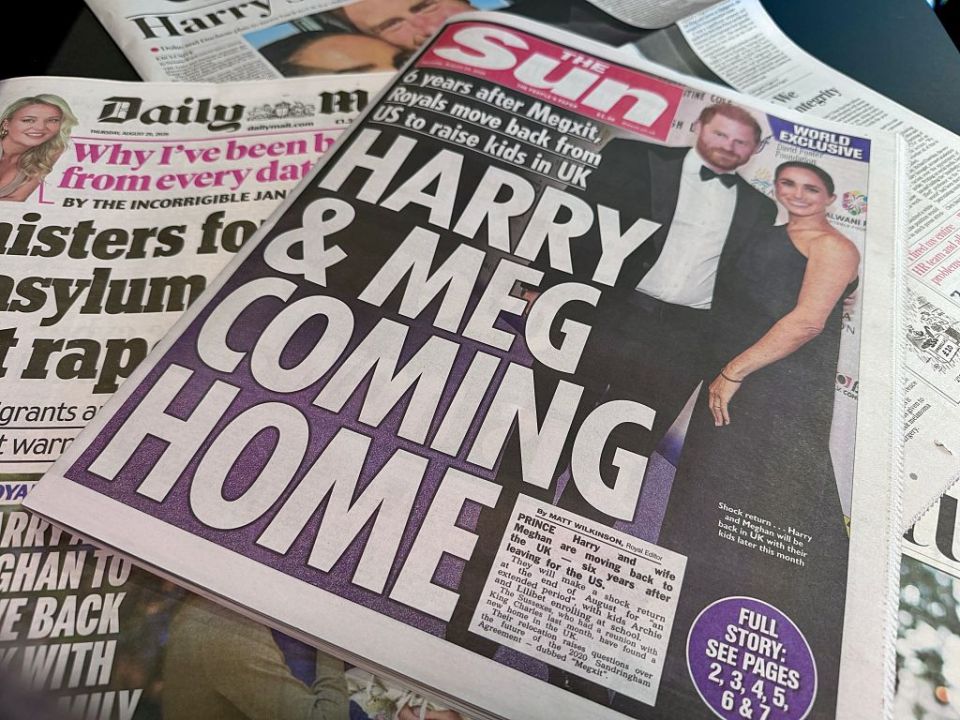
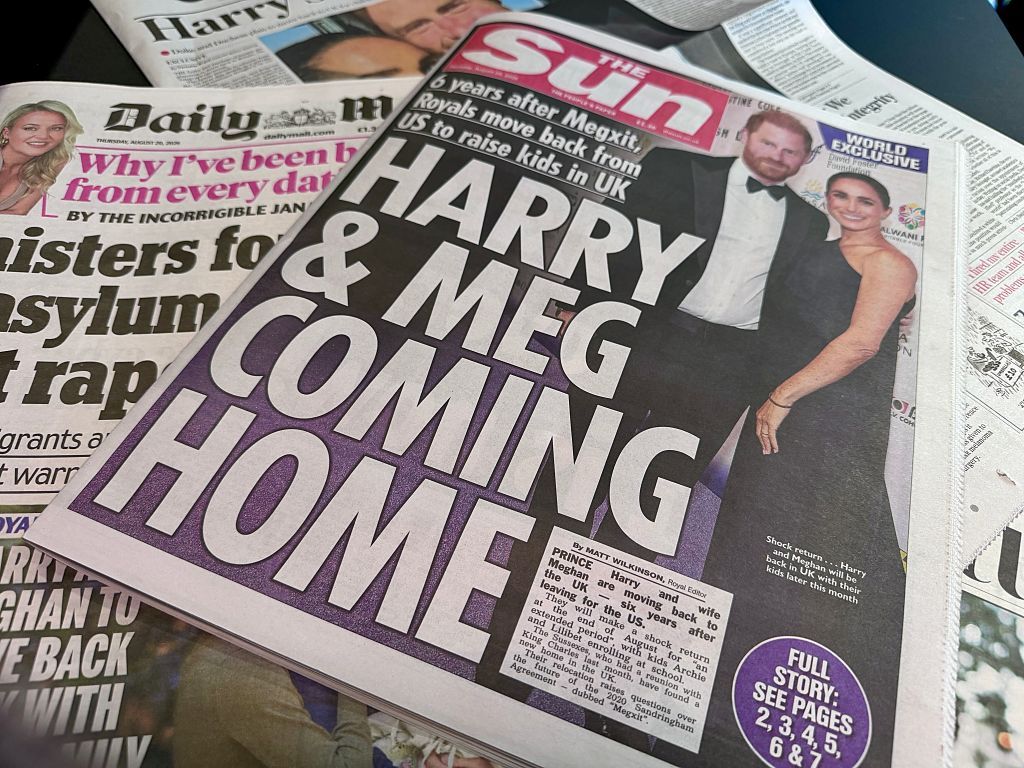
The prospect of Prince Harry and Meghan Markle leaving the United States has been dangled by reports in the British media. Many of us Americans are buoyant. The Daily Telegraph and the Sun reported that their children will begin British schooling in September. The family will occupy a private house outside London, keep their California and Portuguese homes and remain non-working royals. The King learned of the plan only on Sunday. He welcomes private time with his grandchildren, yet the late Queen’s boundary still stands: no half-in, half-out arrangement.
How things have changed in the six years since the Sussexes left Britain. Harry’s arrival in America in 2020 was met with considerable curiosity and some excitement, which he has since squandered.
The Sussexes arrived as exotic refugees. They leave as washed up, self-possessed Hollywood grifters
Harry and his wife invaded American political debates on election integrity, family leave and other partisan questions, despite having no mandate or expertise to do so. He spoke dismissively of the First Amendment, calling the constitutional guarantee at the heart of American free speech “bonkers.” Nigel Farage, the leader of the UK’s Reform party, noted at the time that Harry had “lost the plot” and would soon be unwanted on either side of the Atlantic. How prophetic he was.
More insulting still, Harry had the gall to remark on national television that America had “elected a king.” Even a liberal New York audience booed. The American hostility to Brits meddling with our democracy runs deep. Did he really think that mocking Donald Trump would go down well? As a foreign prince who had chosen to live in America, sneering at our elected head of state revealed a stunning lack of judgment.
Most popular
Nathan Cofnas
Academics are trying to get my paper retracted — and some of them haven’t even read it

Harry’s immigration record completed the picture. In his memoir Spare, Harry detailed extensive past drug use. Those admissions prompted formal scrutiny of how he obtained and retained his United States visa. Ordinary applicants understandably expect immigration rules to be applied consistently. The spectacle of a highly privileged foreigner publicly discussing such conduct inevitably invited scrutiny. Was Harry held to the same standards as everyone else, or did he get special treatment?
The American reaction to the Sussexes’ departure has been indifferent. Meghan McCain spoke for a wide constituency when she labeled the couple “entitled grifters” and offered Britain a dry farewell: “Good luck to our friends in the UK, they’re your problem now.” Megyn Kelly captured the same relief in fewer words: “We’ve done our time here in America my dear friend.” Neither is a fringe voice. Their comments capture something broader: the American public’s growing impatience with the Sussexes’ habit of treating their host country as both a refuge and a political stage.
That scorn was long in forming. From the Oprah interview through their Netflix series and Spare, a growing share of Americans tired of their predictable schemes: private grievances aired and monetized, family loyalty discarded and the host country used as a convenient platform. The Sussexes arrived as exotic refugees. They leave as something far less captivating: washed up, self-possessed Hollywood grifters.
There is another reason the American reaction matters. Harry and Meghan were not merely private celebrities who happened to move to California. They arrived carrying the enormous symbolic capital of the British Crown. That gave them a platform, but it also imposed an unusual obligation to understand the country in which they had chosen to live. Americans are generally tolerant of eccentricity, celebrity and even political disagreement. What tends to irritate us is the suggestion that the rules and institutions governing everyone else are somehow beneath some privileged person.
So we watch their departure with relief that it’s finally over. The reasons for leaving, we can assume, are fair enough. The children will know their father’s country, which is a legitimate parental desire. Relations with the King have warmed sufficiently for personal contact and a reunion in July. With the Prince and Princess of Wales, relations remain far colder, and rightfully so. Harry and Meghan’s security dispute remains unresolved, and the Palace has restated the essential limit on their status: they will remain private individuals, not royals.
The constitutional point is simpler. The monarchy survives by distinguishing public duty from private life. Harry chose private life, and he was entitled to do so. What he cannot reasonably expect is to abandon the obligations of the institution while retaining its prestige whenever it suits him. Not to mention the unforgivable insults and attacks he has made on the monarchy. Britain has been here before. The answer is not punishment or reconciliation on demand, but severe boundaries.
Many of us Americans admire the institution Harry abandoned and betrayed. We have been considerably less impressed by what followed. Britain must now decide how to manage the return. With a dangerous, untrustworthy pair heading back, one can but urge the most extreme caution.






Comments