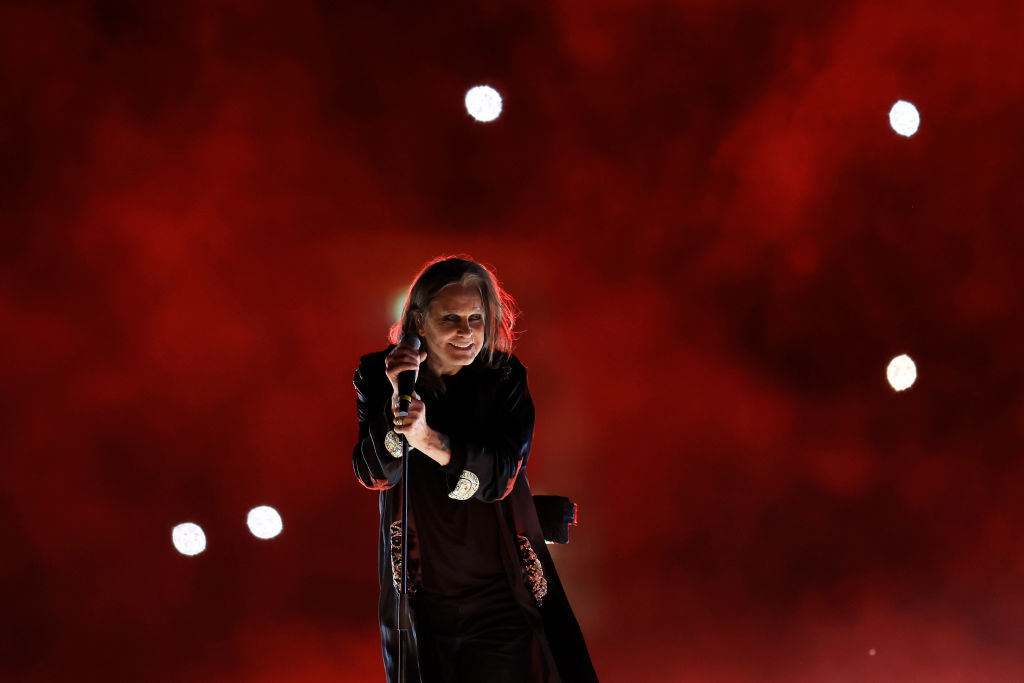
If you were one of the millions of Ozzy Osbourne fans who mourned the death of the Black Sabbath frontman when he died last summer, then you may, or may not, be delighted at the news that he is soon to be resurrected, albeit in holographic form. Granted, a return from the dead might not seem entirely unlikely for the one-time “Prince of Darkness,” but the form that his comeback will take is purely down to AI wizardry.
The idea of a gleaming, sanitized Ozzy is a depressing one both technologically and in terms of what it represents for the music industry
The digital companies Hyperreal and Proto Hologram are promising a whizz-bang experience that will allow no doubt grateful audiences not only to view Osbourne in his pomp, but also to interact with him. Hyperreal claimed that all footage of Osbourne will be “authenticated, approved source material, curated, consented, and controlled by the people who love him most.”
It is little surprise that his widow Sharon is firmly behind the project, and she has said that, “You can go and talk to Ozzy and ask him anything you want and he will talk back to you. You can have your photo taken with Ozzy. He can tell the audience he loves them. He can just be Ozzy. After you get over the tears, it’s brilliant.” It is unclear as to whether there will be a digitally aided recreation of the notorious moment when he bit the head off a bat on stage, but given advances in AI technology, virtually anything is possible, if not necessarily advisable.
Osbourne was, of course, a proud Brummie, and his home city loved him back, as could be seen by the emotional response to his state-like funeral there last year. Therefore it is fitting that AI Ozzy will begin its tour in Birmingham before going around the world. It was Brum where Osbourne made his final live appearance, a matter of a few weeks before he died, in a celebratory charity concert, and so this represents a homecoming of sorts. Yet it seems strange that nobody has taken a step back and thought whether this exercise in digital necrophilia is not just a poor idea, but sets a dangerous precedent for similar desecrations in the future.

Holographic recreations of dead musicians are nothing new. The eclectic likes of Tupac Shakur and Michael Jackson have been brought back from the grave to delight their fans – even if a recent Elvis show somehow failed to do so, much to its audience’s disappointment. In film, everyone from Peter Cushing and Carrie Fisher to Val Kilmer has been resurrected via the wonders of AI. All of this has so far happened with their families’ consent, no doubt because there have been handsome payments made for image rights.
However, it is hard to imagine that Osbourne himself, an unreconstructed old rocker if ever there was one, would have been thrilled at the idea of his being recreated in pristine digital form. Part of Osbourne’s quintessential Black Country charm was his rough and ready on-stage persona, where audiences enjoyed the idea that anything might go wrong somehow. (And, let’s be honest, it often did; the bat-munching incident was not the only time that Osbourne managed to offend public decency.) The idea of a gleaming, sanitized Ozzy is a depressing one both technologically and in terms of what it represents for the music industry. Whatever next? Serge Gainsbourg reinvented not as a louche boulevardier but as a bright-eyed family-friendly entertainer?
No doubt there are many other major acts – naming no names, Mick Jagger – who are rubbing their hands together at the thought of continuing in AI form indefinitely and earning money from beyond the grave for decades yet to come. The precedent set by the (very much alive) ABBA and their long-running ABBA Voyage show has made the industry look at the idea of virtual performers entirely differently. But for the sake of the ramshackle, distinctly English Osbourne, and the sincere affection with which he was regarded by many, let’s keep his endearingly bewildered visage free from this digitized banality.





Comments