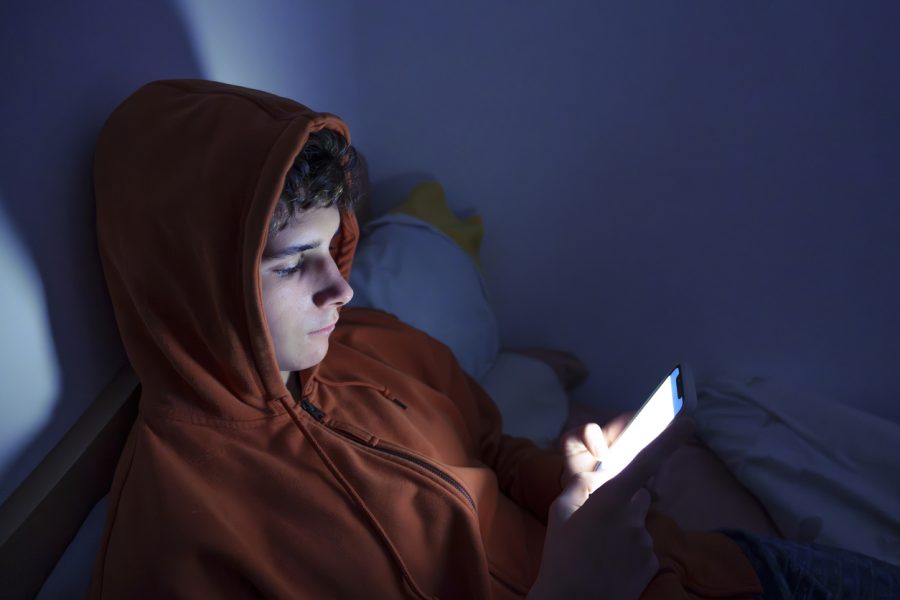
Despite still searching for a social media policy, the government launched – with great fanfare – a pilot this week involving 300 teenagers. Over the next six weeks, these children will be subject to varying restrictions on their use of social media, ranging from time limits to a complete ban.
Events have overtaken this social experiment, however, and the government’s stalling on what to do about how kids use the internet may no longer be feasible. On Wednesday in Los Angeles, a jury found Meta and Google guilty of intentionally building addictive social media platforms that harm children’s mental health and awarded £4.5 million in damages to ‘Kaley’, the 20-year-old plaintiff, who claimed the platforms had ruined her childhood. The landmark case is bound to open the floodgates to hundreds of others blaming their thwarted adolescence on the social media platforms.
On the same day, in a victory that should frighten our feet-dragging Prime Minister into action, the House of Lords backed an amendment to the Children’s Wellbeing and Schools Bill tabled by Lord Nash, the former minister for schools. This would raise the age limit for access to harmful social media sites to 16. ‘The government risks being on the wrong side of history,’ says Lord Nash:
At least Australia’s government is trying to protect young people
The evidence that social media has a negative impact on children’s development is incontrovertible, yet the government keeps trying to fob off parents rather than accept that there is need for an amendment like this.
It seems ironic that peers – who have an average age of 70 – should be moving a lot faster on this issue than the Labour government. Yet while the government keeps stalling on any confrontation with Big Tech and has called for a public consultation to decide whether a ban should be introduced, the Lords are pushing for change now, without wasting time on a lengthy consultation.
As far back as last year, Baroness Bertin had also shone a light in the Lords on the disturbing pornography, featuring choking, incest and many deepfakes, which anyone can access with a few swipes on their phone. Violent sexual images are not only stored in the dark cellar of PornHub, but easily viewed in the nursery of TikTok, the favoured platform of today’s children. Baroness Bertin recommended making harmful online pornographic content illegal when it includes degrading, violent and misogynistic content, as well as that which could encourage an interest in child sex abuse.
Peers are in tune with parents, including the bereaved cohort whose children have died as a result of social media use. Parent groups have pointed out the bias in a consultation that lays out the ‘benefits’ of social media while denying the causal link between its content and children’s wellbeing.
Medical professionals have joined parents in the battle for the ban for the under-16s. Dr Becky Foljambe, campaigner for the organisation Safe Screens, says that:
In our daily practice we are seeing how addictive these platforms are, pulling in our children in narcotic-like fashion to see content that is appalling and unregulated. The screens are damaging eyesight, sleep, speech and language development, which are core to their social skills.
Even the teaching union NASUWT has joined calls for a social media ban for under-16s. The union reports that teachers are frustrated by the gnat-like attention span that a child used to three-second clips is left with. Who would be able to concentrate over 400+ pages of, say, Great Expectations, today? Bex Morse, a secondary school teacher at Canterbury Academy, agrees:
There can be no doubt that the use of social media is having a negative effect on our young people and their families. We need to upskill parents in how to navigate these muddy waters and support them in having difficult conversations with their young people around social media, the impact it has and how to use it safely – if at all.
Campaigner Ellen Roome MBE suspects her 14-year-old son Jools was taking part in a ‘blackout challenge’ – otherwise known as a ‘choking challenge’ – on social media when he died. Countering those who bleat about censorship, she said:
Stop! We’ve had enough. This is not about stomping on anyone’s liberty. This is about protecting children from vicious images and from paedophile groomers who can track them through their phones.
In Australia, which has imposed a social media ban for under-16s, the jury is still out about the impact this has had on young people’s wellbeing. But at least the government is trying to protect them. Here, instead, the state is a negligent parent who feels that, for its children, anything goes.




Comments