Cristina Odone

Cristina Odone is founder of The Parenting Circle.

A social media ban for under-16s is long overdue

From our UK edition

Despite still searching for a social media policy, the government launched – with great fanfare – a pilot this week involving 300 teenagers. Over the next six weeks, these children will be subject to varying restrictions on their use of social media, ranging from time limits to a complete ban. Events have overtaken this social experiment, however, and the government’s stalling on what to do about how kids use the internet may no longer be feasible. On Wednesday in LA, a jury found Meta and Google guilty of intentionally building addictive social media platforms that harm children’s mental health and awarded £4.5 million in damages to 'Kaley', the 20 year old plaintiff, who claimed the platforms had ruined her childhood.

How ‘best friend parenting’ leads to spoilt kids

From our UK edition

Young people are unwilling to go to school. They are unwilling to go to the office. And they are unwilling to go to war for this country. Is this about Generation Z being born with a natural predisposition to laziness and solipsism  – or is it about parents who want to be their child's best friend? Best friend parenting is problematic parenting Increasingly, mothers and fathers are adopting a dangerous approach to raising their children: 'best friend parenting'. This involves dodging conflict at all costs, with parents ensuring their child stays in their comfort zone even if this risks school and the office becoming optional extras in young people’s lives.

Is there a simpler answer to the special needs crisis?

From our UK edition

The Jesuits had it all wrong. They famously insisted: 'Give me a boy at seven and I will give you a man.' Schooling could change everything. Today, neuroscientists, educationalists and psychologists know that the clay is set much, much, earlier. Whether boy or girl, the brain and its neural pathways will be formed by the time the child is into their third year. This is even more true of children with special educational needs and disabilities (Send): early detection of speech defects or cognitive failures can often reduce, and sometimes altogether erase, developmental issues.

Why so many autistic children no longer go to school

From our UK edition

Louis, 9, rocks back and forth. He can draw the solar system and place every planet on it, but he will not meet your gaze and a high-pitched voice will have him clap his hands to his ears in agony. Louis’s parents recognised his autism early on and sought a referral to a specialist from their GP. Early diagnosis – and a middle-class postcode – has helped them seek prompt speech and occupational therapy for their son. This came with guidance for Louis’s parents on navigating the unfamiliar bureaucracy of special needs education: how to obtain a needs assessment from the council; ensure Louis received an Education, Health and Care (EHC) plan that met his needs; enrol him in the local primary school.

Bridget Phillipson must not abandon special needs children

From our UK edition

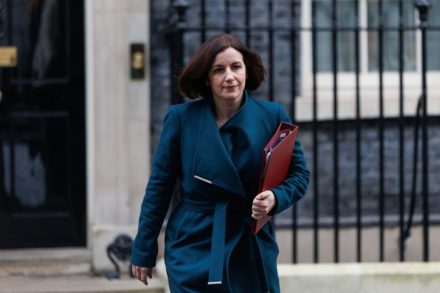
Bridget Phillipson, Secretary of State for Education, has finally turned her attention back to her brief – and there is a big group of school parents who wish she hadn’t. Parents whose children have special needs are up in arms about the latest announcement that has come from the Department of Education. It was bad enough to hear that, given Phillipson’s other pressing commitments (her doomed attempt to be elected deputy Labour party leader earlier in the Autumn being one), the publication of the white paper on schools’ special needs (SEND) provision would be postponed until next year.

Can schools force parents to reconnect with their children?

From our UK edition

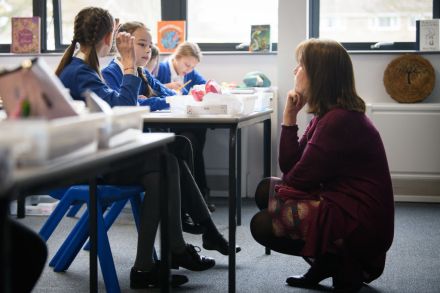
Parents must be 'front and centre' in their children's education, Education Secretary Bridget Phillipson has told schools. Her upcoming white paper will introduce clear expectations around parental engagement with schools. The idea, presumably, is that parents have the confidence and know-how to oversee their children, allowing teachers to focus on teaching rather than on being a therapist, a social worker, or a nanny. If only. Parents have lost confidence, courage, and, as a result, authority. Teachers quite understandably fear 'engagement' will require teaching parenting skills that have grown rusty: too many mothers and fathers seem to have abrogated all responsibility for their child’s hygiene, toilet training, and vaccinations.

Is Labour prepared to alienate special needs parents?

From our UK edition

Welcome to the Isle of Sheppey, a stretch of pebbled beaches and caravan parks that regularly stars in the ONS’s index of multiple deprivation. Health outcomes, like household incomes, are well below the national average: the life expectancy here is nine years lower for men and four years lower for women, while the rates of diabetes and obesity are higher. At Thistle Hill Academy, a primary school in the northwest corner of the Isle, teachers have been contending admirably with their community’s challenges – including the news that 47 per cent of the Reception class they expect in September will have special education needs (SEND). High levels of SEND children is commonplace here and in schools across Kent.

When did divorcing parents become so toxic?

From our UK edition

A friend remembers how, growing up in Ceausescu’s Romania, she and her classmates were encouraged by teachers to spy on their parents for dissenting opinions or unpatriotic behaviour. Such monstrous behaviour would never be countenanced here, right? Wrong. In the poisonous atmosphere of the family courts, quarrelling parents are known to plant devices on their children to covertly record their rows to then put before a judge as evidence. The practice has become so routine it prompted the Family Justice Council to issue guidance against it last month.

Tackling child poverty may prove a vote winner for Farage

From our UK edition

In news bound to make Keir Starmer nervous, voters in 121 Labour-held constituencies with high rates of child poverty are reportedly prepared to support Nigel Farage at the next election and hand their seats to Reform. This shock projection, via the Financial Times and More in Common polling, came less than a fortnight after the Reform party leader declared that he would scrap the two-child benefit cap. Could it be that limiting benefits to families with two children, a policy once so popular with the public, has lost its appeal?

How to stop secondary schools becoming misery traps

From our UK edition

'Transition' is a word much bandied about in education circles. No, this is not about gender. Rather, when school staff talk about transition they mean that pivotal moment between primary and secondary school. This is the moment when a child moves from a small (average roll number of 280 pupils) and familiar place, probably within walking distance of their home, where they were the oldest and most important cohort; to a site often with five times as many pupils, where, aged 11, they are once again the pip-squeaks, braving strange new faces and routines, after most likely having travelled a long way from home (up to 8 miles in rural areas). This step change is proving more challenging than anyone had previously suspected.

What the kids get right about the assisted dying bill

From our UK edition

The brothers Grimm knew that it sometimes takes a child to call out what grown-ups think but dare not say. Whether it is that the emperor wears no clothes or that our parliamentarians show little compassion, you can count on children to speak the truth. Does it take a 17-year-old to point out that we shouldn’t be focusing on assisted dying but on assisted living? Take the latest report from the Children’s Commissioner, Rachel de Souza. Asked about the Assisted Suicide Bill, which reaches report stage this week, the teenage respondents’ approach is thoughtful and compassionate.

It’s not the government’s job to prepare kids for school

From our UK edition

Today, every parent of five-year-olds will find out what school their child will be going to in September. The likelihood is that they will get one of their top choices – last year, 93.2 per cent of families received an offer from their first choice of primary school. Reception class is the introduction to 'proper' school, and the tiny tots will do more duck-duck-goose than A-B-C. But today’s children arrive incapable of even this light schedule. As we now have heard so often, many arrive in nappies and many will not know how to speak properly or play nicely. Almost half of teachers say parents have no idea what being school-ready means.

Showing Adolescence in schools lets parents off the hook

From our UK edition

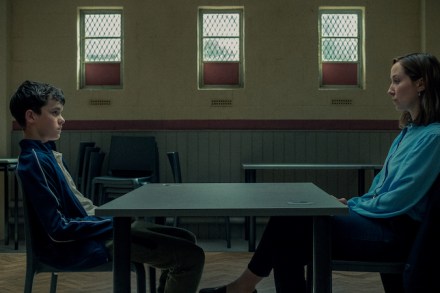
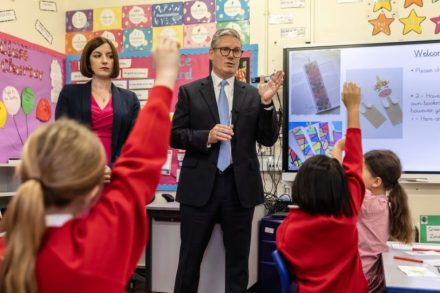
Parents are up in arms. The Prime Minister’s decision to allow all state secondary schools to screen Adolescence, the scary Netflix series about a 13-year-old murdering a classmate for taunting him online as being undesirable, has parenting groups fuming. Keir Starmer believes that showing the drama will teach adolescents about the dangers lurking online which are driving toxic relationships. Parents argue instead that the move risks subjecting school children as young as 11 to violent and sexual content. The roll-out has the potential to harm those children who have experienced similarly abusive relationships, alienating and retraumatising them. The content, they say, is age-inappropriate and messages misconstrued.

Audiobooks won’t help children read better

From our UK edition

Shakespeare, Dickens, JK Rowling: Britain’s literary heritage is undisputable. Creativity, emotional depth and universal values have ensured that Hamlet, Oliver Twist and Harry Potter are familiar to school children (and grown-ups) around the world. While other pillars of the proud national legacy – the BBC, the army, the NHS – have crumbled around us, we could still take pride in our peerless literary canon.  No longer. The National Literacy Trust, the very institution that should be protecting our literary heritage, is encouraging us to replace reading with audio. They have launched a campaign, #GrowAGenerationOfReaders, that risks pushing teachers and parents to supplant 'traditional reading' with audio. 'Just one in three children and young people say they enjoy reading.

What Bill Gates can teach today’s mollycoddling parents

From our UK edition

'I was different,' Bill Gates describes his childish self, 'School… felt slow. I found it hard to stay interested in what we were learning; my thoughts wandered. When something did catch my attention, I might leap up from my seat, frantically raise my hand or shout out an answer.' In his autobiography, Source Code: My beginnings, the schoolboy who went on to become the original tech bro, co-founder of Microsoft and global philanthropist, describes his fascination with learning outside the box. Let classmates dutifully repeat their multiplication tables; he was discovering that the Adelie penguin could hold its breath for six minutes under water and that sound was a propagation of energy made by vibrations affected by the density and stiffness of the material it travels through.

Reforming Ofsted won’t fix Britain’s problem schools

From our UK edition

The proportion of children staying away from school may be alarming – one in five –  but the proportion of parents - almost one in three - who do not see school as a necessary part of their child’s daily schedule is even more so. Keir Starmer's government understood that the connection between parents and schools needed fixing – and settled on Ofsted as part of the solution. For many, however, Ofsted was part of the problem. The suicide of Ruth Perry, a much-loved headteacher, had highlighted the pressure that school inspections placed on the teaching profession. The majority of teachers viewed the regulator negatively.

Parents are asking too much of teachers

From our UK edition

For a truly educational experience, visit your neighbourhood primary school. Watch the goings-on in the playground: tiny tots rushing around in nappies, pushing and shoving one another, tantrums puncturing the air. You can’t understand what most of them are saying because they mumble – inarticulate and mostly incomprehensible. Say hello to the ‘Covid babies’ – in our classrooms and out of order. Teachers up and down the country are welcoming to their Reception classes the babies of the early months of the pandemic – only to find that this cohort is like no other. A survey out today of more than 1,000 teachers and 1,000 parents of Reception-aged children in England and Wales paints a scary picture.

Sara Sharif’s murder shouldn’t lead to a home-school crackdown

From our UK edition

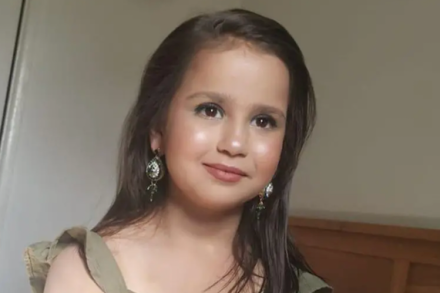
Hard cases make bad laws. There can be no harder case than that of Sara Sharif, whose torture and eventual murder by her father and stepmother moved the presiding judge to tears – and horrified us all. But this tragedy should not launch a witch hunt. The Children’s Wellbeing and Schools Bill, fast-tracked by the Department for Education and unveiled on Tuesday, risks turning all home-schooling parents into suspects and their children into victims.  Home schooling should be seen as part of the education ecosystem Home schooling is a symptom of schools failing families. That failure can be administrative, such as a dearth of school places in your local area; or more fundamental – such as the inability of your SEND child’s schools to meet their needs.

Can Starmer help get children ‘school ready’?

From our UK edition

It takes a lot of effort for 'Johnny' to take off his coat every morning when he joins his reception class. That’s because his teacher or a teaching assistant have to help the five year old pull his arms out from the sleeves of his duffel coat. Johnny is not disabled in any way; he simply was never taught how to dress himself. 'School readiness' is a catch-all term for some alarming failures. Children who are not toilet trained, who don’t know how to hold a spoon, who can’t sit still. Some can’t articulate properly because at home they are not talked to enough. Others come to school smelling so badly, teachers are spending on average £27 of their own money to buy hygiene products for their charges.

Has Labour given up on solving the social care crisis already?

From our UK edition

The Toto Washlet toilet: at the press of a button, a jet of clean warm water sprays your nether regions; press another button and warm air dries them. The sleek bowl, a masterpiece of Japanese technology, can be fixed at the right height for your use, ensuring easy access. At around £3,000 this stylish, ultramodern feature will transform your bathroom routine – and your carer’s life. Gone is the ignominy of wiping bottoms, gone the back-breaking hoisting of their charge onto the toilet. As their role is shorn of some of its more humbling aspects, the carer’s satisfaction improves, their status takes a giant leap forward, and they are free to spend more 'quality time' with their charge.