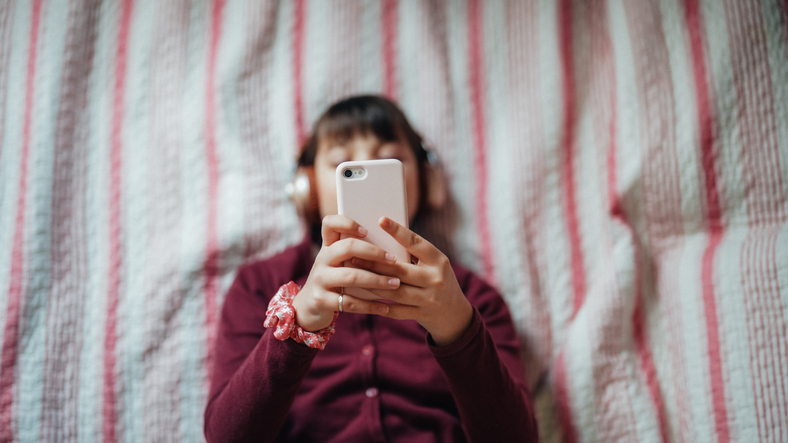
This week parliament will attempt to conclude legislation allowing the government to ban young people from social media. It’s taken weeks of ‘ping-pong’ to land on the specific form that these restrictions will take, and there has been no shortage of ideas. Tory peer Lord Nash’s proposals would introduce a blanket ban on all social media for under-16s, while the government is angling to implement restrictions on features and even introduce online curfews.
We’ll soon find out what the final compromise will be. But from an online safety, privacy and civil liberties standpoint, the details hardly matter. The wave of a legislative wand will not magically banish children from social media. The only way to do this is to force every single user to submit to invasive biometric face scans or digital ID uploads.
The ban will not solve the fundamental reason why young people spend so much time online
It is not hard to see that for all the good intentions, age-based restrictions to social media amount to a Trojan horse for a de facto mandatory digital ID system. Biometric face scans, often falsely presented as a privacy-safe method of age verification, will fail for millions of people: no algorithm can tell the difference between a 16-year-old on the day of their birthday and the day before. Many more users – adults with facial disabilities, young-looking women, or anyone who isn’t white – will face a significantly higher risk of being prompted to upload an ID document because the algorithm cannot accurately verify their age. And so, a biased and inaccurate algorithm will be the arbiter of who does – and who does not – need to upload their ID to unlock huge swathes of the internet.
Many people across the UK, particularly teens, don’t need or have IDs. But conveniently, the government’s national digital ID scheme is waiting in the wings. This multi-billion-pound solution in search of a problem may have just found one to solve.
Monitoring and managing children’s internet use is vital to keeping them safe. But children’s online safety includes more than protection from harmful content or addictive algorithms – it includes their cybersecurity, data protection and freedom of expression as well.
Since the introduction of the Online Safety Act, there have been many examples of just how vulnerable age-verification platforms are to data breaches and cyberattacks. Only this week, the government confirmed that the medical details of 500,000 participants of Biobank, one of the UK’s landmark scientific programmes, were offered for sale in China after a massive data leak. This data included full body scans and medical records. The mass gathering of biometric and ID information by age-verification platforms would mean that similar breaches, now on a national scale, would become more common. One can only imagine the devastating impact of such a breach on national security and democracy itself.
Rather than taking these risks seriously, it is all too likely that the government will present a national digital ID system as a ‘safer’ alternative. But any giant database full of sensitive ID information is simply a honeypot for hackers and hostile states.
It really is remarkable, watching hundreds of parliamentarians talk about how dangerous it is when children put personal information about themselves online and then, in the same breath, create a system that asks everyone in Britain to do just that. Even if banning social media would benefit children – which an alliance of 42 children’s charities and bereaved parents strongly dispute – the truth is there is simply no privacy-friendly way in which it can be done.
Comparisons are often made with the requirement to present an ID when buying items like kitchen knives. But in those cases, you flash your ID to the cashier, who checks your age and that’s the end of that. But social media is connected to a personal account, which means that ID information you submit risks being linked to your online activity. A more accurate analogy then, would be that the cashier checks your ID, follows you home, stands in your kitchen, and carefully logs every time you chop a carrot.
By relying on age-verification technology, all proposals to restrict social media for children pose an acute threat to the freedom of expression upon which our democracy rests. A future government could easily age-gate online spaces based on what political content they host, requiring users to pay for their right to free speech with their right to privacy.
I do not doubt that most people campaigning for online age restrictions are doing so in good faith. We can all agree that children deserve a childhood where their online experiences are as safe as their offline ones. Having grown up on the internet myself, I know first-hand that the online world has real dangers. But just as we expect parents to teach their children how to cross a road or to call 999 in an emergency, we must expect more from parents when it comes to teaching children online safety too. Currently, only a third of parents use parental controls on their children’s devices, and it is not uncommon to see children as young as 2 experiencing their first years in front of the flashing screen of their very own iPad.
Banning children from social media by putting everyone’s privacy at risk will not solve the fundamental reason why young people spend so much time online. They do so because generations of adults above them have eroded away their youth centres, libraries and parks; have created a school system rife with impossible pressures; and have turned the offline world into something inaccessible, unaffordable and filled with chronically ‘unprecedented’ political and economic events.
Rushed, sweeping laws like those being voted on this week are the result of a political landscape too keen to impose restrictions based on a gut feeling to do ‘something’ rather than the result of well-thought-through policy. Our children’s digital safety and the security of our democracy are too important to fall victim to this kind of self-congratulatory lawmaking.
Whatever form of restrictions MPs pass this week, make no mistake: this is the end of anonymity online and the birth of a digital nanny state.





Comments