
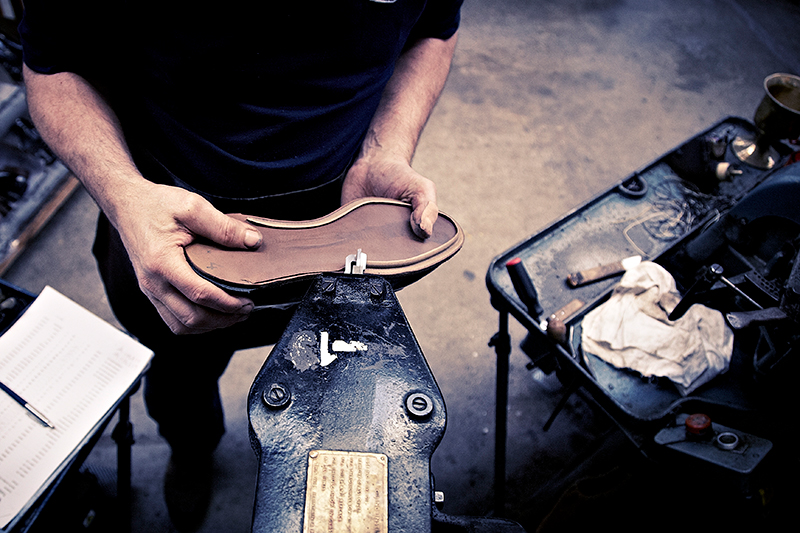
An icon of British craftsmanship, Edward Green has been handmaking shoes in Northampton, the home of the UK’s shoemaking industry, for 136 years. The original Edward Green’s vision – to attract the best craftsmen, united under the slogan “excellence without compromise” – still holds true today, with 60 skilled artisans using techniques that have been passed down and honed through the generations.
Supply is strictly limited to 350 pairs of shoes a week – the maximum it can create without compromising on the excellence that is ingrained in the brand’s DNA. Its illustrious list of clients includes Ernest Hemingway, Cole Porter, and Edward, Duke of Windsor.
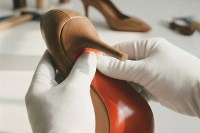
Visiting the factory, I was struck by the sense of quiet, confident pride that pervades the building. Production is split into two halves – on one side, clicking (the cutting of the leather patterns) and closing (where the leather pieces are sewn together) takes place; while the other is dedicated to lasting, where the final shape of the shoe is formed before finishing.
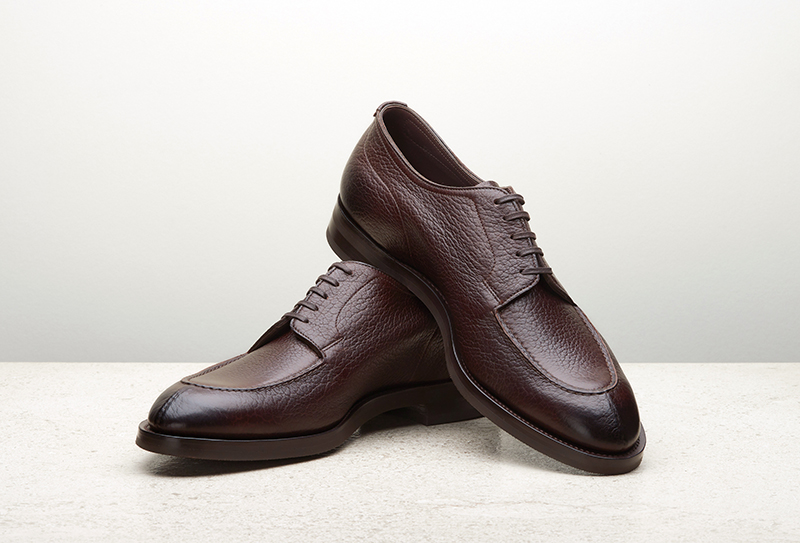
The Dover – with its distinctive hand-sewn, split-toe Derby design dating back to the 1920s – is typical of Edward Green’s meticulous attention to detail and quality. It is inspired by Norwegian fishermen, who pioneered a hand-sewing method using a malleable boar’s bristle needle that allows the two sides of the upper to be sewn edge-to-edge at the toe. The technique requires over two hours per pair – but what began as practical necessity has evolved into a polished expression of English shoemaking.
“The Dover, like all of our styles, can be made to order on a range of different soles and lasts, from different leathers and in different fittings,” explains head of brand Euan Denholm. “This way, customers can personalize their shoes and have something unique and original.”
As an example of how Edward Green is pivoting from traditional territory to softer, more comfortable styles, an unlined version of the Dover offers a more supple and breathable alternative for the warmer months, fitting like a glove from first wear. “This is what we mean by evolution,” says Denholm: “a style rooted in Northampton tradition, refined to suit how men dress today.”


Comments