
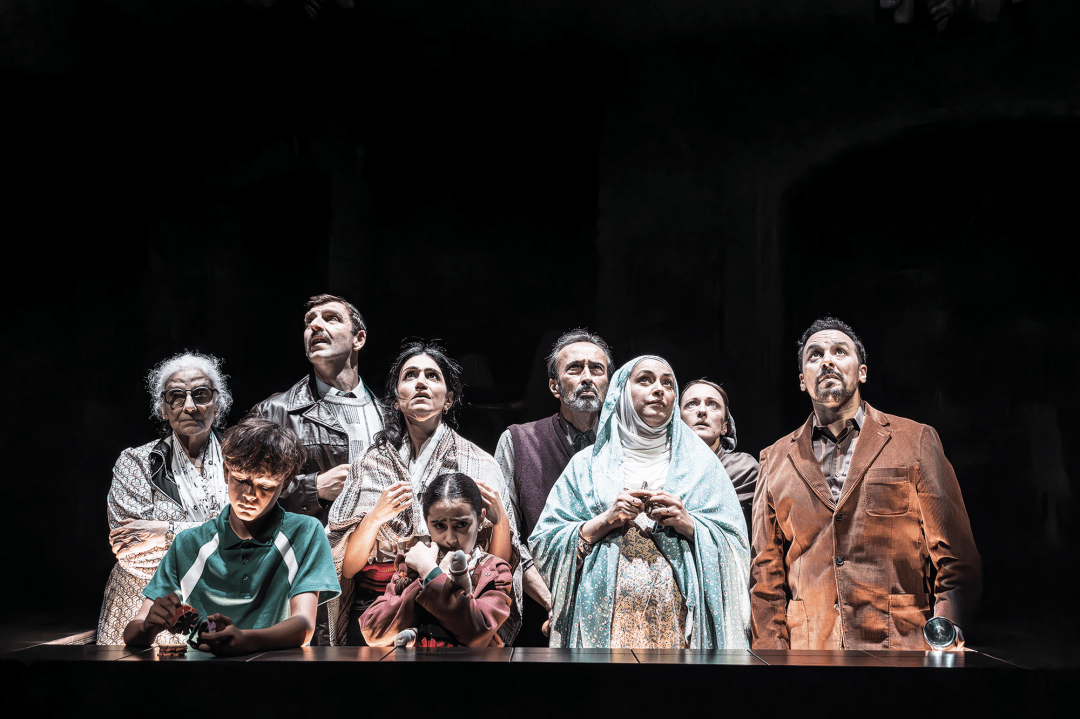
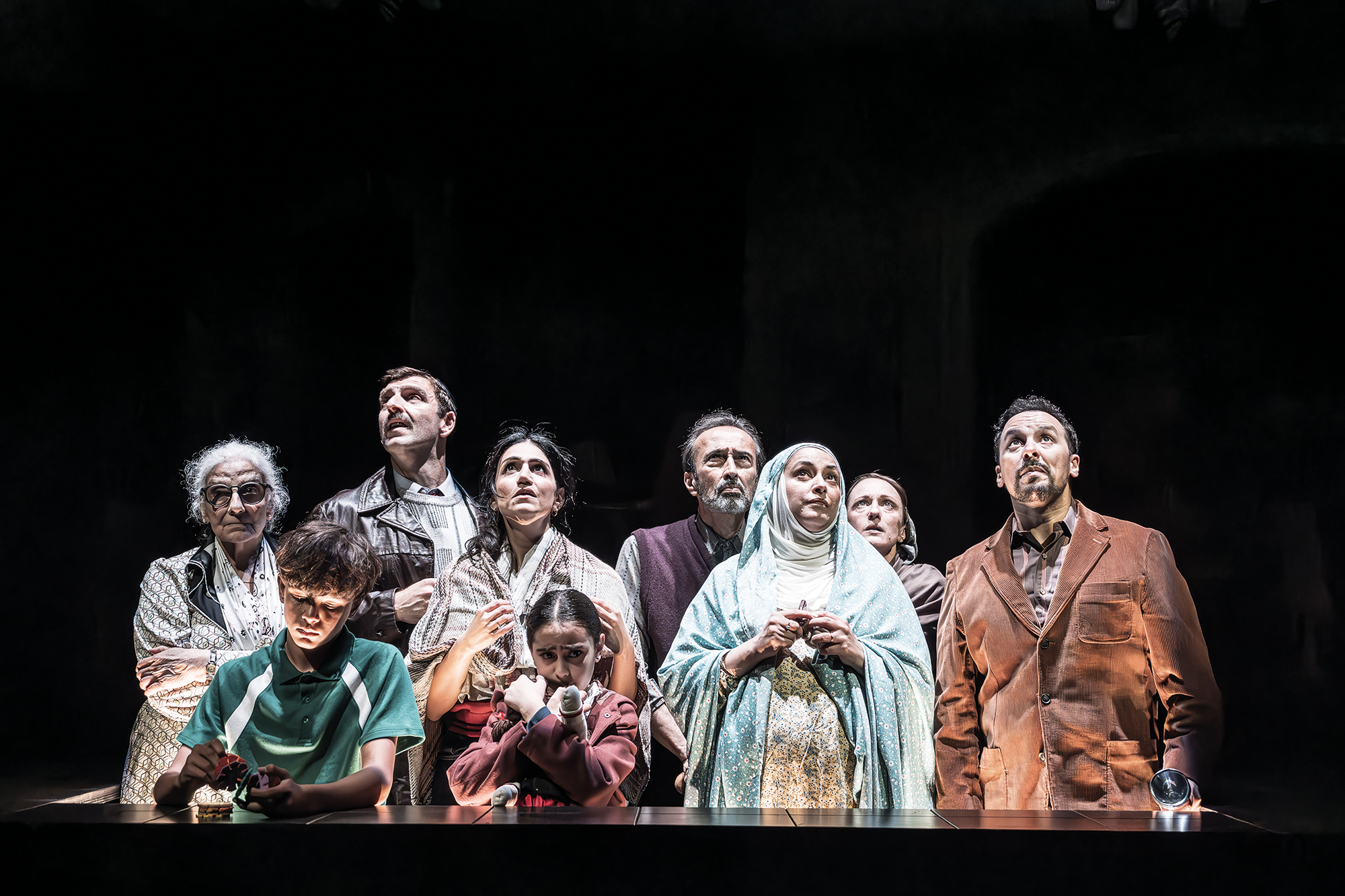
Under the Shadow is a timely drama set in Tehran in 1988 during the Iran-Iraq war. Saddam’s missiles are raining down on the city which puts an additional strain on the troubled marriage of Iraj and Shideh. Iraj is a doctor. Shideh is a part-qualified doctor. During quiet spells, they chat about humdrum stuff. Iraj wants Shideh to have another baby. Shideh prefers to leap around doing her Jane Fonda exercises. Her mother-in-law potters in and out and fusses over bits of crockery. Their daughter snuggles on a sofa with a rag doll. The low-energy dialogue flits from one issue to the next without any sense of direction. The characters tell each other jokes to pass the time.
The production is as forgettable as a daydream
An air raid begins and they gather in the underground bunker with their dreary neighbours. As the bombs fall, they tell each other more jokes. Mr Bijari, a philosopher, cheers everyone up with his personal mantra. ‘What will be will be.’ A foul stench fills the shelter. Is a chemical weapon about to kill them? Mr Bijari explains that he has just emptied his bowels into his trousers. ‘What will be will be,’ he repeats.

The play’s monotonous rhythm is frustrating for about 70 minutes but eventually you get used to it and start to feel engaged with the characters. They seem believable enough and they care about each other. What’s coming next? A fat man has a heart attack. A mute child utters his first word. Shideh’s daughter tells a joke about orgasms. Someone decides to leave Tehran and move abroad. Another air raid sends everyone back to the bunker where they tell more jokes. A sad old man terrifies the kids with a tale about a wolf-monster that eats children alive.
Nadia Latif’s production suggests that the divisions in Iranian society are similar to our own. The working-class characters wear cheap clothes, eat too much and speak in provincial accents. The wealthy characters use Home Counties accents, dress stylishly and keep themselves trim. There’s another difference. The poor folk revere Islam while the wealthy see their religion as an absurd embarrassment. Hypocrisy has become a habit. The middle-class ladies cover their hair in public but at home they read French novels and drink strong liquor from a secret decanter.
The drama changes course in the closing scenes and morphs into a ghost story about an evil spirit hidden in the attic. Fans of horror shows will enjoy the scary bits but this weird ending feels like a desperate attempt to spice up a dull dinner party by setting fire to the table.
How To Make a Mess is a musical about a celebrity chef who becomes a self-help guru. Anna, a cosseted yuppie living alone in north London, is struggling to accept that her mother has died. And yet she didn’t like her mother, she explains. They hardly knew each other in fact. Anna’s father sounds even worse. He was a cold, narcissistic philanderer who abandoned his marriage and started a new family when Anna was little. Poor Anna. She seems determined to have a horrible time. And in this she succeeds. She may be young and attractive with a swish flat and a lucrative job but she broods on her past disappointments rather than looking forward to future achievements. She’s a textbook victim: she sees herself as the sum of other people’s slights.
The weird ending feels like a desperate attempt to spice up a dull dinner party by setting fire to the table
Enter Nigella Lawson who springs from a broom cupboard and tries to bring a bit of cheer to Anna’s sad existence. Nigella is the polar opposite of her pupil. She’s fun, warm, stylish, witty, articulate and brimming with optimism. And Anna, naturally, feels rather inadequate beside this paragon of womanly self-confidence. For their first lesson, Nigella suggests home-made mayonnaise which Anna happens to hate. Neither of them washes their hands but never mind. The masterclass begins. Anna picks up a free-range egg and glares at it suspiciously. She breaks it into her cupped palm and allows the contents to ooze over her splayed fingers and slither into a green mixing bowl that looks like an upturned stormtrooper’s helmet. Whisking is the next step. But things go awry. A dispute erupts between pupil and teacher. Eggs are tossed. Water is hurled. Olive oil flies across the stage. This is a risky moment for a theatre producer because airborne fluids that land on ticketholders may result in large dry-cleaning bills. (Thankfully, at press night, we emerged unstained.)
In Act Two, Nigella and Anna compose their quarrel and spend an hour cooking and singing together but the story lacks any tension. Nigella is a figment of Anna’s imagination and not a dramatic character who can learn, change and grow. The production is as forgettable as a daydream. Tanya Truman (Nigella) has tons of charisma and Anna (Natasha Karp) sings beautifully. Great performers. Nice idea. Better execution needed.




Comments