Mass student protests in France, Italy, Germany, Belgium, Greece and Albania, looted shops, burning cars, the destruction of a historic town hall, a leaderless movement coming to power: all these recent examples of disorder or the upsetting of order, across Europe and beyond, including the Cockroach Janta movement in India, may seem like manifestations of anarchy. It looks as if Yeats’ prophecy in ‘The Second Coming’ is being fulfilled. But what if hiding behind the apparent anarchy being ‘loosed upon the world’ is something quite different, though its name sounds similar – the spectre of anarchism?

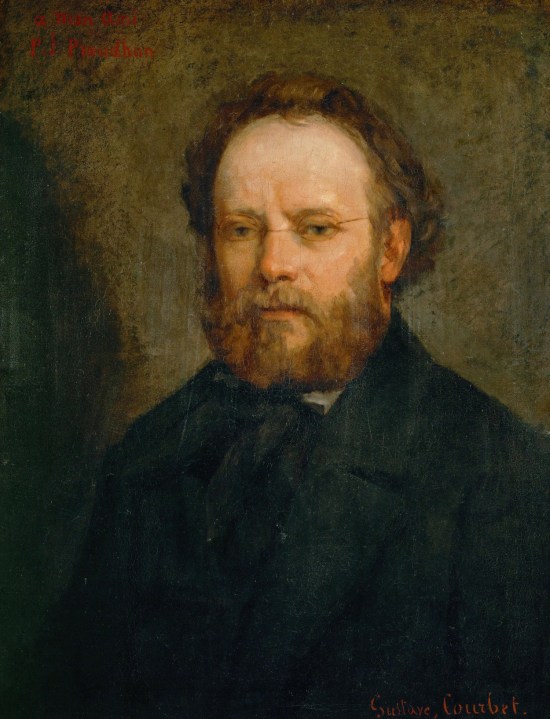
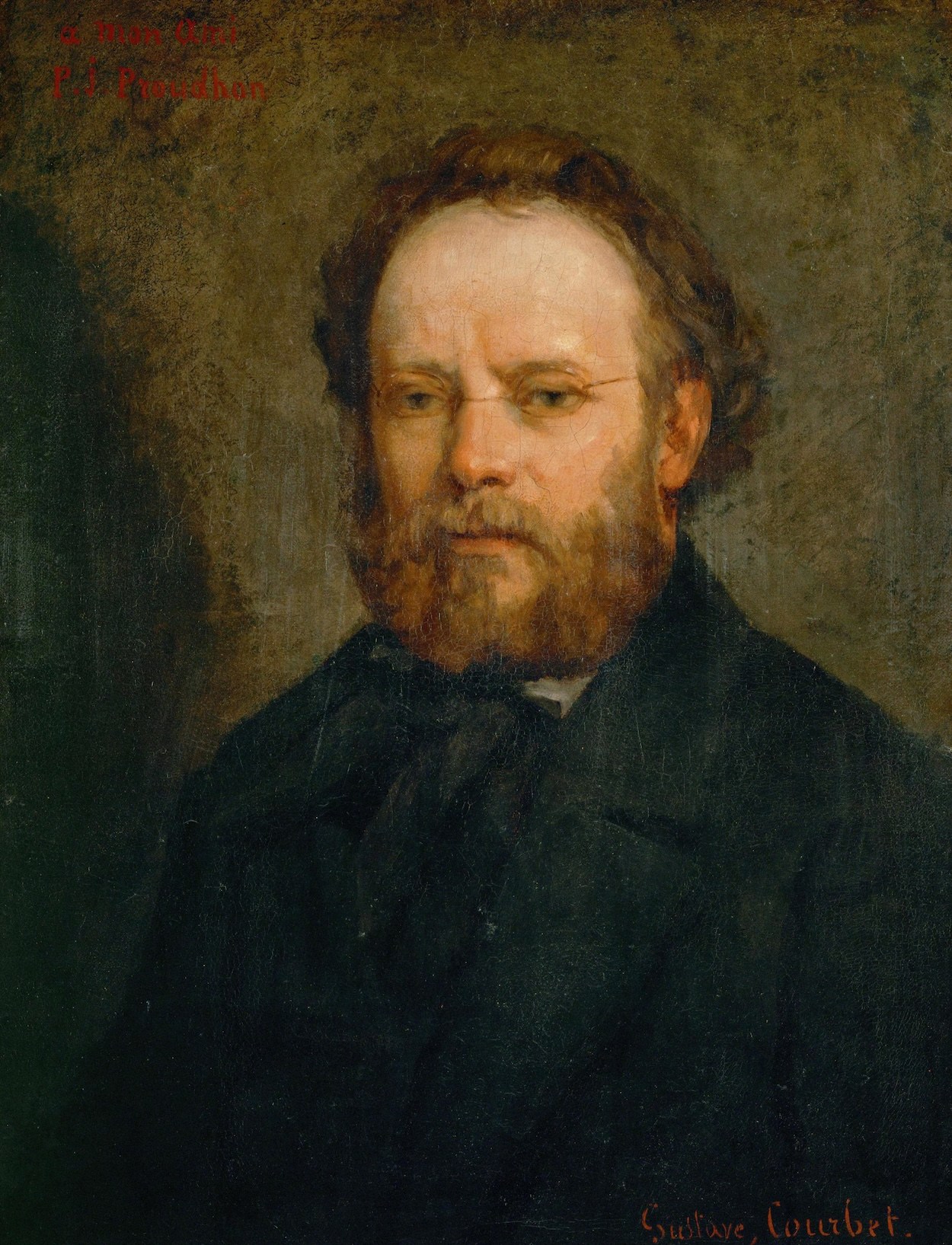
First, un peu d’histoire, as the green Michelin guides used to say. This may be especially necessary as anarchism seems nowadays to be the least remembered and understood of the great ideological movements which convulsed Europe (and beyond) in the latter years of the nineteenth century and the early twentieth century. We should probably start with the French thinker Pierre-Joseph Proudhon, famous for the misunderstood phrase ‘property is theft’ and for his friendship and then bitter falling-out with Karl Marx.
Proudhon, unlike Marx, believed radical change could be achieved without revolution and disliked the idea of the dictatorship of the proletariat; he advocated the transformation of society from the bottom up, through mutual associations, workers’ co-operatives and people’s assemblies. His version of anarchism was based on positive principles: the idea that cooperation, among humans and other animals, is a higher and stronger force than competition, and the recovery of the power of individuals, organised into non-coercive groups, to shape their own destiny, rather than cowering beneath the tyrannical sway of authoritarian states or succumbing to the grip of capitalist corporations.
Proudhon’s most famous disciple and successor was the Russian Mikhail Bakunin, whom Marx famously expelled (in his absence) from the Hague Congress of the International Workingmen’s Association in 1872, initiating the historic split between anarchism and communism, but his ideas were more faithfully and developed by another, less fiery, Russian, the geologist and naturalist Peter Kropotkin. Unlike Bakunin, Kropotkin shared Proudhon’s belief in non-violent, evolutionary transformation.
This may all be sounding rather academic, but the reality was far from it. Anarchism spread quickly through Europe, especially in Spain, but also in Italy, France and more surprisingly Switzerland, and beyond Europe, notably in Argentina and Uruguay. In Spain it mainly took the form of anarcho-syndicalism and especially the great anarchist trade union the CNT which at one point had two million members. Fatefully, Bakunin’s ideas seemed to prevail over Proudhon’s and Kropotkin’s and many anarchists resorted to violence – the notorious ‘Propaganda by the Deed’, which included the assassinations of the French President Sadi Carnot in 1894, the Spanish Prime Minister Cánovas del Castillo in 1897 and the Italian King Umberto I in 1900. Then in the great conflagration of the Spanish civil war, which marked the end of anarchism as a serious political force, the Marx-Bakunin split was reenacted in the brutal suppression of the anarchists by the communists.
What relevance if any does this have to current événements? The various protest and radical political movements across Europe and beyond do not, so far, share an ideology and none as far as I know has explicitly identified itself with anarchism. However, they do manifest a number of common traits associated with the political philosophy initiated by Proudhon. First, they are grass-roots movements, not initiated by established parties or other institutions. Secondly, they demonstrate the self-assertion of individuals or groups who feel marginalised and powerless under existing structures of politics and economic power. Thirdly, they open up the possibility of a different kind of radically decentralised politics.
Many questions remain to be answered: do these movements represent a demand for the existing order (especially the welfare state, but also housing, employment) to function better, as Janan Ganesh has recently argued, or do they point to a much more fundamental shift, towards a different kind of order, or even lack of order, in which ‘solutions’ are not imposed from above, but arrived at through open-ended discussion and deliberation among citizens? Is it possible to govern at all with such a radical dissolution of authority? Can the non-violent, constructive strain of anarchism prevail over the Bakunin-inspired will to destruction and the association of anarchism with bomb-throwing desperadoes?
Here the victory of Student List in Serbia in a snap election on 25 October is especially interesting, as this is a leaderless movement of students, academics, artists, doctors, farmers and others which began with university occupations, street blockades and plenary assemblies of students. Particularly notable in its organisation are its rules around candidate selection which do not allow career politicians to run for office. How can ‘a bunch of students’, as the Economist describes them (erroneously as students are not permitted to stand as candidates) run a country? According to the Croatian philosopher Srecko Horvat this is a ‘deep systemic protest’ by citizens for whom conventional representative democracy is no longer meaningful.
The weakness of anarchism is that it cannot be established as an order: its name means the absence of order
In February 1848, just days before a wave of revolutions swept across Europe, Marx and Engels published The Communist Manifesto, opening with: ‘A spectre is haunting Europe – the spectre of communism.’ They had sensed that the old repressive powers of Europe, especially the newly restored French monarchy under Louis Philippe, Metternich’s Austria and Tsarist Russia, were terrified by something they could not clearly discern, but which threatened their existence. The overthrow of those powers took longer than they expected and eventually led, in Russia, to a tyranny no less brutal and repressive than that of the Tsars.
The weakness of anarchism is that it cannot be established as an order: its name means the absence of order. But what it can do, especially if seen not as an ‘ism’ but as a current of ideas flowing from Proudhon, Kropotkin and more recent thinkers such as Murray Bookchin, is to inspire a loosening of repressive, hierarchical structures and ways of thinking. A haunting by this kind of benign spectre, cured of its propensity to violence, is long overdue.




Comments