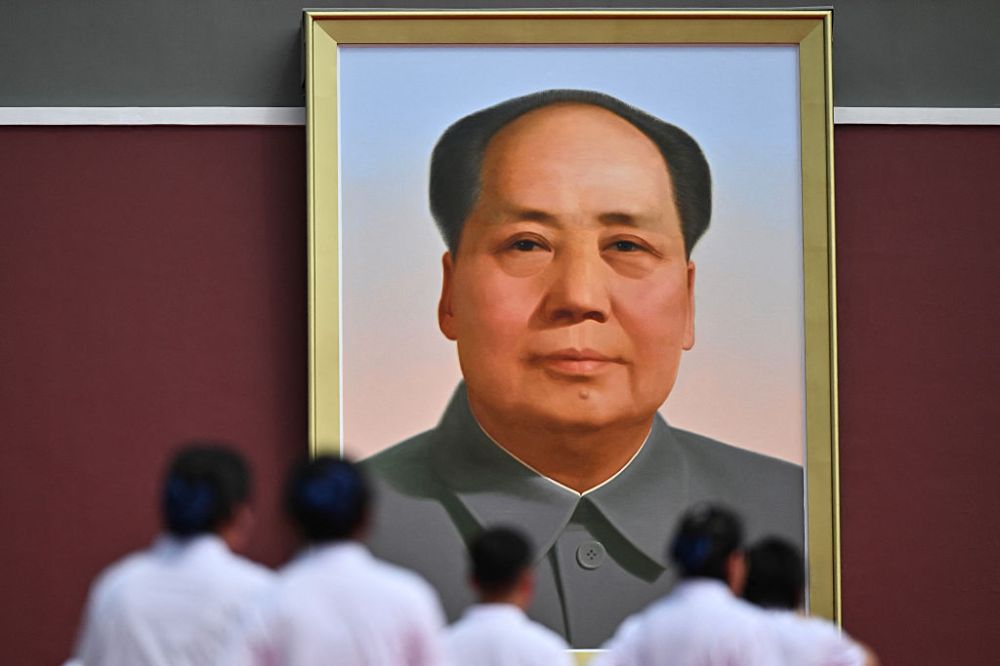
Mao Zedong was certainly a dictator, French footballer Kylian Mbappé was right about that, but the label still feels inadequate for a man who was responsible for the deaths of tens of millions of Chinese. He was a mass murderer, one of the worst tyrants of the twentieth century, in a super-league alongside the likes of Hitler, Stalin and Pol Pot. When he died in 1976, after endless and barbaric campaigns and purges, his legacy was a traumatised and impoverished land of fear and paranoia.
China excels in performative outrage, and for their part Western companies and individuals have excelled in their humiliating scramble to perform the ‘self-rectifications’ (as Mao would see them) deemed necessary to head off sanctions
Mbappé’s jokey comments were not about this brutal history, but the result of an internet meme, a video circulating online that placed his face on images of Mao. ‘[The meme] that makes me laugh the most, it’s the one where there’s a video of a guy, I think it’s a Chinese dictator,’ he said on a podcast interview.
Queue outrage. Several Chinese companies cut ties with the Real Madrid footballer, while the Chinese foreign ministry spokesperson Lin Jian huffed that ‘words and actions that hurt the feelings of the Chinese people will naturally face unanimous opposition from all sectors of Chinese society’.
That was followed by grovelling apologies, cringe-making even by usual standards of corporate kowtowing to Beijing. ‘I apologise to everyone my words have upset… I have deep respect for the Chinese people and their history, and I am sincerely sorry’, said Mbappé. While La Liga, which runs Spain’s top football divisions said it deeply regretted the ‘distress and offence’ caused by Mbappé’s remarks. Javier Tebas, the president of La Liga, then went even further, offering ‘sincere apologies to the Chinese people’.
There have been regular corporate run-ins with the Chinese Communist party (CCP), with brands ranging from Marriott hotels to Zara, Gap, Leica and Nike among those forced to apologise or change marketing campaigns deemed politically offensive by the CCP. Clothing brands looking to embrace trendy themes of human rights or eliminate forced labour from their supply chains have been on especially tricky ground.
The Mbappé row was reminiscent of Arsenal’s 2019 run-in with Beijing, the London club distancing itself from comments made by midfielder Mesut Özil, a practising Muslim of Turkish descent, who had criticised the repression of the Uighurs in Xinjiang. That same year saw grovelling backtracking and apologies from America’s National Basketball Association (NBA) after Daryl Morey, the general manager of the Houston Rockets, one of America’s most popular teams, tweeted an image that read ‘Fight for Freedom. Stand with Hong Kong’. All were desperate to protect their commercial interests in China.
Another stand-out grovel came from John Cena the professional wrestler and star of F9, a Fast and Furious movie. Not many things intimidate Cena, at least not in his movie persona. Fast and Furious movies might be the ultimate in strutting macho melodramas, but Cena was reduced to a quivering wreck in the face of Communist party anger when he accidentally called Taiwan a country in an interview with the Taiwanese broadcaster TVBS. Trigger Chinese outrage and a quick retreat. ‘I made a mistake,’ he said in a rapidly released apology video. ‘I’m very sorry for my mistakes. Sorry. Sorry. I’m really sorry. You have to understand that I love and respect China and Chinese people.’ China is a huge market for Fast and Furious, and Cena has a big personal following there, neither of which he wanted to jeopardise.
Mao, the founder of the People’s Republic of China, is an especially difficult subject for Beijing. He was a monster by any measure, but the CCP wrestled for years with how to describe his brutal legacy. Deng Xiaoping, the paramount leader who followed Mao, and was twice purged by him, declared that Mao had been ‘70 per cent right and 30 per cent wrong’. He was, said Deng, ‘a great Marxist and a great proletarian revolutionary, strategist and theorist… His merits are unquestionably primary and his mistakes secondary.’ The deaths of around 50 million people from murder, abuse and starvation, notably during the Great Leap Forward and Cultural Revolution, was put down to ‘excessive enthusiasm’.
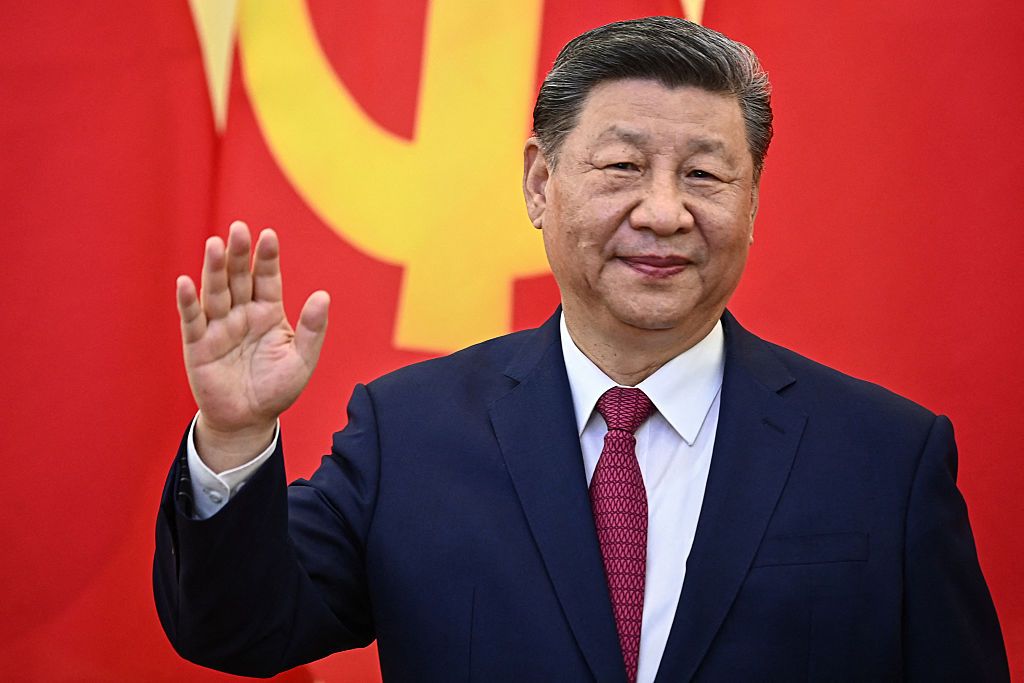
Criticism of the Great Helmsman has become more difficult under President Xi Jinping, who has encouraged Maoist nostalgia, as he has centralised power, eliminated rivals and built his own personality cult. This month marks the 90th anniversary of the end of the Long March, a much mythologised retreat by Mao’s ragtag army during the Chinese civil war. Last week, the Xinhua news agency trumpeted ‘Xi Jinping’s new long march’. ‘May the spirit of the Long March shine forever’, it said, comparing Xi’s efforts for modernisation with the supposed determination of Mao. ‘Every generation must undertake its own Long March,’ according to Xi.
‘Hurting the feelings of the Chinese people’ is a long-standing accusation against critics. I was accused of that very crime while living in Hong Kong. ‘What, every one of them? Have they all seen the report?’ I asked my stony-faced foreign ministry handler. I didn’t apologise, and was promptly banned from the mainland for a year.
China excels in performative outrage, and for their part Western companies and individuals have excelled in their humiliating scramble to perform the ‘self-rectifications’ (as Mao would see them) deemed necessary to head off sanctions. It is never a pretty sight. It is also absurd in many ways and self-defeating, highlighting CCP petulance and raising attention to issues that otherwise might not have been noticed. But it does once again show the pernicious danger of dependencies and the way they enhance Beijing’s ability to use coercion to impose its own views on all-too-compliant world.



Comments