
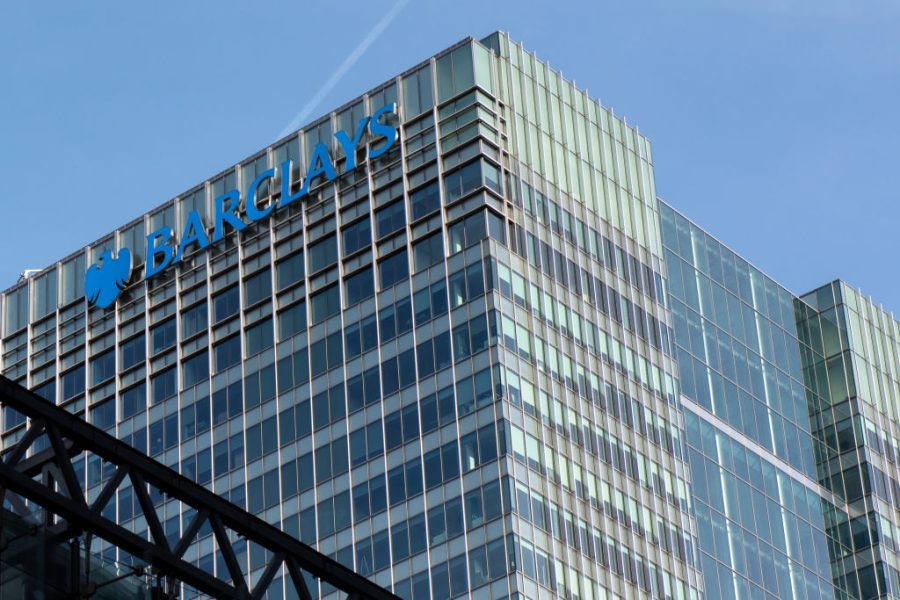
Imagine if the City of London were full of largely unmanned office blocks, and that this had occurred not because their former occupants were working from home but because they were not working at all. There are a few people wandering around, technicians mainly, who are checking things as the computers purr away. Then go a short step further and imagine that the spaces occupied by the large banks are reduced to a few boardrooms and a handful of offices, while most of the computers are relocated to an industrial estate in Enfield or to Malaysia.
For some it is a dystopian vision that has just been brought a lot closer by the news that Barclays is to lay off 5,000 staff in order to replace them with AI bots. Except that it is not really all that dystopian: it simply reimagines the financial services sector after it has gone through the same automation and reindustrialisation process which heavy industry went through in the 1980s.
No one should take pleasure from the thought of a banker being sent out of the door into the uncertain world of job-hunting carrying a black bin bag any more than they should have taken pleasure at the sight of miners and steelworkers losing their jobs. But at the same time, neither should the evolution of banking towards a less labour-intensive industry be resisted.
The discarded labour will be picked up elsewhere
This is how societies become richer: by discarding labour which is no longer required and allowing it to be deployed for more productive purposes. At the time that miners and steelworkers were being laid off, the City was booming and creating large numbers of well-paid jobs. I don’t remember anyone in the City at that time calling for a halt to redundancies in industry. On the contrary, the mood was that the free market must be allowed to be the free market, and that greater prospects lie ahead for the UK economy by allowing it to specialise in higher-value industries. That was right then and it is right now.

But that is not how some of Barclays staff seem to see it. The roles which will be eliminated are mostly support roles in compliance, legal and IT. Sharon Graham of the Unite union, which represents some of them, has already attacked the redundancies. On a previous occasion, in 2023, when the bank cut 900 staff, she commented:
Barclays is disgracefully cutting jobs to further boost its massive profits. This is a mega-rich bank that is already on course to make eye-watering profits this year.
Sorry, but financial sector jobs are not a special case, and nor are white-collar jobs in general. If AI comes for them, as automation came for many millions of industrial jobs before, that is just part of how the economy functions. Yet we are expected to see the displacement of professional jobs by AI as somehow more sinister than the elimination of blue-collar roles, which after all has been going on for the past 200 years. It is suddenly the end of the world if graduates can’t secure plum positions in the professions for which they thought they had been preparing.
Yet where is the mass unemployment which has been predicted? We are in the midst of an AI revolution, supposedly, yet it seems to have had no effect on the employment rate whatsoever, which has been steady at around 75 per cent since the end of the pandemic. We may have a troubling rise in Neets (people not in employment, education or training), but overall there is no evidence of an AI-driven fall in overall employment.
Who cares if Barclays lays off 5 per cent of its staff? The discarded labour will be picked up elsewhere. That is how it should be. Every job lost to technological advance is one more person freed to help staff the growing industries of the moment.






Comments