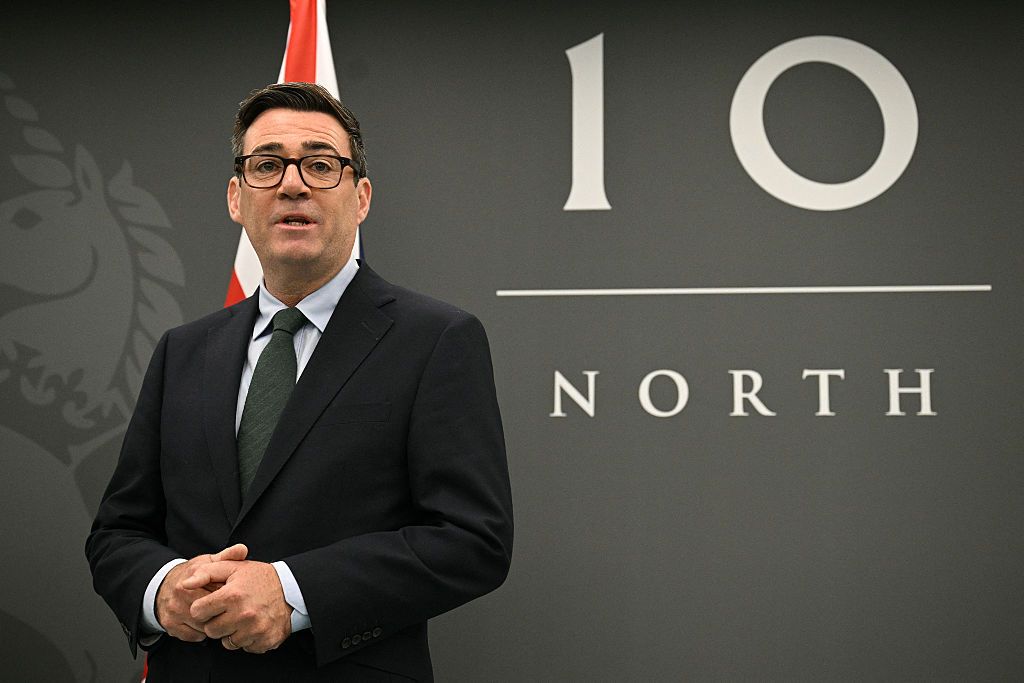
Yesterday, in America, Andy Burnham announced a new policy which has already been met with concern within the US government. Our PM promised to ‘stem’ the ‘poisonous tide’ of ‘industrial-scale assault by hostile actors on the information environment in the UK’ by establishing a new ‘National Centre for Information Defence’ (NCID). This is necessary, the PM explained, because ‘Russian agencies have used every means at their disposal to spread lies and disinformation and prey on people’s fears’, in order to enact ‘an insidious campaign that reaches into people’s homes and twists what they feel about their own country and community – creating a narrative of decline, stoking division and sowing despair.’
It is no wonder that the state is seeking to establish greater control over speech which it feels threatens
This all, apparently, means it is necessary to establish the NCID, ‘to detect, attribute and disrupt these kinds of hostile state information attacks. To support and defend our democracy’. To do this, Burnham promises to ‘put in place the architecture we need to stem this poisonous tide’.
Putting aside the fact that GCHQ is already responsible for detecting, attributing and disrupting information attacks from hostile states, what does all of this mean? While I understand that more details will be announced in due course, it seems that the PM has asked the security services to establish the NCID in order to detect, attribute and disrupt what the state calls ‘hostile state information attacks’, and identify both ‘disinformation’ and deepfakes which they believe threaten our interests. The new centre is expected to work not just with intelligence agencies but also government departments, law enforcement and social media companies. It will also be concerned with community cohesion – I understand that the goal is to prevent what the government sees as distorted and untrue narratives about the country.
While Burnham may have announced this, none of it is his idea. In fact it all follows from ‘Protecting What Matters’, the government’s cohesion strategy which was published in the spring. That ambitious document, which described its remit as both the ‘whole of government’ and the ‘whole of society’, revealed the deep paranoia which has captured the British state. The foreword, written by Keir Starmer, describes a ‘dangerous’ (to who?) and ‘volatile’ nation, struggling with an ‘emergency’ due to ‘demographic’ challenges, where social trust is ‘fraying’ and in which migrants live ‘parallel lives’. The report is full of concerns about the ‘real threat’ of ‘extremists’ who ‘forment division and target UK institutions’. This ‘division’, is appreciated by ‘so many people – digital grifters, hostile states, politicians of grievance – [who] have a vested interest’ in it.
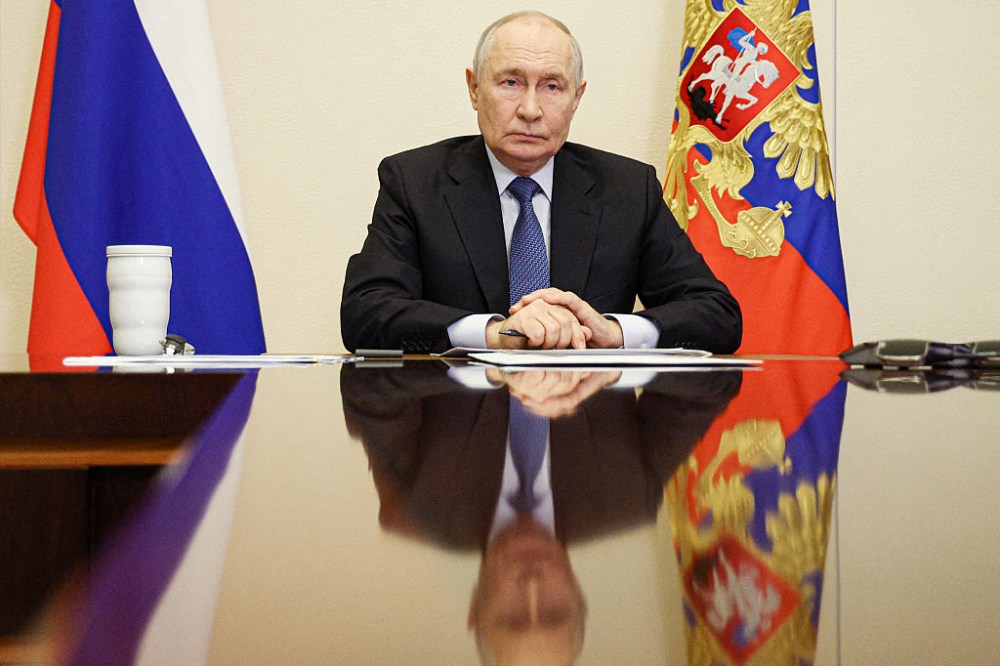
The report goes on to define as ‘hostile actors’, those who it describes as ‘the extreme right…[who] equate being English with being White or being Christian [and] exploit national identity as an ethnic construct’, but it then claims that ‘division’ is really the fault of foreigners. The authors state that at ‘various points in our history, community tensions have erupted into social disorder’, all exacerbated by ‘foreign actors, and hostile states, particularly Russia, which is engaged in information warfare against the UK and Ukraine, [who] often attempt to fan the flames of such violence, exploiting people’s frustrations and concerns, through spreading or amplifying disinformation online’.
With an increasingly paranoid tone, the report describes how internal ‘extremists [who] are exploiting people’s fears for their own purpose’ work in concert with ‘malign foreign influence’, in ‘online echo chambers’ where harm is ‘exacerbated by malevolent algorithms’. The last claim is particularly bizarre. For the British state in 2026 has become so paranoid that it believes algorithms have moral agency and are out to get it.
It is then, no wonder that the state is seeking to establish greater control over speech which it feels threatens it. Of course, simultaneously, the state is lying more and more. It is fighting a court battle to avoid publishing data it holds on migrant crime rates. It has spent the last year claiming that the early release scheme is perfectly safe because those set free will be tightly managed via tagging, only for it to emerge this week that they won’t be tagged because there’s no capacity. And this week, the boats bringing illegal migrants ashore turned off their transponders to disguise where they planned to land. The state lies all the time, and it projects that dishonesty onto those who challenge its goals. So of course it intends to establish a ‘National Centre’ to oversee speech. Of course we must have a Ministry of Truth.
Commenting on the establishment of NCID, Toby Young, Director of the Free Speech Union, told me that:
‘Andy Burnham sold it as a way to counter Russia’s information warfare, then, in the next breath, said it would be used to tackle threats to “community cohesion”, so there can be little doubt its main purpose will be to monitor and silence domestic dissent. It’s the latest addition to the state’s growing surveillance and suppression apparatus. Emily Thornberry welcomed this new Orwellian unit as “long overdue”, but there are at least nine others by my count. The British state is managing the indigenous population as if it was a colonial power occupying a foreign country. Got to keep a close eye on the natives and nip any potential uprisings in the bud’.
Everything Toby says is true. And there are other reasons to be concerned. The PM’s speech mentioned ‘far right’ content, but nothing about the threats from far-left agitators such as Extinction Rebellion, or Islamists, which were described as threatening our national security last week by former head of MI6, Sir Richard Dearlove. It seems that for this Prime Minister, only right-wing ideas are a threat. Similarly, it is not clear whether American content will be suppressed by the NCID. After all, the Lib Dems have called America a hostile foreign influence.
I understand that the while the British government stands by the PM’s position that we are the US’s closest ally, it is also committed to disrupting so-called foreign-state interference from any actor including the USA.
This has caused concern in Washington, including over what ‘interference’ actually means, particularly in the context of British NGOs influencing American policy on internet anonymity, both directly and via American proxies with significant foreign management. It was also noted in Washington that Labour party officials volunteered for Kamala Harris’s 2024 Presidential campaign. Given all of this, there is concern as to how NCID will behave. Indeed, a US official told me that ‘Five Eyes should mean they categorically exclude targeting us with Natsec capabilities’.
Also of concern, both in Britain and Washington, is the question of what powers this Ministry of Truth will have. How secret will its operations be? Will it be able to spy on British citizens? Will it seek to suppress and influence domestic discussion about controversial matters such as migrant crime and crumbling infrastructure? After all, as the PM said, ‘we have given too much ground to those who want to run a negative, corrosive narrative about life in Britain.’
It is all deeply redolent of the late Soviet Union. We must keep affirming that Britain is a multicultural success story, our health service the envy of the world, else we are doing the bidding of hostile foreign powers. And if we say the wrong thing, if we dare affirm the English ethnicity, then the Ministry of Truth will come for us.






Comments