

I must return, regrettably, to the subject of the Church of England. Readers with long memories may recall the year of our Lord 2024. In February of that year, the people who are meant to care for Canterbury Cathedral allowed a ‘silent disco’ to take place over two nights in the place where St Thomas à Becket was martyred. Two thousand revellers turned up to take part in what became known as ‘a rave in the nave’. Naturally the Church of England authorities denied that this constituted any sort of defilement of one of England’s holiest places.
Fast forward to September of that same year and it was Peterborough Cathedral’s turn. That was when it announced an Ibiza-themed nightclub evening with DJs spinning an ‘epic’ set of ‘soul, funk and contemporary hits’. The event in Peterborough was exactly what the authorities in Canterbury tried to pretend their event was not. But, as I have often noted, the interesting thing about the Inferno is that there is always another level. Hell, it turns out, is bottomless. Which brings me to St Paul’s Cathedral.
If you allow other cultures to have their holy places, then we must be allowed to have ours too
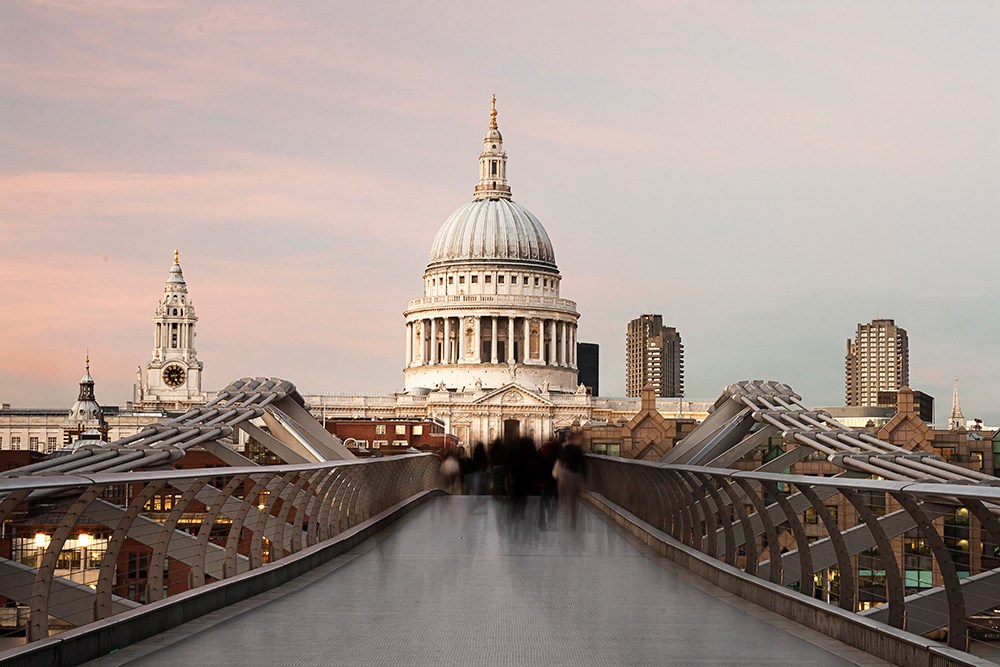
Last week it was announced that St Paul’s had made a partnership deal with the nightclub Fabric, which is due to last four years. This will apparently allow St Paul’s to host raves of exactly the kind that Canterbury Cathedral denied it was having. It is almost as though some slopes are indeed very slippery after all.
Many of us were alerted to this partnership by a crowingly boastful social media post sent out by the Mayor of London, Sadiq Khan. ‘Fabric. St Paul’s Cathedral. Name a more iconic duo,’ Mayor Khan wrote. ‘Bringing together these two institutions will create a one-of-a-kind experience, pairing world-class music with one of our most special landmarks.’
About which there are a number of things to say. The first is that many of us would not put our capital’s great cathedral and the nightclub Fabric in quite the same bracket. Secondly, the resting place of Lord Nelson and other national heroes is not simply ‘iconic’. Thirdly, I very much doubt that the nightclub organisers in question can provide ‘world-class music’ unless they think that someone spinning tracks from a DJ booth is the equivalent of the Vienna Philharmonic playing Bruckner. And finally this isn’t a ‘one-of-a-kind experience’.
As my colleague Mary Wakefield has observed in these pages before, if you want to go into Westminster Abbey to pray, you will be charged an entrance fee, looked at with bewilderment by the bouncers as though you are trying to get around paying said fee, or you will be shoved into some ignominious corner like a suspect kept under close observance by security.

The point is that the desecration of our nation’s churches and cathedral is becoming routine. Unless you believe that the ravers whom Fabric is hoping to attract are people who have tired of the architectural splendours of Peterborough and Canterbury cathedrals and now wish to get off their tits on MDMA while admiring the architecture of Sir Christopher Wren: another national hero whose body will also be resting under their feet.
But the most obvious and necessary thing to say about Khan’s tweet is that it is, as ever, one-sided. A number of people pointed out online that some might regard the London Central Mosque as being an equally ‘iconic’ venue. Still, I suspect that neither the mosque in Regent’s Park nor any other Islamic house of worship would allow the kind of sacrilege that the Church of England seems so keen to foist on its own cultural and religious inheritance. If they did, I doubt that Khan or any other prominent Muslim would celebrate the ‘one-of-a-kind event’.
Indeed, were some mosque to allow such a thing, I suspect that no observant or cultural Muslim would welcome the fact. The Mayor would be unlikely to celebrate the event as ‘iconic’. Put simply, many people seem not to regard the desecration of St Paul’s as a noteworthy event because they do not regard such a space as sacred. Not to mention the fact that, if such an inconceivable event were to take place in certain mosques, the evening would end up being ‘booming’ and ‘banging’ in a more real and literal sense.
By now, we all know the arguments and the spin that is put on them. The wet fools in charge of our cultural and religious heritage will say that such events bring new people into our shrines and that they help raise the money to keep them standing. Idiot multiculturalists will pretend not to understand what the problem is and object at those of us who do. Many decent people will simply react with a sigh – the sort of sigh that the people of these islands have become used to emitting over almost any day’s news.
So perhaps I can reiterate a point I have tried to convey before. Which is that, if you allow other cultures to have their holy places, then we, the British people, must be allowed to have our holy places too. And we should be allowed to express more than a sigh at the unfairness of the deal that is being forced upon our country.
It is my understanding that when the Visigoths took over the land of the Romans, they allowed many of the holy places to remain standing for a time. But they slowly transformed their purpose. Or so I gathered from a biography of Theodoric the Great which I laboured through a while back.
It appears to me that something very similar is happening now. Our holy places have been allowed to stand, but their purpose is being changed. I suppose the question now is whether we simply stand by and allow this to happen or not.






Comments