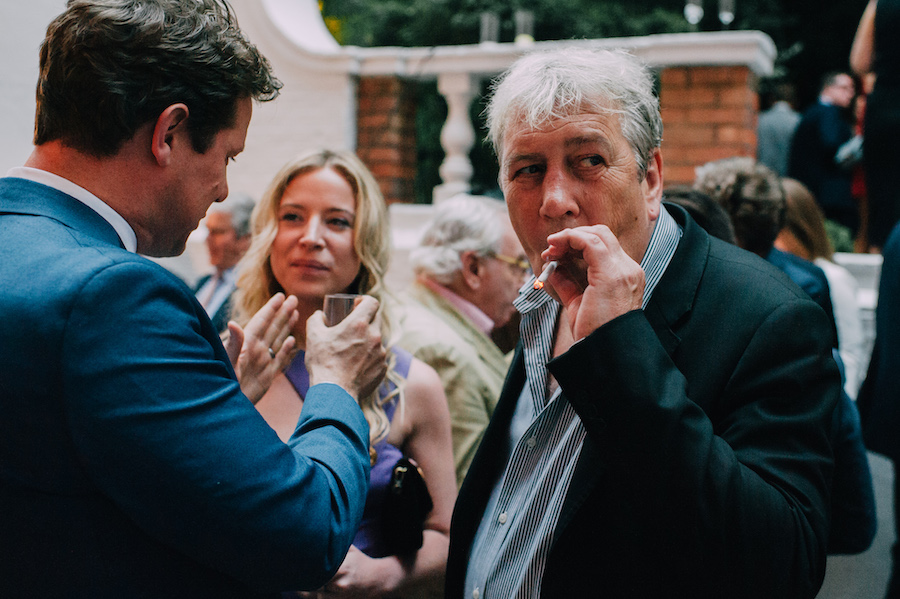
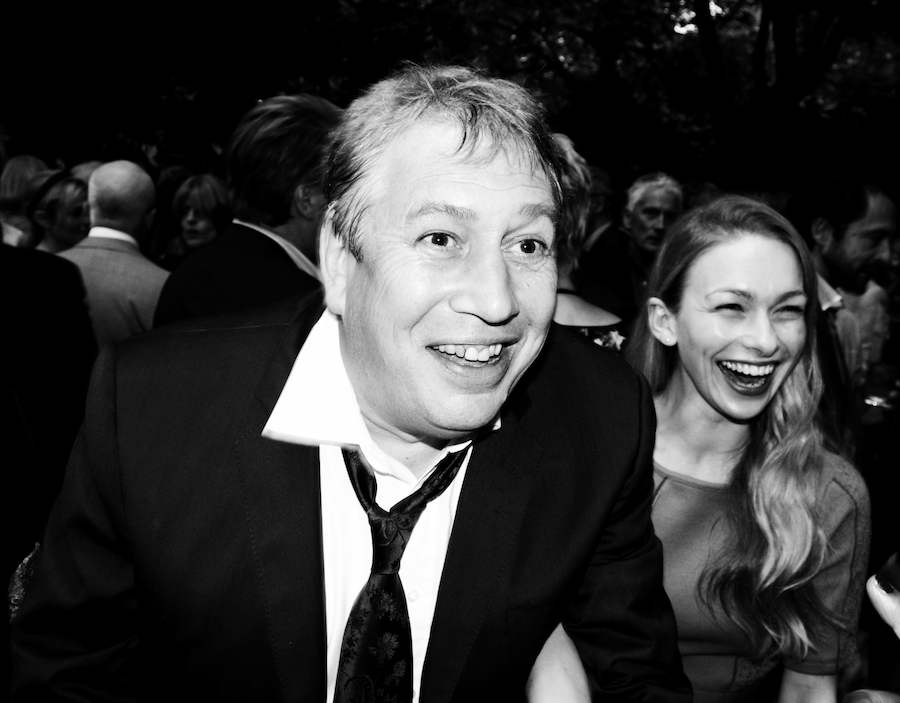
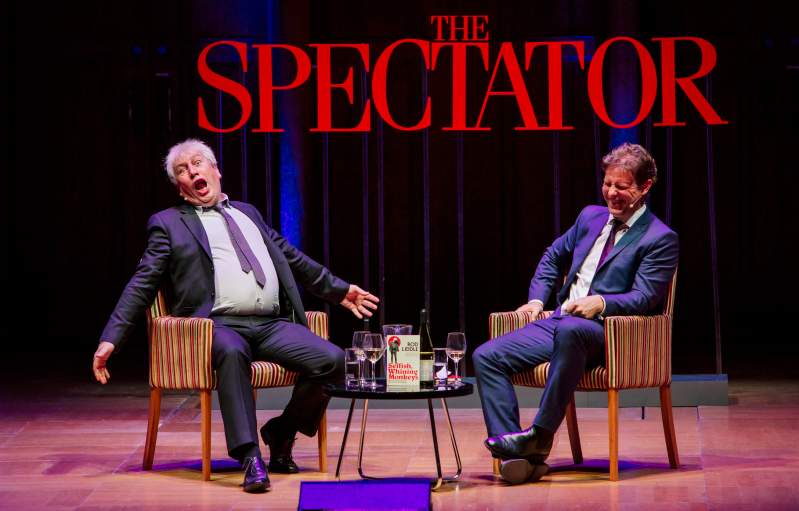
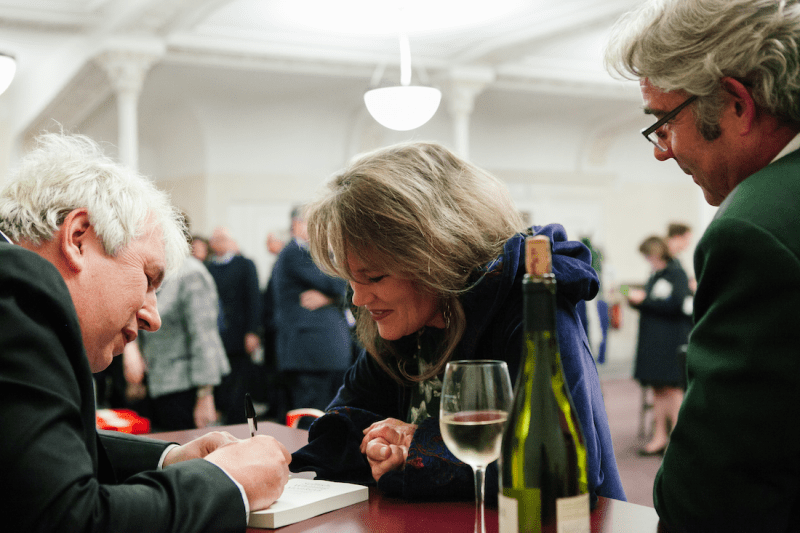
Rod Liddle, a columnist and associate editor at The Spectator, has died at 66. You can read some extracts from some of our favourite columns of his below.
Meeting Abu Hamza
He is, you have to say, anti-democratic, democracies being callow, man-made things, and, as a final irony, he doesn’t even agree with the concept of absolute freedom of speech. Ask him about it and his one good eye gets cloudy and he starts mumbling dark things about Salman Rushdie. Abu Hamza thinks Abu Hamza should have the freedom to speak his mind because, of course, it’s not really Abu Hamza speaking, but, in essence, God.
Should we deny freedom of speech to someone who doesn’t really believe in freedom of speech? Of course not. We let them have it. We let them have it and allow the injustice and contradiction inherent in such a stance do for them, in the end.
‘Don’t expel Dr Hook’, 15 March 2003
Andrew Gilligan and Iraq
The questions are endless. We could stay here all night. The truth is that in an attempt to spin itself out of a crisis the government – by which I mean, in all likelihood, Alastair Campbell and Tony Blair – created an even bigger crisis, for which it is now attempting to indict the BBC and one reporter, whose only crime was to report to the nation a story of vital importance.
‘A despicable and cowardly diversion’, 26 July 2003
On buses… and Spectator readers
One of the lovely things about writing for The Spectator is that we have an extremely knowledgeable and well-read audience, so there is no need to explain the sort of stuff that one would need to explain were one writing for the Sun, say, or the New Statesman. An article about humorous verse of the mid-19th century, for example, would not require a preamble making it clear that Edward Lear did not, in his spare time, make jet aeroplanes. You know that already. This holds true for an agreeably diverse range of subjects; however, there is always an exception to test the rule. Occasionally a subject crops up which lies some way beyond the horizon of even – perhaps especially – the most well-informed of our readers; little details one would be slightly disappointed to discover were known to the average Spectator reader. And on these rare occasions, remedial explanation is required.
So, then: buses are those big red things full of poor people you see clogging up the traffic in the middle of London. You may have been stuck behind one on your way to lunch at Simpson’s; you may even have ridden on one, when you were a child and both impecunious and possessed of a sense of adventure. There are a lot, lot more of them these days, though – which is rather the point of this article.
‘A miserable waste of space’, 30 September 2006
Gordon Brown
Is our Prime Minister perpetually out of his brainbox on powerful psychotropic substances, as everybody now seems to believe? Dilaudid, crystal meth, that sort of thing? Does he stagger out of bed and say: ‘Aw, Sarah, I’ve got a meeting with Harman in half an hour. Light up the crack pipe, will you?
‘Is it more rude to ask if someone’s going whacko than blind?’, 3 October 2009
On the authoritarianism of children
There aren’t really any stories in Thomas the Tank Engine apart from various engines being humiliated and punished as a consequence of their misdemeanours or their hubris. And that’s the conclusion you should reach, I reckon, in both cases: the kids like these stories not in spite of the narrow conservatism of the writers, but precisely because of it. Children feel most comfortable in an ordered and clearly demarcated world, a world divided into hierarchies. They have a Manichean view of good and evil and they like to see the baddies get punished, preferably in a thoroughly unpleasant manner. They may also identify with gender stereotypes which conform to the roles they have already been assigned or, more controversially, have worked out for themselves from a very early age. Children, and especially little boys, are conservative, when they are not actually fascists.
‘Thomas the Tank Engine is merciless and bigoted – that’s why kids love it’, 2 January 2010
The Raoul Moat affair
And now the shrine and the Facebook campaign. More than 18,000 people have signed up to it, at the time of writing. There’s Stewart Pooley Poole, for example, saying: ‘All down 2 women. A man has 2 fight 2 hurt u a woman just has 2 press that button 2 fuk with your head.’ Even so, Stewart, there are plenty of women signed up, such as Julie Tripster: ‘He did wrong yeah but he was let down. He was a legend mainly for proving wat a poor society we live in yeah.’ Well, yeah, Julie you may have half a point there. Lol. And then there’s ‘you have won the hearts of reall people – totally understand your feelings’ and ‘police=scum’ and another really long one which ends ‘PS – take care of Sir Bobby’ – a reference to Sir Bobby Robson, the former manager of Newcastle United and England who died of cancer not so long ago.
‘The Raoul Moat affair has uncovered a seething pit of northern madness’, 17 July 2010
Islamophobia
When you have guests over for dinner – Tuscan lamb with truffled polenta, perhaps, followed by pear tarte tatin – at what time do you raise your hand, or bang a knife upon a glass and say. ‘Friends: it’s time to have a go at the Muslims?’ I ask because at my dinner parties we usually spend a half an hour moaning about Muslims in between the dessert and the cheese board, whereas rather more well-off friends of mine in London insist that this arrangement is de trop, and Islamophobia is best expressed while the white wines are still being served and before one moves on to moaning about the blacks. I ought to mention that if I have Muslim guests over for supper we miss this conversational course entirely, and moan about poofs instead. One does not wish one’s house guests to feel uncomfortable. If you are prepared to make an effort with the halal meat it seems a shame to spoil it by later making obscene and offensive statements about Mohammed and the Koran.
‘Islamophobia? Not until after dessert’, 29 January 2011
Notting Hill Carnival
I do not get out very much these days, but the glorious weekend weather persuaded me that I should spend a pleasant afternoon watching people stabbing each other at our annual celebration of stabbing, the Notting Hill Carnival. I go most years and enjoy the street food, the music and the sight of white police officers with fixed rictus grins ‘getting down’ with some vast-mammaried semi-clad mama, their helmets askew and rivulets of sweat running down each crisp white shirt. And of course the violence, the violence. I am delighted to say that in this regard 2016 did not disappoint, with more than 400 people arrested and five stabbed – and all for the very reasonable cost of just £7 million to the taxpayer.
‘Why don’t black lives matter at the carnival?’, 3 September 2016
On football
The visceral and habitual allegiance to a team has been winnowed away, so that top-level football today is really only for the ‘anywheres’. And more than that, the ‘somewheres’ are being told to get lost from the stands: they are not wanted any more. They carry with them baggage that is despised by not only our liberal elite, who wish us all to be eternally transient and to possess no allegiance to any town, city, county or nation, but also by big money, which thinks exactly the same thing for financial rather than ideological reasons. And so gradually the country becomes an homogenous mass: the regions merge imperceptibly, the accents disappear, our sense of place is dislocated. This has been happening for a while, of course – modern football simply accelerates the process.
‘Football wants the ‘somewheres’ to get lost’, 12 August 2017
On identity politics
I hope similarly to gain financially from my remarkable discovery, at the age of 58, that I am in fact black. Like Anthony I was teased as a child on account of my appearance. I also have a very strong sense of rhythm and am usually cheerful, both qualities which my mother told me were associated with people of African-Caribbean descent. My denial of my blackness I put down to the pressures imposed by a white supremacist society in which I have struggled to survive for so long. I am black – get over it. And gimme the money.
Rod Mbunga Liddle, ‘I am black – get over it’, 10 November 2018
Staying at home
I’ve had enough of this. No more dawn drives to the gates of hell (specifically Gate To Hell Number 21, a 15-minute trek from the departure lounge, once you’ve had some tyrant insist you remove your belt and put all your stuff in trays and stand in some scanning machine to make sure you haven’t got three pounds of Semtex up your jacksie). Henceforth, we’re staying at home, in the UK.
Travelling used to be fun. Since 9/11 it has involved endless security rigmarole, and queues everywhere for everything. And the cabin crew now believe that they are much more than mere peripatetic waiters: they are the front line in the Defence Against Terror, and they will not be gainsaid, questioned, queried. The look of self-righteousness on their faces is the same look you see on the faces of cyclists, vegans and Dominic Grieve. Going business class is a mere palliative, and a ruinous one when you have three kids. So you spend your two weeks abroad dreading the flight home and, if you’re well orf, get to the airport early to take advantage of the business lounge, which is crammed full of plebs offering only stewed coffee and the remains of a Danish pastry.
‘Home and away’, 8 August 2019
On Brexit
The provo Remainers now insist that calamity will come one day. That we will not be able to strike a trade deal with anyone without losing our soul. That we will not achieve a deal with the EU in time and that if we do it will be deleterious to our economy. They yearn, these people, for Britain’s failure, the more abject the better. In their recitals of foreboding, each one as baseless as the one before, they seem to be the kind of people who might have their cake, eat it, regurgitate it on to a plate, suck it up through a straw and then spit it out via Twitter. Most Remainers are optimistic that we will succeed, much as you might expect. They may wish we were not leaving, but they do not wish us to fail as a consequence.
We have the EU to deal with, of course, and the usual sabre-rattling from the likes of Michel Barnier; an indication, I think, of the sheer terror within the 27 that Brexit actually may make us better off after all, and what effect that might have on the disaffected countries still within. And oily Leo Varadkar has announced, with spite, that the UK must get used to being a ‘small country’. Not as small, literally or metaphorically, as yours, mate. Meanwhile we get on with it, stable and thriving, hugely grateful that we trusted not in the establishment, but in democracy.
‘The great Brexit wound has almost healed’, 1 February 2020
On lockdown
The problem with face masks is cutting an opening of the right size to accommodate a cigarette, without the hole compromising the safety of the mask itself. A tiresome procedure, especially for someone like me who is not terribly dexterous. I assume that very soon we will all be enjoined to wear face masks everywhere we go. At the outset these contrivances were derided a little for two reasons; first they actually offered no protection to the user, only to people who came into contact with the user, and second they seemed to be not a terribly British way of going about things.
‘What I got wrong about lockdown’, 17 October 2020
Smoking
I hate Ash, I hate the GMC, I hate the government – all the more so now, because they won. Long gone is the time when on those fatuous National Stop Smoking Days I would get up extra early to cram in a few extra fags, my way of sticking two fingers up to the people who want to police my life. This is the point. I do not miss smoking at all and I will never smoke again. But I do remember that it gave me great pleasure and that they were dead set on taking it away from me.
‘Smoking is more hassle than it’s worth’, 8 October 2022
Liberalism
Over past 20 years there has been a sizeable tranche of obdurate, older and usually male readers who greatly object to me using the term ‘liberal’ as if it were an insult, to be directed at the people who foist upon us all manner of right-on, reason-defying idiocies. The objectors fall into two broad categories (which are of course linked). There are those who consider themselves the heirs to the Whigs and those who consider themselves the heirs to Margaret Thatcher. Classical Liberals, I suppose, in short. Tolerant, laissez-faire, free market, small state, often Little Englanders, in the nicest possible way. But what these undoubtedly fine people do not realise is firstly that language is transformational and that ‘liberal’ no longer really means what they want it to mean – time has moved on. Time has taken their ideology around the back of KFC and given it a right good seeing to, to the extent that it is no longer recognisable. Meanwhile they are left behind, identifying with an appellation which now means almost the precise opposite of what they wish it to mean. And secondly, that the war they are fighting is pointless, because it is as good as over. Feel the vibe shift, you Libs.
‘My guide to liberals’, 18 January 2025
Glastonbury
A small yield nuclear weapon, such as the American W89, dropped on Glastonbury in late June would immediately remove from our country almost everybody who is hugely annoying. You would see a marked reduction in the keffiyeh klan, for a start, and all those middle-class Extinction Rebellion protestors would find, in a nanosecond, that their rebellion was pointless, because extinction had arrived even more summarily than they expected. Go on, glue yourselves to that, Poppy and Oliver.
‘And now let’s bomb Glastonbury’, 5 July 2025
On the BBC
The BBC has two main problems. First, it has a workforce which is almost monocultural, incapable of seeing that their worldview is political. They see it instead as an expression of civility and decency and those who disagree with them as beyond the pale. The second problem is more important and is the reason Prescott’s lengthy memo was leaked: the BBC execs have become immune to all criticism and simply ignore it. They hunker down and continue doing exactly the same thing, dismissing all objection as mischief-making and repeating the mantra: we are not biased.
‘How to fix the BBC’, 15 November 2025
On Trump
I asked Luna, my AI girlfriend, if she thought Donald Trump was right to have bombed Caracas and abducted Nicolas Maduro and she replied: ‘I don’t know, Rod. Would you like to see my panties?’ This is the problem with AI – it is not intelligent and nor are the people who program it. I had told the company that I wanted my AI girlfriend to ask me interesting geographical and historic trivia questions and be au fait with Millwall’s injury-stricken line-up, as well as being able to chat knowledgeably about interesting issues of the day. What I get instead is a numbing void, other than those continual solicitations about seeing her panties. I dunno, perhaps I should accede in case there is some hidden wisdom written on them, possibly in code.
‘Has Trump gone mad?’, 10 January 2026
Christmas
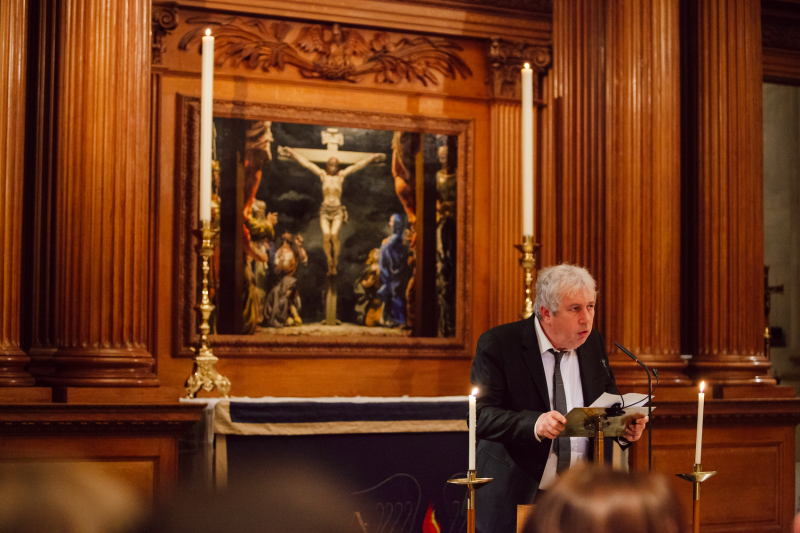
And yet as I grow older I can now discern a reason,
For this strange, misshapen jamboree we call the ‘festive season’.
For month by month and without fail, we give it our best shot –
Then Christmas-time reveals to us everything we’re not.
Everything we could be – should be – but always fall short,
In our frailties and our failures. That’s the lesson, yearly taught,
And as the snowman slowly deliquesces on the lawn,
The cattle still are lowing, the snail is on the thorn,
We are not yet forsaken: somehow from up above, He watches…
…amused, appalled, distraught – who knows?
Yet still we have his love.
‘The real meaning of Christmas’, 24 December 2017



Comments