One uncomfortable consequence of political longevity is seeing the facts prove some of one’s most confident forecasts wrong. As the trade secretary overseeing Britain’s entry into the single market in 1992, I claimed it would wonderfully boost our exports. As I outline in my new paper for Policy Exchange, I was proved wrong. Over our 28-year membership, British goods exports to the EU grew less than 1 per cent a year, while our exports to the 111 countries with which we had no trade deal grew four times as much – by 87 per cent.
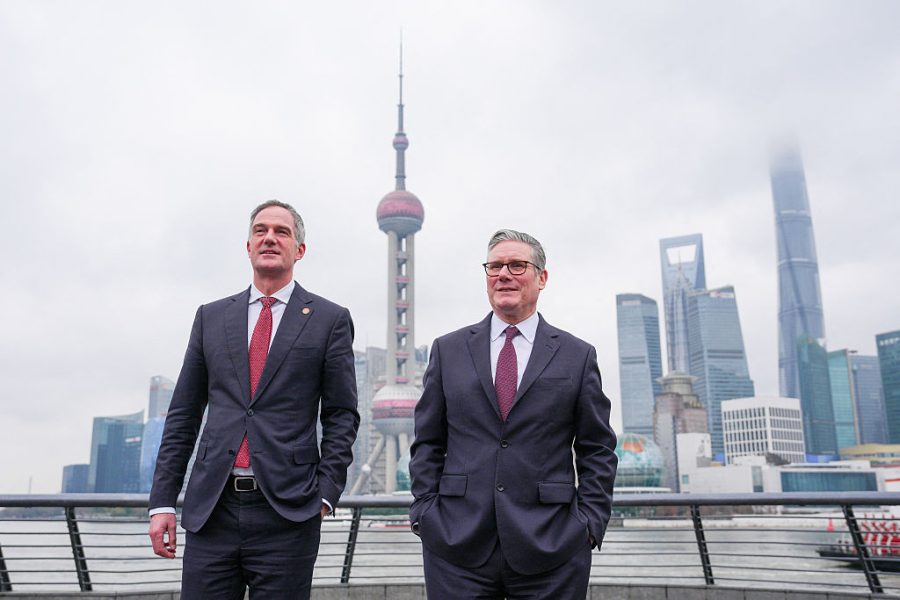
Yet the present Business and Trade Secretary, Peter Kyle, is apparently ignorant of this disappointing experience. He has justified the government’s proposed ‘reset’ of relations with the EU by claiming that ‘the single market is where the magic happens’.
Why are Kyle and – to be fair – most of the political class unaware of the failure of Europe’s single market to live up to expectations? It must be because the single market was the one aspect of the EU which almost everyone across the political spectrum agreed was a ‘Good Thing’. Free market Conservatives welcomed it because it was supposed to unleash market forces; Eurosceptics were persuaded to support it because Margaret Thatcher advocated it. Labour and social democratic Europhiles were persuaded by former EU Commission chief Jacques Delors to back the EU single market as a way to regulate the market in the public interest – through European institutions. So no one bothered to look at how our exports had actually performed until very late in the day.
The single market was the one aspect of the EU which everyone agreed was a ‘Good Thing’
To explain is not to excuse. This government should have examined past performance before pursuing a reset based on blind faith in the single market – especially as Labour’s manifesto pledged ‘no return to the single market’. The only specific manifesto proposal was an SPS agreement to reduce EU checks and delays on food and drink exports. Given that agriculture accounts for only 0.6 per cent of our GDP and its output falls far short of domestic demand, so exports are a fraction of imports – even the most magical SPS agreement could not reignite broader economic growth!
Farming regulations have diverged far more than anyone realised. Alignment would outlaw many plant protection products (reducing output by £600-800 million per year), gene editing, bovine vaccination, etc.
An SPS agreement was an odd choice given that we already have an agreement embracing the EU which forbids unnecessary checks – the World Trade Organisation SPS agreement. The EU abides by it for animal imports from New Zealand, checking only 2 per cent. But they flagrantly ignore it for UK food exports – even where our regulations remain identical to those of the EU – subjecting them to 100 per cent of the paperwork and physical checks 30 per cent of the time.
The EU has agreed to end these unnecessary checks – but only if we do six things. First, erect the same obstacles to food imports from the rest of the world as the EU does – giving EU farmers privileged access to our market. Second, join the EU electricity and carbon markets, neither of which we sought to join. Joining their electricity market means increasing the proportion of all our energy (not just electricity) coming from renewables from 16 per cent to 42.5 per cent by 2030. Linking our carbon markets will increase the price of carbon permits to the EU’s level, costing energy users £1 billion a year.
Third, the EU wants us to dynamically align our regulations with theirs in these sectors. Amazingly, the Chancellor proposes to make dynamic alignment ‘the norm’ in nearly all sectors, asking nothing in return. This will not make exporting easier. Firms exporting to the EU already meet the bloc’s standards. But it will impose EU overregulation on the 92 per cent of British firms that don’t export to the EU.
Fourth, the bloc wants us to pay the EU’s ‘relevant costs’ in each sector. Fifth, as the three sectoral agreements constitute partial participation in the single market, the UK must make a proportional contribution to reduce disparities within the EU (money that could be used to level up the UK) and, sixth, bring back an element of free movement at least for young people.
The government is rightly resisting EU demands that European students pay domestic fees funded by UK student loans. The £58 billion of pre-Brexit loans to EU students that exist and are still outstanding are hard to enforce.
However, the government has rejoined the Erasmus scheme at an annual cost of £570 million, rising to £810 million. It previously cost £290 million but was deemed bad value because it paid for 30,500 EU students to come here while only 17,100 Brits went to Europe. Instead, they scrapped the Turing scheme, which cost just £110 million and helped 40,000 young Brits study in over 150 countries.
A government besotted by the EU, ignoring experience, lacking hardened negotiators and signalling to the bloc that it will accept any terms appears to be doing just that. Donald Trump boastfully published The Art of the Deal: Keir Starmer can, with greater authenticity, claim to have demonstrated ‘The Art of the Bad Deal’.


Comments