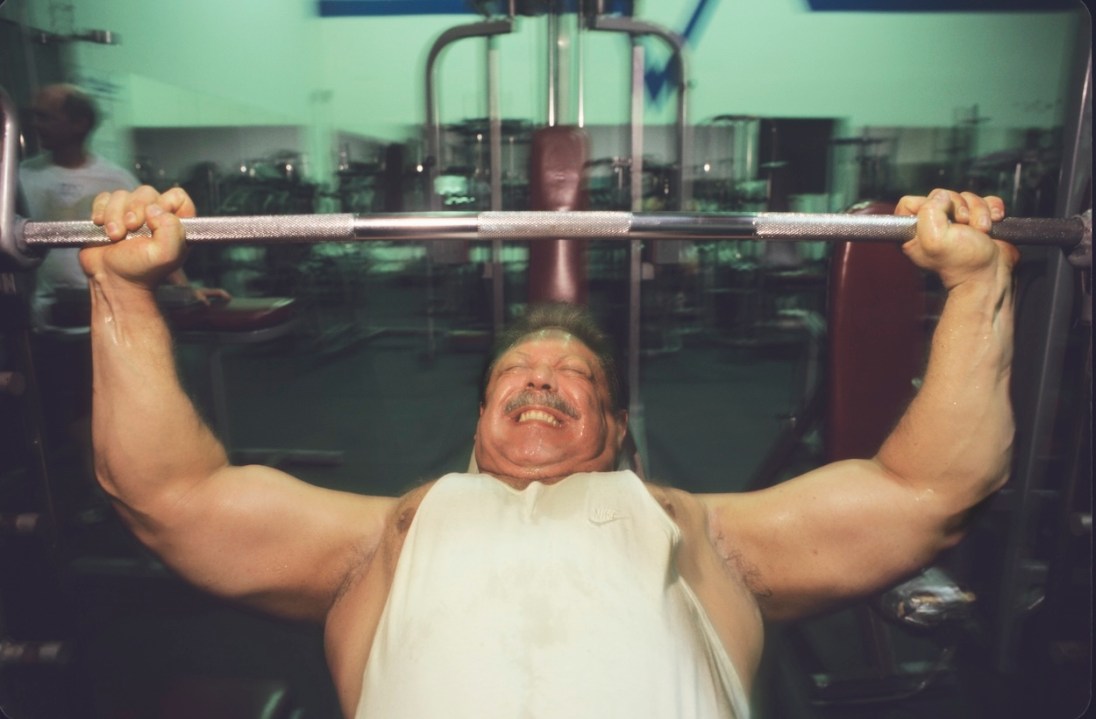

This new year, you may find yourself in the gym. The aim, of course, is to mitigate the effects of the gallon of brandy butter consumed over Christmas. But you may also be trying to build the ‘new you’ (clichés abound when it comes to fitness). Yet as a Spectator reader, you might soon find yourself strangely at home.

That’s because the gym is a curiously conservative space. Partly that’s down to the kind of people it attracts, but also because of its existing clientele: disaffected young men. Last year, a Guardian columnist was mocked for stating this, but anyone who’s spent time in a squat rack knows it’s true. Bench pressing more than 100kg won’t see you suddenly possessed by the spirit of Andrew Tate, but it’s rare for a lifter not to awaken a conservative streak they never knew they had.
This effect has led to the pillorying of gym culture by some. Podcasts and news articles regularly cite weightlifting as a gateway to becoming outright nasty. Yet the connection between gyms and conservatism is a good and healthy one. It can actually help with the very problem that Guardian columnists and Mumsnet groups fret about: ‘toxic masculinity’.
Like many gym-goers, I arrived by the typical route. After a three-month gap year travelling across the US with a friend (both hoping, like Colin in Love Actually, that on hearing our accents we’d be pounced upon by scores of husky vixens), we decided that our romantic failings were due to our physiques. We made a promise to hit the weights when we returned home.
I kept our promise, while he took the more effective alternative route of growing three inches taller. Gyms are full of cases like mine. Just as the Statue of Liberty has on its base ‘Give me your tired, your poor, / Your huddled masses yearning to breathe free’, the gym welcomes unhappy young men. Those who feel they have inadequacies they need to fix.
Sound familiar? This same demographic is the one deemed most vulnerable to radicalisation, whether right-wing, incel, or Islamic. Those who have been regaled for the past decade by tales of the perils of masculinity. Young men have always been sad – but the systemic discontent of men born post-1980 is alarmingly widespread. Much of it derives from being raised under a dissonant upbringing. We were fed the post-1990s ‘everyone is special’ attitudes, only to be met with a decade of identity politics and villainising of overt masculinity. Feeling down once in a while doesn’t justify becoming a Nick Fuentes acolyte or joining al-Shabab, but equally a better response is required than: ‘Just go to therapy’.

Men have historically not responded well to talking therapies, despite public transport being plastered with BetterHelp adverts. Merely getting them to ‘open up more’ won’t restore the agency for which they yearn. One internet commentator even cynically described modern therapy as ‘talking to a liberal until you agree with them’.
For men, action is often the only cure; it provides a quest to keep them from feeling hopeless. The best analogy is found in The Lord of the Rings, when Gandalf provides King Théoden – blind, weak, and bitter from Wormtongue’s corruption – with his sword, restoring his former strength. If male dissatisfaction is defined by a sense of absence, then the gym is one of the best ways to fill it. Were it not for a rack of dumbbells, many would find themselves cloistered away in a dark corner of the internet. Sure, getting musclier might make them a bit more individualistic, but isn’t that something to be desired? Particularly when the alternative is blaming others.
Rather counter-intuitively, within the gym the atmosphere is communitarian: there is a sense of goodwill born of a shared goal. To stretch the Lord of the Rings metaphor, it feels like one large fellowship, or a team of dwarfs hammering away in the mines of Moria.
For men, action is often the only cure; it provides a quest to keep them from feeling hopeless
Your roided-up meathead is very willing to show a grandmother the rudiments of the lat pulldown, so long as he can take alternate turns with her. Most are also aware of the humour involved in what is an absurd activity: repetitively moving heavy weights up and down. Conservative gym accounts online always get a bit ridiculous when they forget they first started going to get girls, and ascribe too great a purpose to their lifting. Today’s top gym influencer, Sam Sulek, is known for his commitment. But he is also known his self-deprecating humour. How can you undertake a diet like GOMAD (gallon of milk a day) without noticing the comedy?
I have cautioned against over-romanticisation, but I cannot help indulging in it myself. In some ways, the quiet conservatism instilled by the gym can seem quasi-religious. I see the same manner and reverence for order in my gym-bunny friends as I do in evangelical Christians. Each resists banging on, knowing it could easily become tedious. Yet both have a contentedness to them. If you express curiosity, or a yearning for something more, they will readily invite you to their place of worship.
The growth in both gym-going and church-going – particularly among young men – is part of the same phenomenon. Much as there are no atheists in foxholes, there are no gym-haters after a tough breakup. With councils selling off more and more school playing fields, gyms are only going to grow in popularity. The traditional outlets for diffusing the nervous and combative energy of adolescence are disappearing. Many will also soon discover the great irony of getting buff to charm women. Gay men love it. Most women remain unconvinced.


Comments