
Mankind is facing its greatest AI challenge: how to tell whether an Andy Burnham speech has been written by artificial intelligence or not.
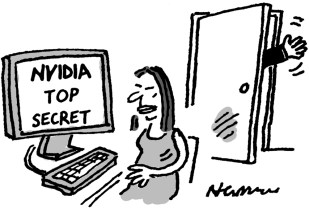
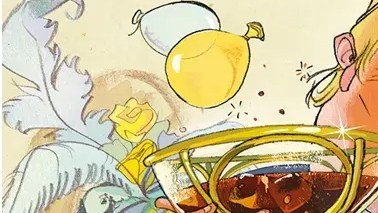
Consider the scale of the problem. Last Friday night, one of the Prime Minister’s aides was sitting on a train from London to Holyhead. He was working on a speech that the PM was due to give the following day to Welsh Labour members in Llandudno. In a detail which could not be invented, the speechwriter was drinking a bottle of prosecco while he worked. We know all this because a fellow passenger was snooping on the aide and took several photographs, including close-ups of his phone.
Ordinarily I would deplore people snooping on other people’s phones – or at least I would deplore other people doing it. But an exception has to be made here, because it is important to know whether the human race can still distinguish AI from human behavior or not.
Till now I had thought the PM’s tide of banalities were his own. But it is clear it was ChatGPT all along
While working on the speech, the aide asked ChatGPT to help make a certain passage “more emotive.” I am surprised Burnham needs any help in making a speech to Welsh Labour members more emotive. Or to put it another way, I could have written this passage myself. I would suggest a text consisting of the following: “Margaret Thatcher, silent steelworks, working men’s clubs, closed mines, miners saved by the solidarity of LGBTQIA+ activists (see also the film and musical Pride), brass bands, collieries, collies, shattered communities, male-voice choirs, Margaret Thatcher.”
As it happens, ChatGPT favored a speech pretty close to the one I just typed out. The speech, as read by the Prime Minister on Saturday, included a passage in which he lamented Thatcher’s years in office and how they “shattered the way of life for communities up and down Britain” with “mines closed, factories closed, steelworks silenced.” Personally I have never understood how Labour reconciles its current policies with this sickly nostalgia for a grim past. Why do the British left always imagine that the greatest tragedy of the late 20th century is that the mines closed? Would they want to go down the mines themselves? Why are they so sad that this generation and all future generations of Welsh lads do not have the opportunity to head down the pits? How do they reconcile this fetish for coal-mining with their current obsessive hatred of fossil fuels and impossible net-zero targets? Nobody knows the answer. Even AI would struggle. But I digress.
So, fortunately, did Burnham. For, while reading out his prosecco- and AI-imbued speech, he went on to talk of “the working men’s clubs, the sports teams, the choirs, the trade unions.” Until Thatcher came along, Welshmen were still allowed to sing and play sports; once her reign of terror commenced the Welsh fell silent.
At this point someone – or something – then added a nice touch about those sweet, sonorous, soot-covered days: “People came together, looked out for each other.” Which implies Burnham thinks that since the 1980s the Welsh have become a selfish people who are deaf to the needs of others. I hope that is not what he is implying, or if it is then I hope he pays for it at the ballot box.
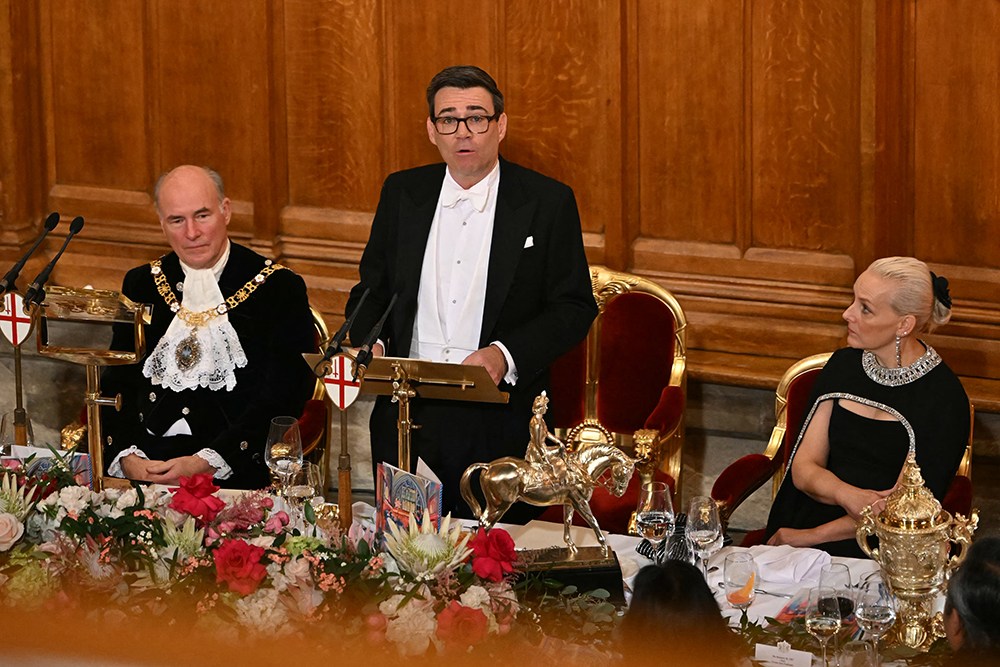
In any case, the challenge of discerning what is Burnham and what is AI was made much more difficult two days later when the PM dressed up in white tie and tails to deliver another speech, to the Lord Mayor’s Banquet in London. The foreign policy section was especially suspicious.
For example, he claimed: “Too often in foreign policy we pose a false choice between our values and our interests. Either you are a starry-eyed idealist focused only on principles, or you are a cynical realist focused on power and interests alone.” I suppose it is possible that the Prime Minister or one of his half-drunk speechwriters came up with that themselves, but it seems more likely to me that one of the aforementioned aides put into ChatGPT: “Hello. Can you invent a false dichotomy followed by a conclusion that makes me look good?” ChatGPT (if it were he) obliged. For Burnham went on to declare that he is neither a “starry-eyed idealist” nor a “cynical realist.” He has found another way.
“What is that other way?” I hear something thinking. Apparently it is that Britain should “always lead with our values” and “a clear sense of what’s right and wrong.” If we do this then “we put ourselves in a stronger position to secure our interests in the long term. The more we lead with our values, the greater goodwill we build around the world and the more we secure our interests.”
Please tell me whether you have any idea whether that was written by man or machine? Burnham or ChatGPT? I honestly could not tell you.
All we can know for certain is that it is grandiose piffle. Among the list of foreign policy challenges that Burnham claimed this “new” approach to foreign policy would help address are the Russia-Ukraine war, the Israel-Palestine conflict and stopping Iran from getting a nuclear weapon.
Since Britain has neither the hard nor soft power to achieve any of these things, I feel that this portion of the speech settles the matter of AI or Burnham. Surely no prime minister could think that “leading with our values” or even displaying “a clear sense of what’s right and wrong” is going to make any impression on the hidden Ayatollah in Iran? Or make the Israelis, Hamas, the Palestinian authority or Vladimir Putin bow to the authority of Andy Burnham?
All things considered, from now on I think I should go easier on the Prime Minister. Up till now I had thought that Burnham’s tide of banalities were his own. But it is clear that it was AI all along. Or at least AI as prodded by a half-drunk speechwriter with the prompt: “Make us sound more important than we are.” I for one am consoled by this conclusion.




Comments