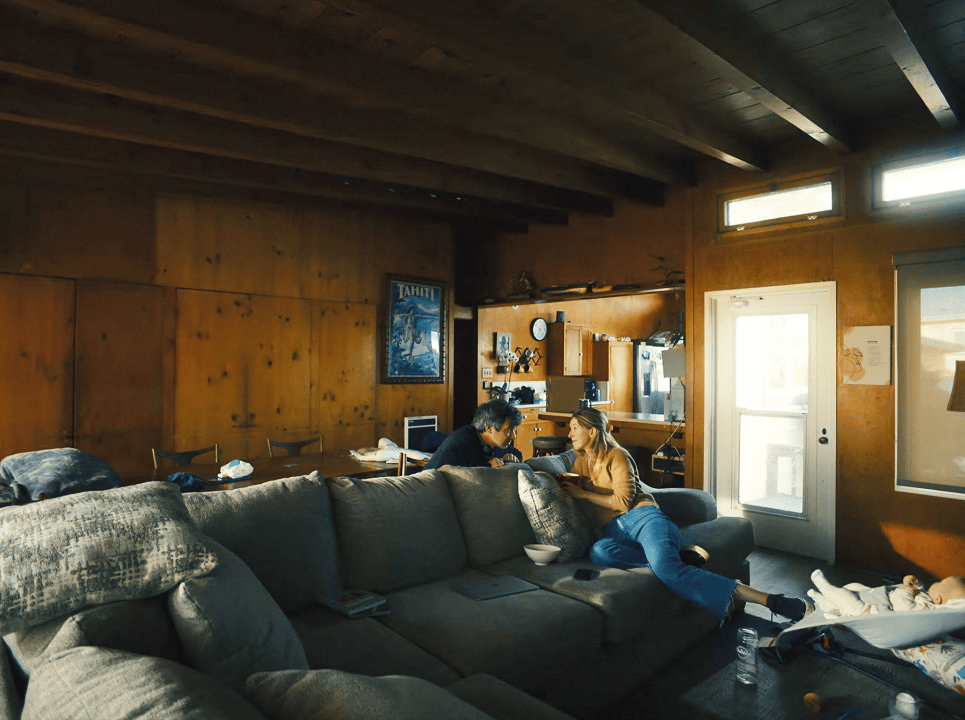
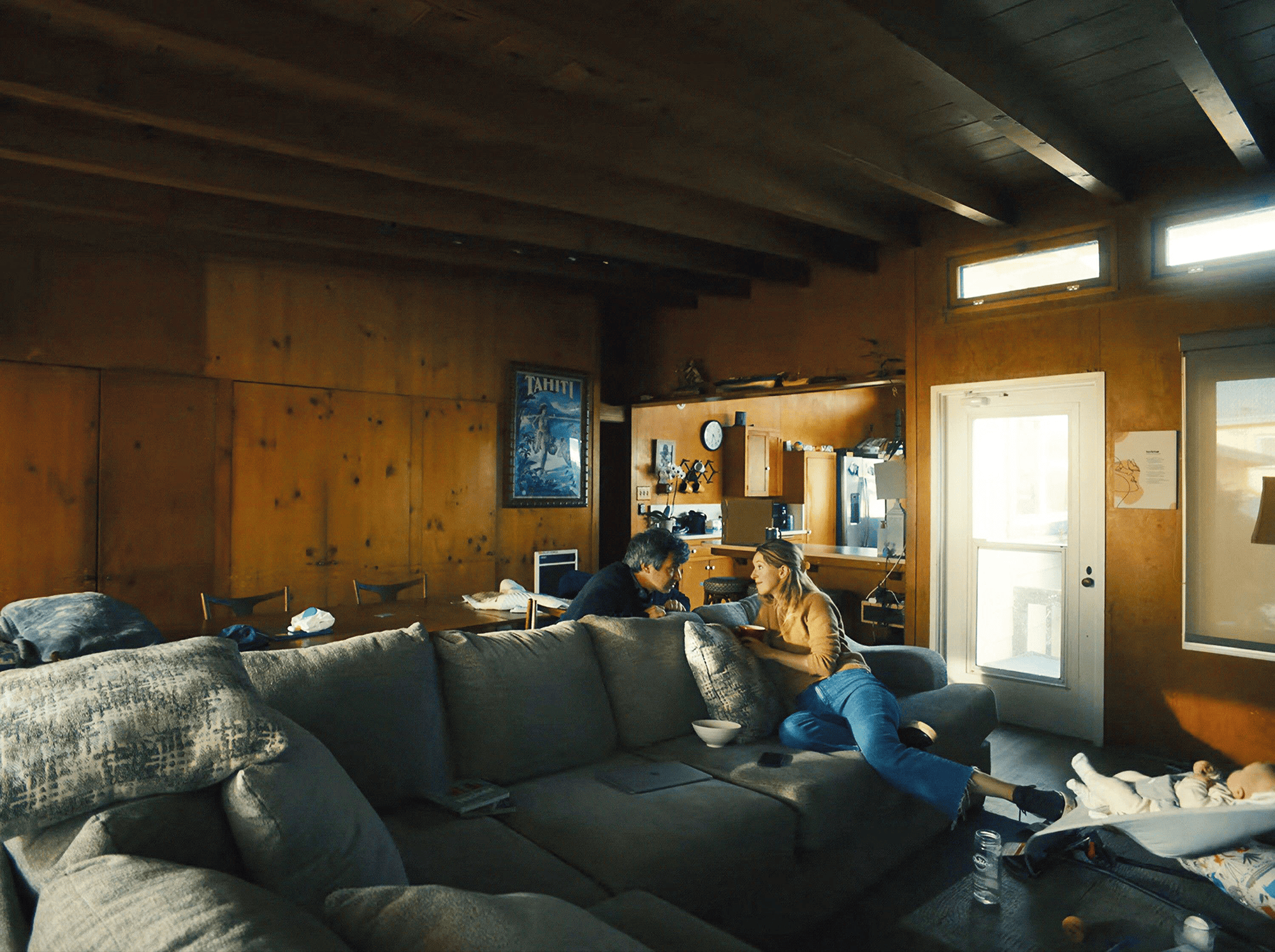
The experimental documentary You Can See Everything serves up a memorable central pair. There’s chemistry on display but it’s not the traditional fireworks. The comedian and prankster Nathan Fielder, star of the celebrated series Nathan for You and The Rehearsal, has a knack for creating awkward situations, while his subject, the entrepreneur and fraudster Elizabeth Holmes, is unflappable or just impervious. Fielder likes to hold his gaze longer than anyone normally would. Holmes, with her bright-blue bug-eyes, could win any staring contest without trying. If there’s no such thing as a question that Fielder would be afraid to ask, there’s also none that Holmes wouldn’t pretend to answer. The film, which takes a series of wild turns – which I won’t reveal – over its three-hour running time, is a portrait of a collaboration, a duel, a folie à deux (more than one) and possibly an unrequited love story.
So much of “everything” cannot be seen, especially the sort of thing with which Fielder is concerned
This slipperiness is a reflection partly of Fielder’s ingenuity – he is co-director as well as co-star – and partly of the project’s inherent surrealism. In early 2023, while she prepared for an 11-year prison sentence, Holmes invited Fielder to stay on the grounds of the house in California where she was living with her boyfriend, Billy Evans, and their two young children. (Holmes was 39 at the time, Fielder turned 40 during his stint as her guest.) It is clear enough that Holmes wanted to tell her side of a well-documented story – which was that she never misled investors or patients about the blood-testing kit developed by her company Theranos. Though a sit-down interview might have seemed the more appropriate format, her presentation in a domestic environment, while it can do little to prove her innocence, would reveal her as something more than a peddler of Silicon Valley snake oil. Shots of Evans’s aggressive workout and naked showering – that he apparently okayed – hints at darker or certainly stranger motives, at least on his part.
The footage of Fielder’s month-long stay, as filleted by the directors and the editor Adam Locke-Norton, unfolds as a series of high-stakes set-pieces. Some emerge from the documenting of apparent mundanity. There’s a moment in which Evans takes a bowl of eggs that Holmes is whisking to perform the task himself, then under Fielder’s questioning, explains that he “just wanted to help her” – though not to alleviate her workload but because she was doing it badly.
Other showdowns are of a more stage-managed kind. At one point, Holmes brings out the discredited Theranos hardware and explains what the machine “can” do. Fielder notices that her wording elides the difference between existing and potential (but never realized) capabilities. To illustrate his point, Fielder plays the Abbott and Costello sketch “Who’s on first?” in which the same phrase is repeated multiple times as both question and answer. Holmes says that she found the sketch funny and understood the analogy – but also concedes that she didn’t get the pun.
Fielder’s own enterprise risks falling foul of the same logic as Holmes’s. The film’s title comes from a text that she sends him: “You can totally see everything.” The problem here isn’t the verb: Fielder was granted extensive access (even if Evans occasionally tries to intervene). It’s the entire sentiment. So much of “everything” cannot be seen, especially the sort of thing with which Fielder is concerned. Throughout the film, he tries to catch out Holmes in an act of duplicity: about her knowledge of the profit-participation deal Evans cut with the producers; about whether, despite her insistence to the contrary, she told a New York Times reporter that her Theranos-CEO self was “a character I created.” But even these mysteries, which unfold in the sphere of action, prove impossible to resolve. So what chance does Fielder stand of answering questions about the true nature of Holmes’s character?
This is a tantalizing and finally obvious exploration of the limits of documentary
American verité filmmaking was always drawn to figures with a familiar public presence who don’t reveal much more of their private selves behind closed doors: Kennedy, Dylan, Brando, Jagger. There is a thrill to access, to seeing a president chatting in the Oval Office, a convicted criminal going for a swim. But the film camera, when trained on real subjects, is better-suited to producing spectacle than insight. You Can See Everything is an intoxicating experience – a smash hit for good reason – and a tantalizing and finally obvious exploration of the limits of documentary.





Comments