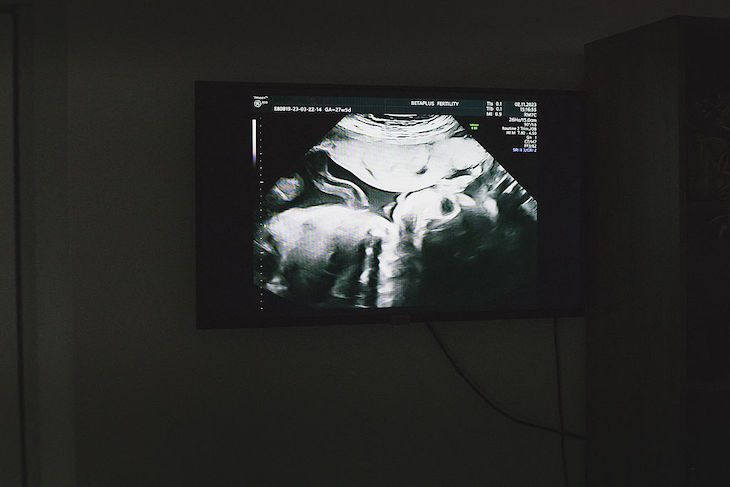
Early on in the Covid pandemic, while I was on maternity leave at Number Ten, a hurried change in abortion practice was rushed through by the Health Secretary. Like so many things then, it was done as an emergency measure for women up to ten weeks pregnant, driven by fears that women might otherwise try to abort the baby at home.
There is reason to believe that the problems with ‘pills by post’ may not be confined to such headline-grabbing stories, but are far wider
Women would be sent pills to take following a teleconsultation without the previous safeguard of a prior in-person appointment to reliably confirm gestational age, assess health risks and check for coercion.
While the justification for this change was the pandemic, abortion providers had long been lobbying for such a scheme, which they have explicitly argued reduces their costs. Despite the Government announcing the measure would end once the pandemic eased, it was later made permanent following backbench campaigning via a controversial amendment to a health bill in March 2022.
Legislating at speed in an emergency and responding quickly to backbench rebellions seldom leads to well-founded policy.
At the time, critics warned this scheme would put women having abortions at risk. High-profile cases since of abortion pills falling into the wrong hands, leading women to perform late abortions of viable babies, which are more dangerous, at home and being given abortion pills without their knowledge or consent by abusive partners, suggest these warnings were prescient.
Yet there is reason to believe that the problems with ‘pills by post’ may not be confined to such headline-grabbing stories, but are far wider. Freedom of Information requests in 2021, looking back at the first year of the pills by post scheme, found an estimated one in 17 women who had an at-home abortion in 2020 required hospital treatment afterwards.

A separate investigation found a significant increase in ambulance callouts across six English ambulance trusts relating to at-home abortions. Despite this, abortion providers continue to insist that pills by post are safe, and official Government data seemed to suggest similarly. Or at least it had done so until a little-noticed November 2023 Office for Health Improvement and Disparities (OHID) report was published finding significant deficiencies in official data.
Abortion statistics record medical complications through a system whereby an abortion provider notes any problems on an ‘HSA4’ form which is submitted to the Department of Health. This approach made sense in the days when abortions took place in clinics and providers themselves were more likely to witness resulting complications.
However, according to the most recent data, nearly three-quarters (over 200,000 in 2023) of all abortions in England and Wales are at-home abortions. Where complications arise, women will typically report to A&E or their doctor, meaning abortion providers are often unaware of these complications.
The OHID report is clear about this, explaining that “it is unlikely that the person filling in the HSA4 form will know if the woman experienced a complication following an abortion.” Even if an abortion provider were subsequently told about complications, the report found there was “no evidence” that they were then updating information passed on to the Department of Health to reflect this.
The OHID report looked at an alternative way of recording complication numbers, by studying Hospital Episode Statistics (HES) in order to capture information from inpatient admissions. The report found that complication numbers were over two and a half times higher under HES data than data collated via HSA4 forms. Given the proportion of abortions taking place by pills by post has grown further by nearly 40 per cent since the publication of the data considered by the report, this discrepancy may well now be even higher.
This is no mere academic question regarding statistical methods. Data from 127 NHS trusts in 2021 found that 2.3 per cent of women having an induced medical abortion are subsequently treated in hospital for haemorrhage. With around 300,000 UK abortions a year, this represents a significant number of women experiencing serious complications, and yet much of that information is likely to be missing from official records. The Government has a responsibility to ensure official statistics are reliable and accurate so women are made aware of such risks before deciding whether to proceed with an at-home abortion.
It is striking that only 4 per cent of women support the continuation of the current pills by post scheme. Two-thirds want mandatory in-person appointments reinstated. Yet the Government not only seems determined to continue with the scheme but is also failing to reliably collate data that might highlight its risks.
Later today, Lord Moylan has a Private Members’ Bill in the House of Lords designed to address these concerns. His Bill would require the Government to publish complication figures annually in line with the 2023 OHID report, using both HSA4 form and HES data.
Whatever one’s views on abortion, women deserve the truth about any risks they are taking. Ensuring publication of accurate Government data safeguards women and enables genuine, informed consent. After damning past scandals where health risks have been hidden from the public, the Government should have the courage to find out the truth, rather than leave women to bear the consequences of what it does not know and does not care to know.
Nikki da Costa was Director of Legislative Affairs to two Conservative Prime Ministers, Theresa May, and Boris Johnson. She writes in a personal capacity






Comments