

Pitching a joke perfectly is a very delicate act, like throwing a ping-pong ball into a cup. Throw it too hard and you overshoot the target. Throw it short and the thing is a dud. But pitch the ball just right and it lands with a delightful, plopping sound, and everyone applauds.
The problem for comedians is that the cup keeps moving, as does the audience.
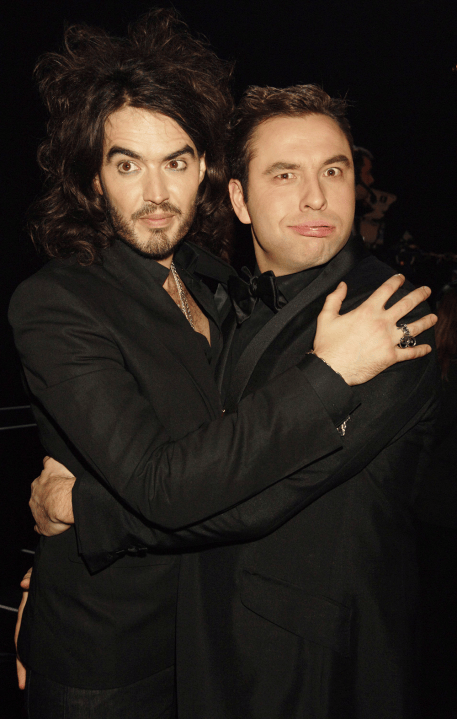
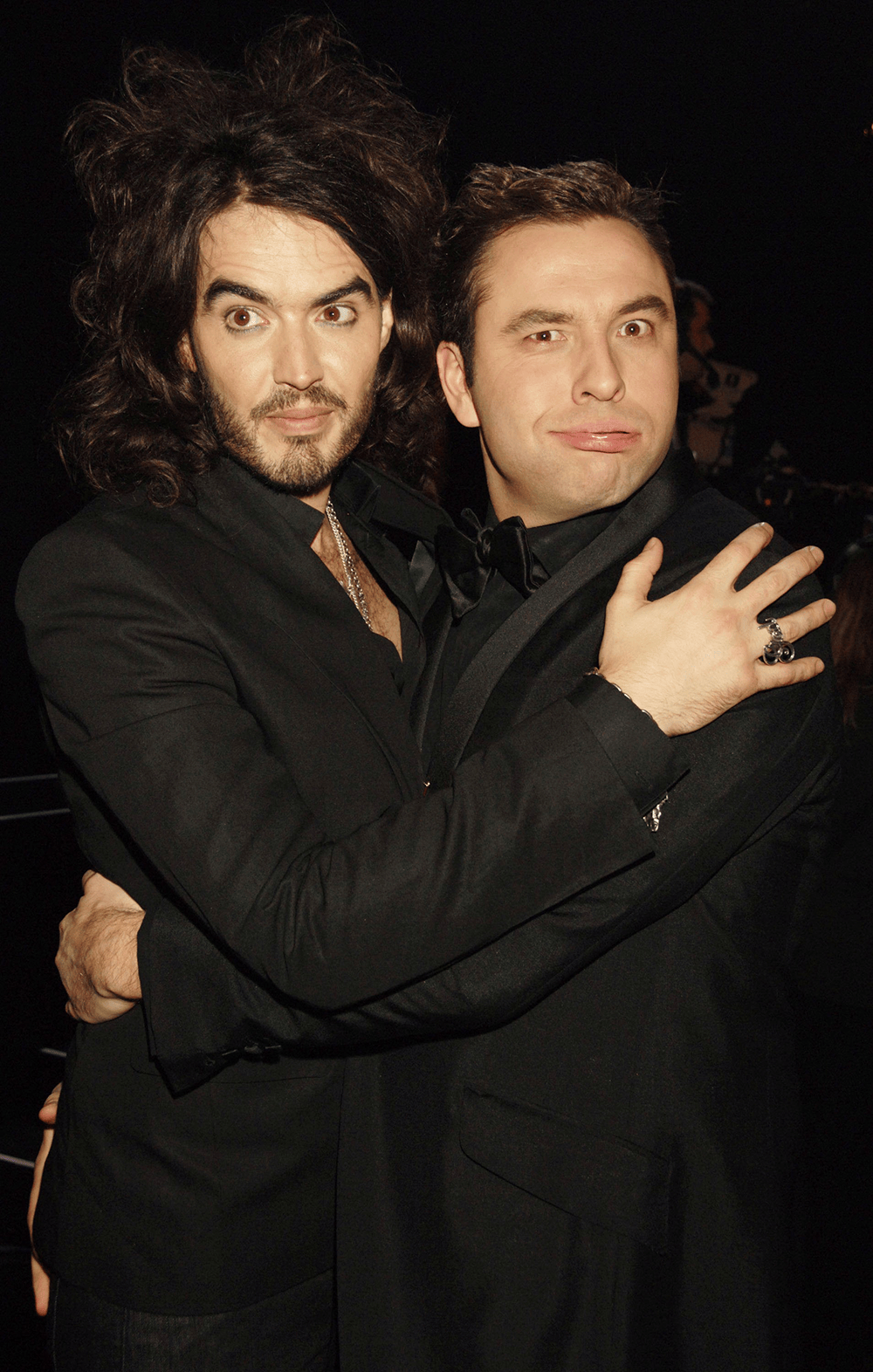
This week Russell Brand was sent to prison for ten-and-a-half years and nobody seemed sorry to see him go. Aside from the crimes for which he was convicted, the Brand “joke” never worked for some of us. Perhaps it was the cruel phone calls to Andrew Sachs, or his general coarseness and ugliness. Yet there once was an audience, a time when Brand was so celebrated that he was given his own television and radio shows, offered deals for idiotic books and featured as one of the “Best of British” acts in the London Olympics closing ceremony. Where did that audience go? Where is that laughter now?
Humor is often transgressive and hurtful to someone. Chappelle’s “joke” wasn’t meant for us
I cannot help thinking that a similar dynamic will be at play with the allegations about David Walliams (which he denies). Although Little Britain had some hits, it seemed to aim for the cheapest laughs possible, especially at the expense of soft targets like the Women’s Institute or elderly people with bladder issues. In 2020, following the death of George Floyd, the BBC started editing out sketches which featured “blackface.” A black man dies under the knee of a policeman in Minneapolis and within weeks two British comedians are having to apologize for a skit from two decades earlier.
As it happens, Floyd is a useful comparison for another sour “joke,” this one from the past week. That is Dave Chappelle using a gig at Madison Square Garden in New York to laugh about, and apparently celebrate, the murder of Charlie Kirk. Watching the American right react to this “joke” has been an interesting exercise.
I knew Charlie and was fairly appalled by Chappelle’s gag. Like many of Charlie’s other friends, I found myself reflecting that he was a more principled defender of free speech – including Chappelle’s free speech – than the comedian. But the conservatives who are outraged at Chappelle’s “joke” are forgetting that humor is often transgressive and hurtful to someone. The joke wasn’t “meant” for us.
When Floyd died, part of the American right became furious at a criminal and drug addict’s elevation to near-sainthood. As a result, there were many jokes, mainly online, taking aim at the apparently enforced veneration of “St. George of Floyd.” Doubtless such humor would have been hurtful to Floyd’s loved ones. But relatives don’t have perpetual veto rights. Theirs isn’t the only consideration at play.
If there is any justification for Chappelle’s gag, it probably germinates in some people on the American left feeling angry at what they might see as some equally forced veneration of Charlie, although I happen to think Charlie led a rather nobler life than Floyd, and a society ought to be careful in its choice of heroes. But it still doesn’t feel as if anyone other than the intended audience should have veto rights. After all, time changes everything, and watching a comedian succeed in landing the ball when everything is in motion is what makes comedy work.
Shortly after 9/11, the comedian Gilbert Gottfried made a joke about the hijackings and was censured. “Too soon” was literally shouted by audience members. But within a few years it was possible to make jokes about the same subject, if you approached it cleverly in the way that Norm Macdonald and a few others did. Yet all this is the subject of unbelievably delicate judgment calls, with the added peril that some people want to see the effort fail. Allow me an example.
Miriam Margolyes has long seemed to me a blight on our national life. Going on talk shows and saying “Pee, poo, bum and fart” only works because literally millions of other women of her age and similar elocution do not do the same. The “joke” only works because Margolyes breaks a convention other people are holding up. As a result I can’t say that I was sorry in September when Margolyes went on television, tried out something “naughty” and got caught in a “race row.” Having decided to transgress boundaries, she finally mis-stepped. I wouldn’t have minded seeing her fall harder.
But that is a matter of taste, like all comedy. And the age we are in has two especially dangerous traps awaiting its comedians. The first is that in-group comedy is now virtually dead. Thanks to smartphones and social media, an “in-group” joke is likely to be discovered at any moment by an “out-group” for whom the joke was never intended, with the result that members of the out-group will try to stop the in-joke. That is probably the case with Chappelle’s Charlie Kirk joke, though Madison Square Garden does seem quite a large venue to try out an “in-joke.”
The second and even more perilous aspect is that the public doesn’t know what it wants and probably never did, as evidenced by the evaporation of Brand’s and Walliams’s one-time fans. Had we been unable to live without Brand’s humor, his work might even have survived the accusations against him in the same way that Michael Jackson’s music has survived the allegations of child abuse. A public that still wanted to dance to “Billie Jean” at weddings chose to overlook the accusations against the king of pop. They’d probably do the same for a true king of comedy.
I suspect that the public will decide that they can do without Walliams, as they have decided they can do without Brand. For sheer talent reasons, the same public will probably decide that Chappelle should survive to try another day. It isn’t a science. But then pitching a joke never was.





Comments