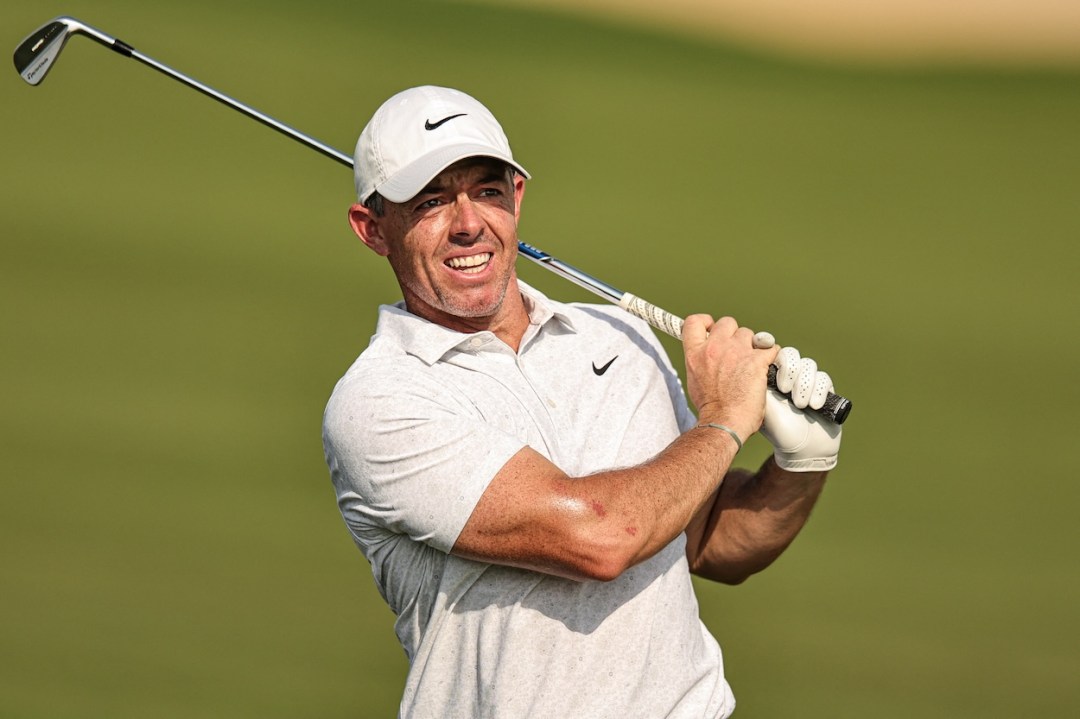
It is easy to argue that the collapse of Saudi Arabia’s golf league, LIV, is a victory for sporting integrity over easy money; for the establishment over the insurgent; for history over clicks. The traditionalists will crow that LIV’s fate shows that golf could not be bought. Except it very nearly was. Dozens of elite players defected, and the PGA Tour’s most effective response was to hose its remaining loyalists with money. On either side the only men to emerge with their reputations unsullied were Rory McIlroy and, remarkably, Tiger Woods. It was, of course, much easier for these men – combined net worth of approximately $1.5 billion – to say no to generational wealth than it was for Pat Perez. The business was a grubby affair all around.

There is a case for LIV, but it is thin. It made golf more global. It took tournaments to locations that were previously excluded from the calendar and showed that events in Singapore, South Korea, Australia and South Africa could draw knowledgeable and passionate crowds. It drew out more young fans and demonstrated how to connect tournaments and online creators. It also shook the PGA Tour out of its lethargy. Under competitive pressure for the first time, the PGA Tour reconsidered its schedule. It now offers more events with more of the world’s best players, easier access for talented young golfers and more jeopardy in its tournaments. For $5 billion, that isn’t much.
And this is a story that starts, begins and ends with money. When it arrived in 2022, LIV had no history, credibility or innovation. All it had to persuade leading golfers to defect was money. It turned out that leading golfers liked money. Dustin Johnson went for $125 million. Bryson DeChambeau’s price was the same. Later Jon Rahm took $300 million. In the frenetic, panicky days of the summer of 2022, the PGA Tour decided it had to respond. It raised its own prize pots from $367 million to $427 million. There were four male golfers among Sportico’s list of highest-earning athletes for 2021, pocketing $180 million in total. (A third of that was Tiger Woods’ off-course sponsorships.) Three years later, there were nine earning more than $435 million. In 2022, Talor Gooch, who has never finished in the top ten at a major, earned more from LIV golf than any Premier League footballer.
The irony is that during what proved to be its final season, LIV golf looked to be making some progress. Crowds in Australia and South Africa were good. It signed Rolex, Qualcomm and JCB as sponsors. But the enormous costs it had to pay to bring in major stars meant that this momentum was building too slowly.
The LIV era will have taught sovereign money and sport and few lessons about the other. For nation-state investors, there is no plausible business case for trying to buy an entire sport. As a test case, the PIF and golf were a useful pairing. Saudi wealth remains effectively bottomless and there are no pesky voters to have to mollify. Golf was fusty and complacent and ripe for disruption. Buying the players proved possible (if expensive) but the rest – the fandom, rivalries, history, the stuff that makes the sport interesting – takes decades to build. In cricket, the Indian Premier League is still cast as the brash interloper as it approaches its twentieth birthday. Even the investors with the deepest pockets of all were unwilling to bear the cost of legitimacy.
Will anyone feel good about the LIV years?
Meanwhile, sport learned that it will never be the primary concern of sovereign capital. Governments buy into sports to serve a wider aim, and these priorities often shift quickly. At the start of the decade, Saudi was looking externally. Golf was its government’s way into the global sports business, with all of the ancillary benefits from higher foreign investment and tourism. It also ensured the country was known for something other than oil and dismembering diplomats. In the second half of the decade, Saudi wants to invest internally. LIV no longer makes sense, especially with its exorbitant running costs. And because Saudi was not building LIV as a business, there was nothing underneath it for another partner to pick up.
Several elite players, including DeChambeau, Johnson and Cameron Smith, are now homeless. Sympathy will be in short supply. The PGA Tour forces LIV players to wait 12 months after their last LIV tournament before they can apply to rejoin. The DP World Tour, the European rival, is likely to be more permissive, but both will be wary of cutting deals that are seen to reward the rebels. They will pay their penance, golf will reunite, and the cycle of majors will continue. But will anyone feel good about the LIV years? I doubt it.



Comments