In the eyes of the NHS, much of ordinary British life constitutes a health risk. Its website hosts more than 4,000 pages and almost every one makes the consequences of our recklessness clear. Enjoy more than 6 pints per week? Cancer! Choose to heat your home with a log burner? Cancer! Prefer mashed potato to lentils? Cancer! The hectoring alone is enough to bring one out in hives.
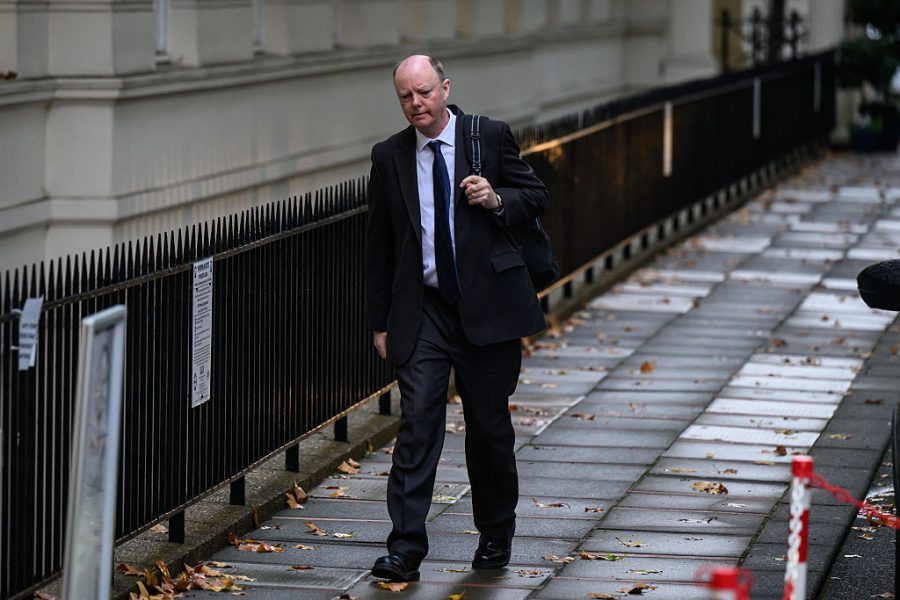
But Sir Chris Whitty has helpfully identified another threat to our modern constitutions: living in the countryside. Yes, that’s right; in his annual report, the Chief Medical Officer has urged people to be ‘clear-eyed’ about ‘moving from an urban area to a rural area where they don’t have links’. Retirees in particular, he warns, can ‘often be left isolated’ without ‘a group of people necessarily around them to support them’.
Whitty is a frightful nannier, but as a resident of darkest Herefordshire, I can attest that loneliness is a problem. When friends are separated by long drives and there’s limited culture on offer, cocooning oneself at home becomes a habit that’s hard to break. Sir Chris’s report proposes using public spaces – churches, village halls, libraries, rugby clubs even – to buck the trend and unite communities. There are, however, in its 288 pages, zero mentions of the institution more than eight in ten Brits believe brings people together: the local pub.
Loneliness is as damaging to our health as smoking 15 cigarettes a day
Imagine young farmers letting off steam, pensioners perusing their newspapers, parents enjoying an hour’s respite – all happily co-existing and exchanging the small pleasantries that keep us sane. This is what proper rural pubs look like. Cross-generational and open to all, they’re worth five village halls and ten ‘community cafes’. Afternoon classes are no use to those of us who work during the day and, by the same token, pensioners who struggle to get around are unlikely to find help by meeting other pensioners in the same situation.

A great many of the problems Whitty’s paper rightly identifies – the elderly struggling to get to hospital, farmers having no one to turn to when business is tough – are ready-made for the regulars at a good local to take care of. Sir Chris, I know you’re more at home in a members’ club, but I grew up above a rural inn, so I’d like to remind you of this: pubs are not where people go to consume their government-approved 14 units of alcohol a week – they’re where villagers’ social lives start and end. Spend an evening at the bar and you’ll hear how it works. Anyone up for a night out in town? I’ll organise a minibus to pick us up outside. Fancy going to the football? I’ve got a spare ticket.
It’s little wonder, then, that Brits who regularly visit a local report having more friends they could ask for help and a greater connection to their community. However, since the turn of the millennium, almost 15,000 pubs have closed. There is some truth in most of the explanations as to why, from draconian drink-driving rules to the rise of cheap supermarket booze. One argument, however, is irrefutable: John Healey’s half-pint budget did little to delay last orders.
Landlords still face VAT at higher rates than their counterparts on the continent. A soaring minimum wage leaves even busy pubs struggling to turn a profit. Punters, meanwhile, are seeing their disposable income gobbled up by threshold freezes. Any Treasury official musing over why we’re losing a pub every day ought to know their policies are to blame. They’ve driven the cost of an average pint to north of £5 and picked the country’s pocket at every opportunity, making a night at the local a luxury many can no longer afford.
I often wonder if this decimation of pubs has been a deliberate policy. For, if Whitehall had its way, pubs would be in an even worse predicament. Sir Chris was the driving force behind the proposed ban on smoking in pub gardens, a policy supported only by the ludicrously nebulous, pseudoscientific concept that inhaling any smoke – no matter how small the amount – was ‘harmful’. Had the proposal not been leaked, then health secretary Wes Streeting acknowledged it would have gone to consultation – and as every Whitehall watcher knows, if a policy reaches consultation, it’s almost always introduced.
If you’ll allow me to borrow the public health lobby’s language for a moment, loneliness is as damaging to our health as smoking 15 cigarettes a day. It even makes developing, you guessed it, cancer more likely.
So, Sir Chris, instead of publishing reports discussing a ‘Human Systems Learning approach to service delivery’, it’s high time you lobbied the Chancellor to cut beer duty and VAT on pubs and call off the next minimum wage rise. Protecting a good local should matter as much to the NHS as opening a new GP surgery or pharmacy. And to the people, it matters a damn sight more.




Comments