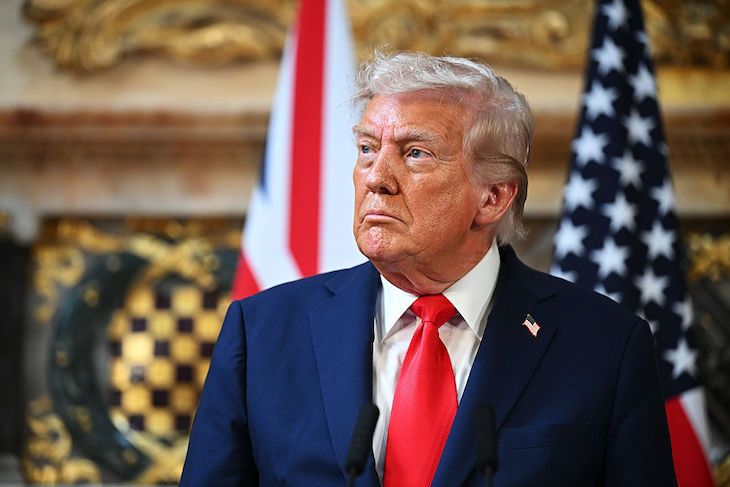
The Democrats have delivered a historic rebuke to Donald Trump. But a repudiation is not an eviction. For Britain, the question is what this political earthquake changes – and what it leaves intact. Westminster should discard the comforting assumption that normal service is about to resume.
Keeping our heads down is not a strategy. Britain needs pragmatic engagement with this administration
Having recently finished five years as a British diplomat in Washington, spanning Biden and Trump, I see five lessons for Britain. None assumes America will now morph into a less challenging ally.
First, resist the temptation to wait this out. Trump’s term ends at lunch time on 20 January 2029. More than two years in which his decisions can profoundly affect British prosperity and security.
A Democratic Congress can block legislation, contest spending and investigate his administration. The scale of this defeat will also test Republican loyalty to him. Yet the president retains considerable freedom over diplomacy, military operations and executive powers. Domestic entanglements may well spur a legacy-obsessed president towards overseas adventures, where he has shown scant regard for congressional permission or his party’s consent.
Keeping our heads down is not a strategy. Britain needs pragmatic engagement with this administration, and to disagree respectfully. Waiting for the next president allows others to make our choices for us.
Second, America has changed more fundamentally than many Europeans admit. Both parties’ 2028 hopefuls will dissect what resonated: Americans feeling poorer after the President’s war with Iran; surging perceptions that corrupt administration figures, tech bros and grifters are getting shamelessly rich while hard-working Americans struggle; and a mushrooming AI backlash. We should not confuse a rejection of Trump’s conduct with an embrace of America’s old international role. There are few votes in funding the world’s policeman, underwriting European security or restoring polite consensus with traditional allies. Economic nationalism and putting America first will dominate 2028 campaigns, on right and left.

Third, America remains indispensable. Like it, or not. Britain’s security and prosperity rest on US scaffolding: our largest foreign investor, integral to our nuclear deterrent and future military capabilities, an underwriter of UK tech and a mission-critical intelligence partner. We extract extraordinary value from the Yanks. Incoming ministers blanch when shown under the bonnet of the ‘special relationship’ and witness the scale of our dependency.
Pivots towards Europe, China or ‘third powers’ are fashionable in Whitehall. As substitutes for America, they are a near-term fantasy. Yes, we should diversify. But Britain’s colours are tied to a US mast for the foreseeable future. Burnham’s government must recognise this uncomfortable truth and nurture our greatest foreign strategic interest, however challenging the administration.
Fourth, Britain must prove its worth to Americans. Political embarrassment about holding America close has encouraged the notion that we can enjoy the benefits without demonstrating our value. The Trump administration’s blend of Anglophilia and disdain for the current state of Britain delivered a wake-up call. It remains inadequately answered. Their Majesties’ masterly US visit was a valuable salve. But like any relationship of value, the partnership requires constant work.
That means spending on defence and leading efforts to secure our own backyard. It means attracting fresh American investment through credible economic and taxation policies. And it means providing tangible support for shared goals: telling Americans what we bring to the table, rather than simply what we think.
This work cannot wait. A Vance or Rubio administration would not extend Britain much benefit of the doubt. Expecting more forgiveness from a Democratic President requires amnesia about the Biden administration’s antipathy towards Britain. A successor drawing strength from the populist left would likely be equally unsentimental and transactional.
This work cannot wait. A Vance or Rubio administration would not extend Britain much benefit of the doubt
American public perceptions of Britain are sinking. The government must challenge America’s now familiar caricature of Britain as economically exhausted and hostile to enterprise and free expression. Ministers may dislike that portrait. Leaving it unanswered allows it to harden. The Prime Minister has yet to do a single US media interview.
Fifth, build tomorrow’s relationships today. Post midterms, diplomacy must go into overdrive. Former Ambassador Karen Pierce understood this, whipping her Washington embassy from 2022 to engage aggressively with Trump and MAGA. That investment paid dividends for Britain.
The contest for 2028 has begun. Governors, senators, donors, advisers and media figures barely noticed in Westminster will shape it.
Incoming Democratic leadership and committee chairs matter immediately. So do the Republicans determining what survives Trump. Britain cannot afford to discover either group only when it needs a favour.
Christian Turner and his capable embassy team are busy doing exactly that across Congress, Democratic aspirants and future Republican camps. But strong relationship building demands a full-spectrum UK effort. The Conservatives and Reform understand the value of American political networks. Burnham’s government should take them equally seriously, across both parties.
The temptation after these results will be to ask whether America will become easier to deal with. The better question is whether Britain will become better at dealing with America.
That requires a government willing to recognise dependency without accepting helplessness, prove our worth as an ally and invest in our influence over the nation that shapes our fate more than any other.
Trump has suffered a historic defeat. Britain still has to earn its hearing.





Comments